
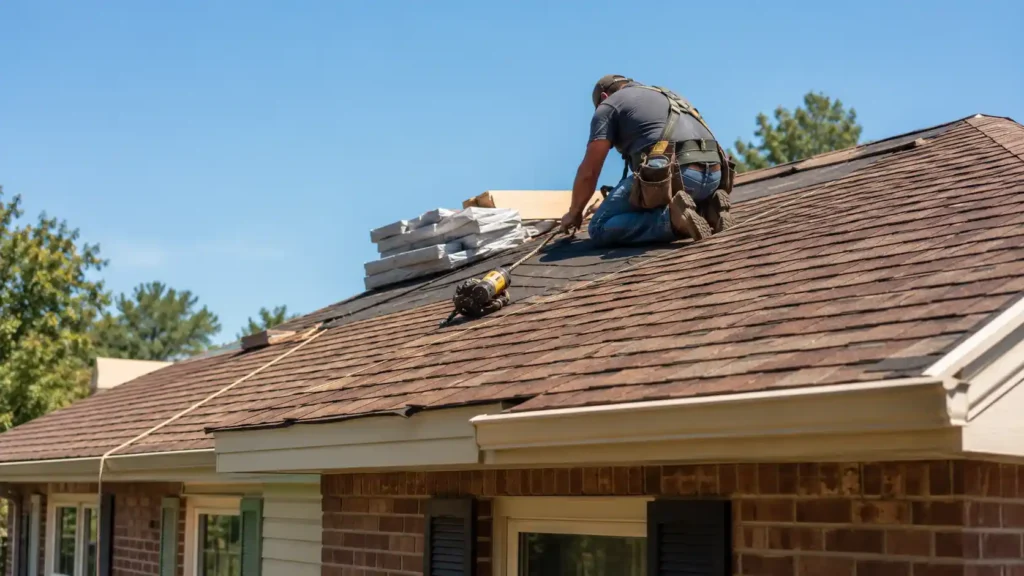
A leaking ceiling doesn’t automatically mean you need a whole new roof. And a contractor who jumps straight to “replacement” without actually inspecting first? Worth a second opinion, honestly. This article gets into the actual signs separating a legitimate roof replacement situation from one a solid repair can fix. What genuinely drives the cost once replacement’s the right call. And the material trade-offs most homeowners don’t fully get until they’re already comparing quotes side by side. You’ll also get a realistic sense of timeline and what the actual work involves. Since a roof replacement disrupts a household more than most people plan for going in.
When Repair Stops Being the Right Call
Most roofs don’t fail all at once. They degrade gradually, and the real skill here is knowing when you’ve crossed from “patchable” into “throwing money at something that’s just going to fail again next year anyway.”
Age is the first, blunt factor. Asphalt shingle roofs the most common type in the US typically last somewhere between 20 and 30 years. Depending on shingle quality, ventilation, climate. A roof already past that range, showing any real damage? Usually a poor candidate for another patch job. Widespread granule loss. Visible sagging anywhere across the roofline. Leaks showing up in multiple, unrelated spots. All of it points toward systemic failure rather than one isolated bad patch. A single damaged section after a storm. Though that’s often genuinely repairable, provided the surrounding shingles and underlying decking are still sound underneath.
So how do you actually know if you need a repair or a full replacement? Damage isolated to one area, rest of the roof within its expected lifespan? Repair’s usually the right call. Widespread wear, a roof nearing or past the end of its material’s typical lifespan. Leaks in multiple unrelated spots all of that points toward replacement being the more cost-effective long-term choice. Even though it costs more upfront than a single repair would.
What a Roof Replacement Actually Costs
Cost’s usually the first real question people ask, and honestly. The answer varies enormously material, roof size and pitch, your specific region’s labor rates. Makes a single national average less useful than actually understanding what drives the cost in the first place.
Asphalt shingles remain the most budget-friendly option, the reason most residential replacements land on the lower end overall. Metal roofing costs considerably more upfront often two to three times the price of asphalt for a comparable job. But it can last 40 to 70 years depending on the metal type and installation quality. Changes the long-term math meaningfully, even though that initial number looks steep at first glance. Tile and slate sit at the premium end entirely. Both for material cost and for the specialized labor and structural reinforcement they sometimes need. Given how much heavier they are than asphalt or metal. Pitch and roofline complexity matter too. Since a steep or heavily cut-up roof just takes contractors considerably longer to work safely than a simple, low-slope design.
What actually affects the price of a roof replacement the most, out of all this? Material choice, more than almost anything else asphalt at the affordable end, slate or tile at the premium end. Size, pitch, complexity also meaningfully affect labor cost. Since steep or multi-angled rooflines take longer and need more safety equipment than a simple, low-pitch design ever would.
Choosing a Material That Actually Fits Your Climate
Material choice isn’t purely aesthetic. Picking based on looks alone, without considering your specific climate. Is one of the more common regrets homeowners report a few years down the line.
Heavy snow load regions? Steeper pitch and a snow-shedding-rated material matter considerably more than somewhere with a milder climate. Since accumulated snow weight’s a genuine structural concern over a roof’s lifetime. Hot, sun-intensive climates benefit from reflective or lighter-colored materials. Since these cut attic heat buildup and can meaningfully lower cooling costs during peak summer months. Coastal areas dealing with salt air and high wind need roofing rated specifically for wind resistance and corrosion standard materials just degrade faster under those conditions than the same product would inland. A reputable contractor should explain specifically why they’re recommending a given material for your actual climate. Not just defaulting to whatever they install most often out of habit.
Is metal roofing actually worth the extra cost over asphalt shingles, or is that oversold? Depends heavily on how long you plan to stay in the home, and your local climate. Metal’s higher upfront cost is often justified for homeowners staying long-term, especially in climates with heavy snow, high wind, or intense sun its considerably longer lifespan and lower maintenance needs offset the initial price gap over time.
What to Actually Expect During the Roof Replacement Process
Understanding the real timeline and disruption helps you plan around a roof replacement realistically. Rather than getting caught off guard by how much it actually affects daily life at home during the work itself.
A standard residential replacement typically takes one to three days for a straightforward asphalt shingle job, though complex rooflines, tile, or slate can stretch that out considerably. Expect genuine noise all day removing old roofing material and installing new material both involve constant hammering and general commotion, making working from home genuinely difficult during active roofing days. Debris removal matters too. A professional crew should use tarps or a dedicated dumpster to contain old shingles and nails, and a thorough final walkthrough with a magnetic sweep for stray nails in the yard and driveway is a good sign a crew that takes cleanup seriously, not treating it as an afterthought.
How long does a roof replacement actually take, start to finish? Most standard asphalt shingle jobs run one to three days for an average-sized home, weather permitting. More complex jobs steep pitches, multiple roof angles, premium materials like tile or slate can stretch that to a week or more. Ask your contractor for a realistic estimate specific to your roof’s actual complexity, rather than assuming a standard timeline just applies.
Conclusion
A roof replacement’s a major investment, but knowing the real signs separating a repairable problem from genuine end-of-life failure keeps you from either overpaying for premature replacement or delaying past the point where repair still makes financial sense. Match the material to your actual climate, not just your budget or aesthetic preference. Get multiple detailed quotes that break down labor and material costs separately. Plan realistically for the disruption during the actual installation. Get those fundamentals right, and a roof replacement becomes a manageable project rather than an overwhelming one.
FAQs
Five factors do most of the work behind any roof replacement quote: roof size, material choice, design complexity, existing roof condition, and local labor costs. A larger, more complex roof with multiple slopes or chimneys needs more materials and skilled labor hours than a simple gable roof of the same size, and if the deck underneath has water damage, that repair gets added to the total before any new material goes on.
Standard asphalt shingles sit at the more affordable end and remain the most common choice thanks to reasonable pricing, easy maintenance, and dependable weather protection. Architectural shingles are thicker and tougher, holding up better against wind and heavy rain and lasting noticeably longer, while metal roofing is the long-game option, capable of lasting decades with minimal upkeep and reflecting heat rather than absorbing it for real energy savings in hotter climates.
The process runs through five stages: an initial inspection of the existing shingles, flashing, and decking; removal of the old roofing down to bare deck; repair of any damaged or rotted wood found underneath; installation of the new system in layers (underlayment, flashing, starter shingles, main shingles, ridge caps, and ventilation); and a final walk-through inspection and cleanup. Skipping the deck-repair step is one of the most common reasons roofs fail early, so a contractor who takes it seriously is worth prioritizing.
Confirm they’re properly licensed and insured, ask for a written estimate rather than just a verbal number, and check that they back their work with a workmanship warranty and genuinely positive customer reviews. A contractor worth hiring answers your questions directly and recommends what your specific house actually needs, rather than steering you toward whatever adds the most to the invoice.
Regular gutter cleaning, clearing leaves and branches before they build up, and trimming back overhanging trees all reduce the debris load and moisture exposure a roof deals with over time. Walking the roof (or having someone check it) after major storms, fixing small issues the moment they appear, and booking periodic professional inspections even when nothing seems wrong are what actually stretch a roof’s lifespan well past its minimum expected years.
Generally yes, since premium products come with longer warranties, better weather resistance, and noticeably improved durability over their lifespan compared to base-tier options. The stronger warranty and longer reliable performance of something like a certified premium asphalt shingle system usually justify the higher upfront cost once you factor in fewer repair calls and a longer stretch before the next full replacement.



2 thoughts on “Roof Replacement: 5 Signs That Mean Repair Won’t Cut It Anymore”