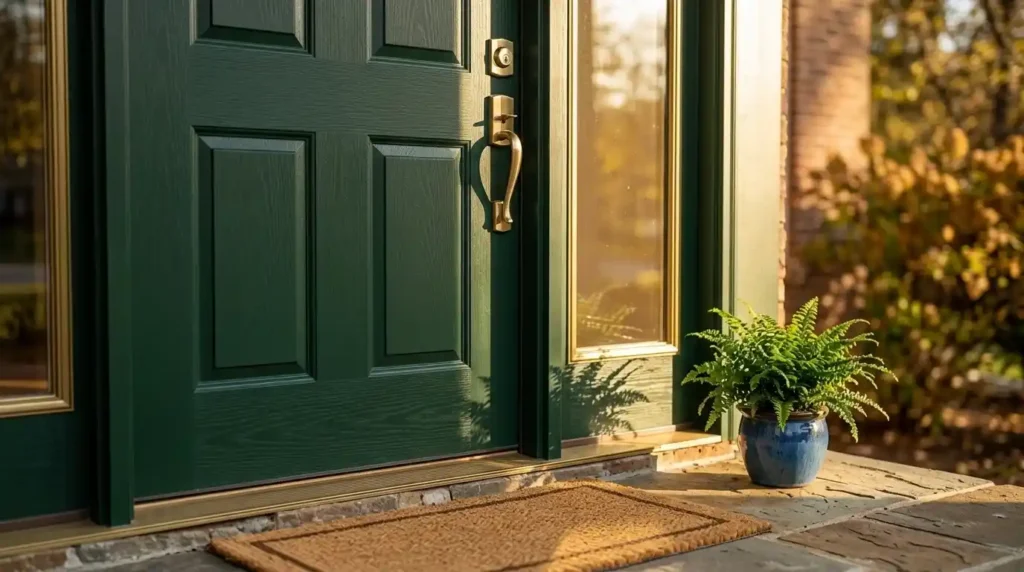
I replaced my front door on a whim a few years back. Mostly because the old one swelled shut every August, like clockwork, and I got tired of shouldering it open. Honestly I didn’t think it would change much but it did the paint color, the hardware. Even the little shadow it throws across the porch in the afternoon. All of it shifted. So here’s the real breakdown, what a door costs installed, which materials are actually worth paying for, and how you match one to the house it’s going on. Even if that house is just, you know, a hallway closet nobody thinks about.
Picking the Right Door for the Job:
Not every door does the same job. Treating them like they do is honestly where a lot of renovation budgets go sideways, fast. A front door handles weather, security, and first impressions, all at once, no room to skip a corner. An interior door? Mostly it just needs to look fine. And keep sound from leaking room to room figure out which one you’re actually shopping for first. It narrows things quicker than you’d think.
Front Doors and First Impressions:
Your front door sets the tone before anyone even rings the bell. Which sounds a little dramatic but it’s true. Modern farmhouse is what most experts are pushing right now. Pivot doors have picked up steam too, especially for anything leaning contemporary. Craftsman doors, upper glass panel, heavier molding, still look great on a bungalow. Cape Cod doors want symmetry, centered, balanced, no surprises. Whatever you land on, match it to the house you already have. Don’t buy the door you saw in a showroom and hope your house catches up to it.
Interior Doors Nobody Notices Until They’re Wrong:
Interior doors get zero attention until one sticks or rattles or lets an entire phone call through the wall. Bedrooms and bathrooms, go solid-core, the sound blocking alone earns the extra cost. Closets and pantries? A basic bifold or sliding bypass door is plenty. Most homes have somewhere between 12 and 18 interior doors sitting there, and I’d bet you couldn’t name the material of a single one until it broke.
Materials That Actually Matter:
Material is what actually drives price and how long a door lasts. Not style, even though style gets all the attention in showrooms and on Pinterest boards.
Fiberglass, Wood, and Steel Compared:
Fiberglass is the default now, for good reason honestly. It fakes real wood grain convincingly, doesn’t warp, barely needs maintenance. Solid wood still looks better up close, oak or mahogany especially, but you’re refinishing it eventually, no way around that. Steel wins on price and security, won’t crack or warp. Though it dents easier than fiberglass does. Aluminum sits at the top, custom order almost always. And that baked on enamel finish never needs touch-ups. Which is nice if you hate maintenance as much as I do.
Hollow-Core vs Solid-Core for Interior Doors:
Hollow-core is the budget pick. Light, cheap, fine for a closet or a room nobody sleeps in. Solid-core costs more but blocks sound way better, and that matters a lot next to a bedroom or a home office. Anywhere near a nursery or a bathroom? Go solid-core, don’t think twice about it. A hallway closet door, though? Save the money.
What a Door Actually Costs Installed:
Here’s the number everyone actually wants, and it moves around more than most guides let on. Door type, material, labor rate, frame condition, they all shift the total independently.
Interior Door Installation Costs:
An entry-level interior door costs from $150 to $600. Hollow-core is the cheapest, while solid-core is among the most expensive. Prehung doors cost more than slabs, costing between $450 and $1,000; however, installation takes less time because the door comes assembled with the frame. Pocket doors become an oddity in this comparison, as these doors roll in and out of the wall rather than swing, with their costs being about $2,500.
Exterior Door Installation Costs:
Exterior doors run $400 to $2,000 or more, and that range stretches fast if the frame needs any real work. A basic steel door, straightforward install, sits near the bottom. Add sidelights, a smart lock, maybe upgrade to fiberglass, and you’re looking at something closer to $2,900 total, which surprises people every time. Rot repair on an old frame can tack on another $400 to $700 before the new door’s even hung.
Hardware, Security, and the Details People Skip:
Nobody budgets time for hardware and that’s exactly the mistake to avoid. A basic knob runs $30 to $80. A smart lock can clear $400 depending on brand and features. Multi-point locks are standard on a lot of higher-end entry doors now, securing the door at three points instead of one. Doesn’t sound like much until you actually compare a single deadbolt against three points holding the frame. Weatherstripping matters too, a $20 to $50 kit fixes gaps a brand new door sometimes ships with anyway, which, yeah, is annoying but true. Reuse old hinges if they’re in decent shape. Just check they actually fit the new door first. Don’t assume.
Matching Style to Your Home’s Architecture:
A gorgeous door on the wrong house still looks wrong. No amount of money fixes that. This is the step people skip most, usually because they fell for a door style online before checking if it fits their actual home.
Farmhouse doors in bold color, deep red, forest green, work great against a neutral traditional exterior. Put that same door on an ultra-modern build and it looks like a mistake. Modern homes want big glass panels, minimal fuss. Climate matters here as much as style does. Snowy region? Inswing door, so a snowdrift can’t trap you inside. Windy area? Outswing, it adds resistance against wind pressure pushing the door back in. None of this is complicated once someone tells you. Almost nobody checks it beforehand though.
When to DIY and When to Call a Pro:
Some door swaps you can genuinely do yourself. Others really aren’t worth the gamble. A basic interior swap, using the existing frame, is a reasonable weekend job if you own a drill and a level. Painting a door, swapping a handle set, adjusting hinges, all fair game too. Exterior doors are different. They have to seal perfectly against weather, they’re heavier, and a bad install means drafts or water damage for years afterward. Structural frame work especially needs someone who actually knows the local building code. If you’re not sure which category your project falls into, that uncertainty is basically your answer already. Call someone.
Door Replacement Conclusion:
The door does actual work each and every day yet still manages to be overlooked half the time. Consider what the material is used for. Allocate the appropriate amount of money for the hardware as well as the labor and not only the door. Take into account the architecture of your house before choosing the wrong door simply because it is on the internet. Do it right, and the door will no longer just be an opening.
FAQs About Door Replacement :
The typical cost for installing a new interior door will be between $150 and $600, depending on whether it is hollow core, solid core, pre-hung or slab style. Specialty doors such as pocket doors will be more expensive due to added hardware and framing costs.
Fiberglass is more affordable when it comes to maintenance, and will not warp, while wood is more aesthetically pleasing but requires refinishing. Nowadays, most individuals choose fiberglass.
Well, for a simple change with the old frame remaining, any competent DIY enthusiast should be able to do it easily enough. However, once changes become necessary for structural repair or legal reasons, then employing a professional will work out more economical in the end..