
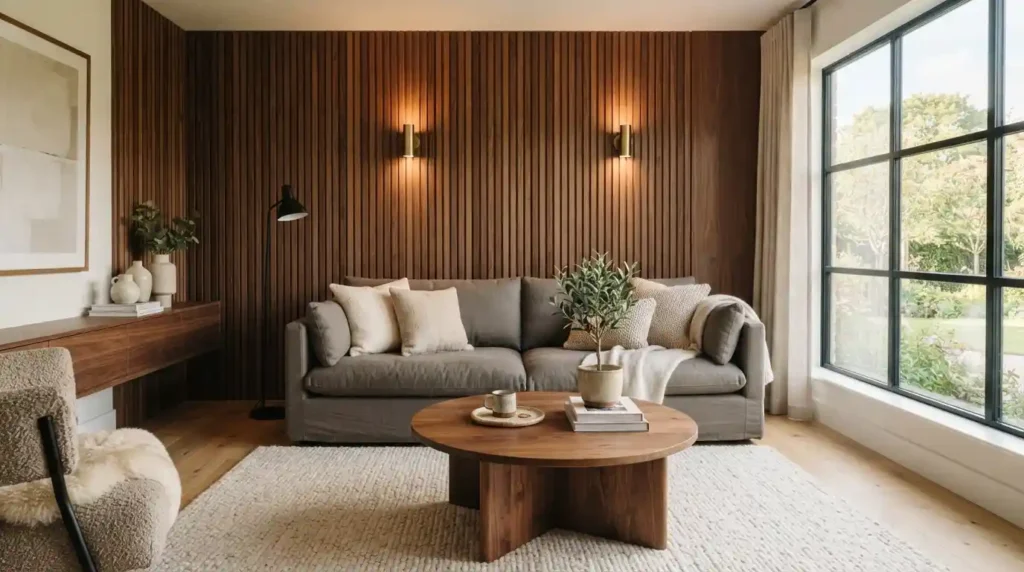
More living rooms than I can count have started the same way. Someone points at one wall and says, “I want to do something here, I just don’t know what.” Fair enough, honestly. An accent wall ideas project seems simple right up until you’re standing in front of a blank wall, stuck between paint, wallpaper, and wood panel, knowing full well the wrong pick is going to be staring back at you for years.
Picking the Right Wall Before Picking a Material
Before color or texture ever enters the conversation, the wall itself needs to earn its spot. I always start clients off the same way: walk into the room and notice where your eye lands first, without thinking about it. Usually it’s the wall behind sofa seating, a bedroom’s headboard wall, or wherever a fireplace already anchors the room. If there’s already something drawing attention there, a niche, a bit of built-in shelving, even just an awkward angle in the architecture, the accent wall has a reason for existing instead of feeling like it was picked at random.
Placement changes by room too. In a living room accent wall situation, the wall behind sofa seating or the wall behind TV setups tend to win because they’re what visitors see first. For a bedroom accent wall, the headboard wall does most of the heavy lifting since it frames where you actually sleep. Dining rooms tend to get the boldest treatment out of any space I work in, mostly because the room only sees short bursts of use, and I’ve talked more than one hesitant client into going darker or brighter than they’d normally choose. Bathrooms and kitchens play by different rules entirely. Moisture rules out half the usual material options, so a sealed finish or tile ends up mattering more than whatever color gets picked on top of it. Entryway accent wall and hallway accent wall spots are where I recommend stripes or a bold statement wall, since a narrow space benefits from something that adds visual depth rather than shrinking the hallway further. Even a ceiling accent wall, sometimes called a statement ceiling or the fifth wall, gets overlooked constantly, and it’s one of the more interesting home office accent wall or nursery accent wall moves I’ve seen work in smaller rooms where the walls themselves are too broken up by doors and windows to feature properly.
Materials That Hold Up and the Ones That Don’t
Paint is still the cheapest, fastest way into a feature wall, and that’s exactly why it’s stayed the default option for so long. Go deep blue or emerald green and the drama shows up instantly; lean toward a neutral tone or pastel color instead and the room softens without tipping into flat. The catch with paint on its own is that a big wall can end up looking a little empty unless something breaks it up, molding, framed art, a gallery wall layered over the top.
Wood paneling is usually where I point clients who want the wall to carry more weight than paint alone can manage. Shiplap, wainscoting, beadboard, and tongue and groove styles each bring a slightly different feel, and board and batten remains one of the most requested looks I get asked to price out, mostly because it reads as both traditional and current depending on the paint finish. A wood slat wall or slat wall setup with vertical fluted panel detailing has become the material I recommend most for a modern accent wall behind a TV or in a home office, since it adds real dimension without competing with anything else in the room. Reclaimed wood brings warmth that new lumber just can’t fake, though it costs more and takes longer to source. MDF panel and MDF strip options, often built into geometric wall panel or herringbone pattern designs, look sharp initially but tend to chip or swell in humid rooms unless properly sealed and finished, something I warn every client about before they commit to one in a bathroom.
Stone accent wall and brick accent wall choices bring texture that paint simply cannot replicate. A stacked stone wall or natural stone wall works well behind a fireplace wall or a wet bar wall, adding a stately, grounded feel to the room. Faux stone panel and faux brick panel alternatives cost a fraction of real stone veneer while getting close enough visually that most guests never notice the difference. Tile accent wall projects using ceramic tile, porcelain tile, or a mosaic tile layout suit kitchen backsplash wall extensions particularly well, and a full mosaic mural takes that even further as a genuine art piece rather than just a surface finish.
Wallpaper sits in its own category entirely. A wallpaper accent wall lets you commit to pattern in a way paint never quite manages, and peel and stick wallpaper has made that commitment far less permanent, which matters for renters. Statement wallpaper, patterned wallpaper, and designer wallpaper options range from subtle textured wallpaper to full wall mural installations that turn one wall into genuine artwork. I’ve had clients hesitate over removable wallpaper thinking it looks cheap, and honestly, the good ones don’t.
Pattern, Color, and the Details Most People Skip
Once the material’s picked, pattern and color decide whether the wall reads as intentional or accidental. Chevron pattern and geometric pattern layouts remain the easiest entry point for anyone nervous about commitment, since straight lines forgive small measuring errors better than curves do. Herringbone pattern and diagonal wood design work beautifully with wood slat wall builds specifically, while honeycomb pattern, kumiko pattern, and Versailles pattern sit at the more advanced end, the kind of intricate designs I only recommend once a client has seen a labor quote and still wants to move forward. Argyle pattern lands somewhere in the middle, more visual complexity than a straightforward chevron pattern, but without demanding the near-obsessive precision a true honeycomb pattern requires.
Stripes solve a specific problem, and it’s worth calling that out directly. Horizontal stripes trick a low ceiling into feeling taller, vertical stripes stretch out a cramped hallway accent wall, and either one works well in a small bedroom accent wall where there just isn’t much square footage to play with. Limewash keeps coming up in client conversations lately too, mostly for that soft, cloud-like texture that reads more lived-in than freshly painted, pairing naturally with a farmhouse accent wall or a coastal accent wall look. Color decisions layer on top of all this. Sometimes it’s analogous colors pulled from neighboring spots on the color wheel, sometimes it’s one bold contrasting color set against neutral tone walls elsewhere in the room. Either way, that choice usually sets the mood for the whole space, which is why I tell clients to nail down the accent wall color first if there’s a piece of art or textile they’re building the room around.
Lighting gets skipped constantly, and it shouldn’t. Accent lighting, wall sconces, and even a tubular lighting fixture mounted directly on a headboard wall add dimension after dark that flat paint alone never achieves. A soffit built into custom millwork can hide accent lights entirely while still throwing a warm wash across a stone accent wall or wood panel finish, which is a detail that separates a professionally finished statement wall from one that just looks like a DIY project someone ran out of steam on halfway through.
What Homeowners Actually Pay For This
Cost swings wildly depending on material, and I’ve had this conversation enough times to know where the surprises usually hit. Paint sits at the bottom of the cost range, usually under five dollars a square foot with basic prep included, which makes it the natural starting point for anyone still testing an accent wall color before going further. Wallpaper ranges more widely, from under a dollar a square foot for simple patterned wallpaper up into double digits once you’re looking at high-end designer wallpaper, and the installation cost climbs quickly the second intricate pattern matching enters the picture.
Wood paneling on an average living room accent wall usually lands in the low thousands once labor’s factored in, with basic wood panel starting around a dollar to three dollars a square foot before climbing based on wood species and finish. A wood slat wall or board and batten build tends to sit in a similar range, though DIY installation cuts that number substantially if you’re comfortable with a saw, a level, and basic carpentry. Faux stone panel comes in well under real stone veneer, which can run considerably higher once labor and material costs are combined, particularly for a full stacked stone wall treatment behind a fireplace wall. Geometric wall panel and MDF strip projects vary the most, since simple designs price out reasonably while intricate designs with tall ceiling height or vaulted spaces can push costs well beyond what a straightforward statement wall would ever cost. Room size and wall height both factor heavily into the final number regardless of material, so I always recommend measuring the actual square footage before assuming any online cost guide applies directly to your space.
Conclusion:
The best accent wall ideas always start with the wall, not the material. Pick a spot that already draws the eye, match the finish to the room’s real conditions, and the color and pattern decisions get a lot easier from there.
FAQs
Start by noticing where your eye naturally lands when you walk into the room, without overthinking it, since that’s usually the wall behind sofa seating, a bedroom’s headboard wall, or wherever a fireplace already anchors the space. If there’s already something drawing attention there, like a niche, built-in shelving, or an architectural quirk, the accent wall has a real reason for existing instead of feeling randomly picked.
Paint is the cheapest, fastest route into an accent wall and works well on its own, though a large wall can start to look empty unless something like molding or framed art breaks it up. Wood paneling, whether shiplap, board and batten, or a fluted slat wall, carries more visual and physical weight than paint alone can manage, adding real dimension that doesn’t need extra layering to feel finished.
Yes, but the material choice has to account for moisture first, before color or pattern even enters the conversation, since a sealed finish or tile ends up mattering more than whatever look gets picked on top of it. MDF panel and MDF strip options in particular need proper sealing in humid rooms, since they tend to chip or swell without it, which is worth flagging before committing to one in a bathroom
Paint sits at the bottom of the range, usually under five dollars a square foot with basic prep included, making it the natural starting point for testing a color before committing further. Wood paneling on an average living room wall typically lands in the low thousands once labor is factored in, while faux stone panels come in well under real stone veneer, which can run considerably higher for a full stacked stone treatment behind a fireplace.
Chevron and geometric patterns are the easiest entry point, since straight lines forgive small measuring errors far better than curves or intricate layouts do. Patterns like honeycomb, kumiko, or Versailles sit at the far more advanced end and are usually only worth pursuing once you’ve seen a labor quote and still want to move forward, given how much precision they demand.



1 thought on “Accent Wall Ideas That Actually Work in Every Room”