Concrete surface preparation can become frustrating when the floor has coatings, rough patches, adhesive, or uneven areas. The right concrete grinder machine can make the work more controlled and easier to manage. But the machine itself is only part of the answer. Tooling, dust collection, surface condition, and operator technique all affect the final result.
A concrete grinder machine removes material by abrading the surface with an abrasive attachment. Depending on the setup, it can help prepare concrete for coatings, reduce surface imperfections, remove residue, or refine an existing floor. The key is to choose a setup that matches the work instead of expecting one machine and one attachment to handle every situation.
Identify What Needs to Come Off
Before choosing equipment, inspect the floor closely. Look for paint, epoxy, glue, thinset, surface latitude, high spots, and other materials that may interfere with the next stage. Also check whether the concrete itself needs correction or whether you’re mainly dealing with something sitting on top of it.
This distinction matters because different materials respond differently to grinding. A thin coating may respond well to diamond tooling, while a thicker or tougher buildup may call for more aggressive preparation equipment. Concrete Network notes that grinding accessories include diamond segmented tooling and tungsten carbide options, with scarifying attachments also available for heavier coatings and mastics.
Pick the Machine Around the Floor
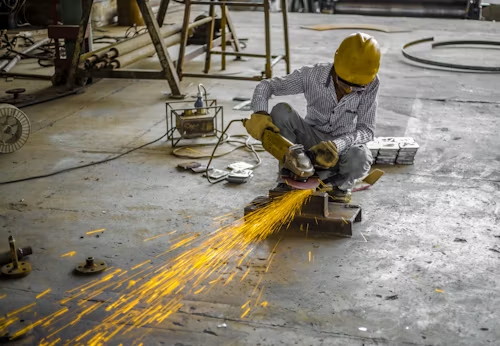
A walk-behind design also changes how the operator controls the grinding head. Instead of holding the entire tool against the floor, you guide the machine across the surface. This can make repeated passes more manageable and gives you a practical setup for larger preparation jobs.
The Grinding Head Controls Contact
The grinding head is one of the features worth examining before you choose a machine. Its configuration affects how the abrasive contacts the concrete and how easily the machine follows the surface. Single disc arrangements can suit certain smaller jobs, while multiple head systems can provide broader contact across an open floor.
Don’t judge a machine only by its motor rating. Head design, machine weight, abrasive configuration, and the number of grinding points all influence how the equipment behaves. A well matched combination can produce more consistent contact than simply choosing the most powerful motor available.
Working Width Changes Your Workflow
A larger grinding path means you can cover more surface with each pass. That can be useful on open floors where there are few obstacles. But a wider machine can be harder to maneuver through narrow entrances or around fixed objects.
Think about access before selecting the working width. If the machine can’t comfortably reach the places where you need to work, its larger grinding area won’t provide much benefit. The best size is the one that fits both the floor and the workspace.
Power Is Only One Part of Performance
Motor power matters when the abrasive meets hard concrete or stubborn material. A machine that lacks suitable capacity can struggle under load. But power shouldn’t be considered separately from the grinding disc, machine weight, speed, and concrete condition.
Speed also affects how an abrasive behaves. Some applications benefit from higher rotational speed, while others require more controlled operation. Current grinder comparisons commonly assess power alongside handling, dust management, weight, and control rather than treating motor output as the only important specification.
Choose Diamond Tooling for the Actual Task
The attachment doing the grinding has a major effect on the result. Diamond tooling is widely used for concrete because it can abrade hard mineral surfaces effectively. Different segment designs and abrasive grades are intended for different stages of surface preparation.
Coarse tooling can help with heavier removal, while finer tooling is better when you’re refining the surface. The concrete’s hardness also matters. If the abrasive and concrete don’t work well together, the tool may glaze, wear too quickly, or fail to cut as expected.
Don’t Start With More Abrasive Than Necessary
It can be tempting to choose the most aggressive tooling because it appears faster. But removing too much material can create additional work later. Start by deciding how much surface actually needs to be removed.
For example, minor high spots don’t necessarily require the same tooling used for heavy coating removal. A controlled first pass lets you see how the concrete responds. You can then adjust the abrasive instead of committing to an unnecessarily aggressive approach.
Give Dust Collection a Serious Role
Dry concrete grinding creates fine airborne dust, so collection should be part of the setup from the beginning. A shroud helps contain debris near the grinding point while a connected extractor pulls the material away. Current guidance for concrete grinding places strong emphasis on source capture and properly matched extraction equipment.
This is where a concrete grinder with vacuum setup can be especially useful. The grinder, shroud, hose, and vacuum need to work together. A poorly matched vacuum or restricted connection can reduce collection performance even when the grinder itself is suitable for the job.
Check the Shroud and Hose Connection
A dust shroud isn’t simply an accessory that can be added without checking compatibility. The shroud needs suitable clearance around the grinding wheel and a connection that works with the extraction hose. Its design should also allow the abrasive to contact the surface without restricting normal operation.
Hose size and routing can affect airflow too. Avoid unnecessary bends and restrictions where possible, and follow the requirements of the grinder and extractor. Recent dust control guidance also highlights grinder size, interface fit, airflow, hose arrangement, and edge access as important factors when building a collection setup.
Know When Grinding Isn’t Enough
Some floors need more aggressive surface removal than a standard grinder is designed to provide. A scarifier uses cutters to remove material from the surface and can create a much rougher profile. It may be useful for heavier coatings, buildup, uneven sections, or repair work where deeper removal is required.
Grinding and scarifying should not be treated as interchangeable processes. Grinding generally offers more controlled surface refinement, while scarifying is intended for more aggressive removal. If a scarifier leaves a texture that’s too rough for your final application, grinding may still be needed afterward.
Use the Right Approach for Coatings
Removing an existing coating isn’t always about grinding the concrete itself. The objective may be to eliminate the coating while leaving the underlying slab suitable for the next finish. That requires attention to the coating’s thickness, bond, and behavior under the abrasive.
If a coating is stubborn, changing the attachment may be more useful than simply applying greater pressure. Concrete Network identifies carbide tooling as an option for heavier buildup and diamond accessories as another common approach for coating removal.
Keep the Machine Moving
Your technique can change the floor almost as much as the equipment. Hold or guide the machine steadily and avoid leaving the grinding head in one position for too long. Staying still while the abrasive is engaged can create an unwanted depression.
Use overlapping passes so that adjacent sections receive similar coverage. Check the floor regularly rather than waiting until the entire area has been treated. Recent grinding guidance also recommends keeping the grinder flat and using controlled passes instead of forcing the abrasive into a deep cut.
Let the Abrasive Do the Cutting
Extra downward force isn’t always helpful. Excessive pressure can increase tool wear and make the machine harder to control. It can also change how the abrasive cuts the surface.
If removal is too slow, first consider whether the tooling suits the concrete. You may need a different diamond bond, segment configuration, or abrasive grade. Changing the setup is often more useful than simply pushing harder.
Prepare Edges Separately
A floor grinder is most efficient on open areas, but walls and corners create a different challenge. The machine may not reach completely into these spaces. That’s why many surface preparation jobs require a smaller grinder for edge work.
Plan these areas before starting the main floor. Leaving the edges until the end can result in visible differences between the center and perimeter. A consistent approach helps the entire surface look and perform more uniformly.
Watch for Tool Wear
Diamond segments don’t remain in the same condition throughout a job. Inspect them before and during grinding, especially when the machine suddenly stops cutting as expected. Flat or heavily worn segments may no longer perform properly.
Recent floor grinding guidance recommends checking diamond segment condition and replacing tooling when the segments have worn down to the bond. A quick inspection can also reveal uneven wear that may point to an issue with the machine setup or surface.
Test a Small Section First
Before grinding the entire floor, select a small area where you can test the machine and abrasive. Make a few controlled passes and inspect the surface. Look at the removal rate, texture, dust capture, and how easily the machine moves.
This test can prevent a large mistake. If the surface is being cut too aggressively, change the tooling or technique. If the machine is barely removing anything, investigate the abrasive and concrete condition before continuing.
Decide Between Dry and Wet Grinding
Concrete can be ground using dry or wet methods, depending on the equipment and application. Dry grinding requires effective dust extraction, while wet grinding uses water to suppress airborne particles and produces slurry that must be controlled. Each approach has practical considerations.
For dry work, a suitable extraction setup is essential. Wet work removes the need for a vacuum based dust collection arrangement but creates a different cleanup requirement. The choice should depend on the equipment, workspace, surface, and preparation method being used.
Think About the Next Floor Finish
The desired final finish should guide your grinding process. Preparing concrete for a coating may require a particular surface profile rather than a polished appearance. Grinding for decorative polishing involves progressively finer abrasives and a different sequence of surface refinement.
This means you shouldn’t stop simply because the floor looks smoother. Check whether the surface is clean and has the texture required for the material going on top. A visually acceptable floor can still need more preparation before coating or finishing.
Build the Whole Setup Before Starting
A machine alone isn’t a complete grinding system. You may need diamond tooling, a dust shroud, an extractor, suitable hoses, edge equipment, extension arrangements, and protective equipment. Planning these components together helps avoid interruptions once work begins.
When comparing a concrete grinder machine, look at compatibility rather than isolated specifications. Ask whether the machine accepts the tooling you need and whether its dust port works with your extraction equipment. Also consider how the machine will move through the workspace and whether its controls are practical for repeated passes.
A Better Way to Compare Machines
Start with the surface, then work backward to the equipment. Identify what needs to be removed, how much correction is required, and what finish must remain afterward. From there, compare grinding width, head design, motor capacity, speed, weight, tooling, dust collection, and access.
A concrete grinder with vacuum capability can be a practical choice when dry grinding and dust control are priorities. But the vacuum connection alone doesn’t guarantee effective collection. The complete setup needs compatible components and proper operation.
Make the First Pass Your Test
The first pass should answer several questions. Is the abrasive removing the intended material? Is the machine easy to control? Is the dust being captured effectively? Does the resulting texture suit the next stage?
If any answer is no, stop and adjust the setup. Changing tooling or extraction before continuing is usually easier than correcting an entire floor later. Good preparation comes from checking the process as you go rather than assuming the first setup will be perfect.
Final Thoughts
A successful concrete grinding job depends on more than choosing a powerful machine. The surface condition, grinding head, diamond tooling, machine handling, dust collection, and working method all have to fit together. Small differences in these areas can affect how quickly and evenly the floor can be prepared.
The right equipment should make the process easier to control, not simply provide more power. Start with the surface, select the appropriate abrasive, manage dust from the source, and test the setup before covering the entire floor. That approach gives you a much better chance of producing a clean and consistent result.
Frequently Asked Questions
What is a concrete grinder machine used for?
It is used to abrade concrete and remove or refine surface material such as rough areas, coatings, residue, and minor imperfections.
Why use a concrete grinder with vacuum?
It connects grinding dust to an extraction system, helping capture fine debris at the source during dry grinding.
What type of tooling is used for concrete grinding?
Diamond tooling is commonly used, with different segment designs and abrasive grades selected according to the concrete and removal requirement.
Can a grinder remove thick concrete coatings?
It can handle many coatings, but very thick or difficult buildup may require more aggressive equipment such as a scarifier.
Should I test the grinder before doing the whole floor?
Yes. A small test area helps confirm that the tooling, machine settings, dust collection, and grinding technique are suitable before continuing across the entire surface.