
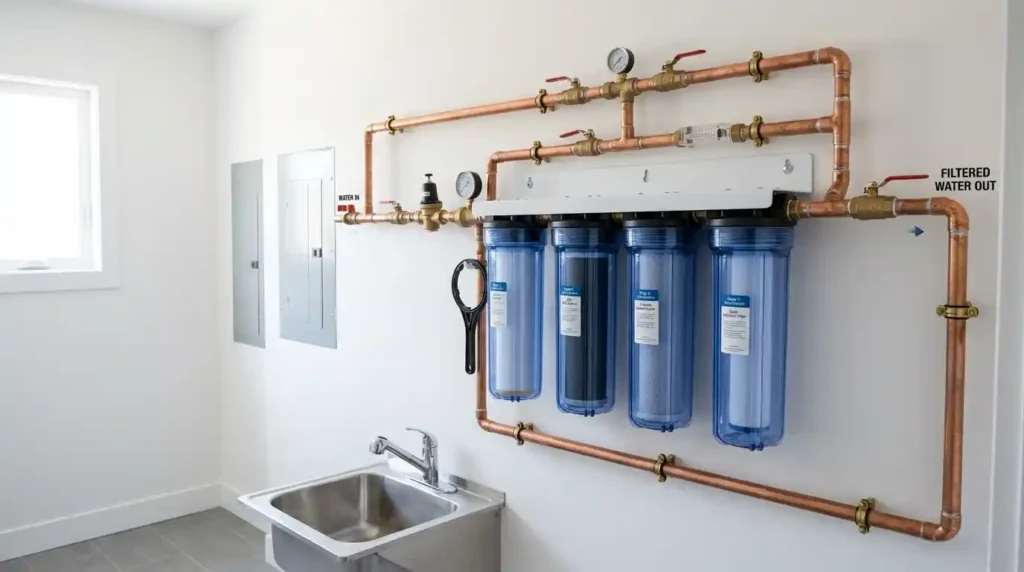
Most homeowners think about water filtration only after something goes wrong a strange sulfur smell coming from the tap, dry skin that no moisturizer seems to fix, or a white crusty buildup appearing around every faucet in the house. By that point, limescale has already been working through the plumbing for years, the water heater lifespan has quietly shortened, and the washing machine protection window has largely passed. I have been in that position myself, and the honest truth is that whole house water filtration is one of those home upgrades that feels optional right up until the moment you realize it was not.
This is not a guide about drinking water alone. A whole house water filter system also called a point of entry water filter or POE filter treats every drop of water that enters your home before it reaches any tap, shower, appliance, or pipe fitting. That distinction matters more than most buying guides acknowledge.
Why Your Tap Water Is Not as Clean as You Think
Municipal water treatment does a reasonable job of removing visible contamination, but city water filtration stops well short of what most families would consider genuinely clean water. For households using municipal water supplies, chlorine and chloramine removal are major concerns because these disinfectants are intentionally added and can leave an unpleasant taste and odor that impacts drinking, cooking, and bathing water.
Consumer Confidence Report
What the annual water report officially called the Consumer Confidence Report or CCR report does not always make clear is the presence of trace contaminants that technically fall within EPA water standards and WHO drinking water guidelines but accumulate over years of daily exposure.
PFAS removal has become one of the most discussed topics in water quality circles since the EWG water database began publishing contamination maps showing PFOA and PFOS levels in municipal supplies across the United States, UK, Germany, France, Canada, and Australia. These forever chemicals linked to immune system disruption, cancer risk, and children’s health concerns are present in far more water supplies than most homeowners realize.
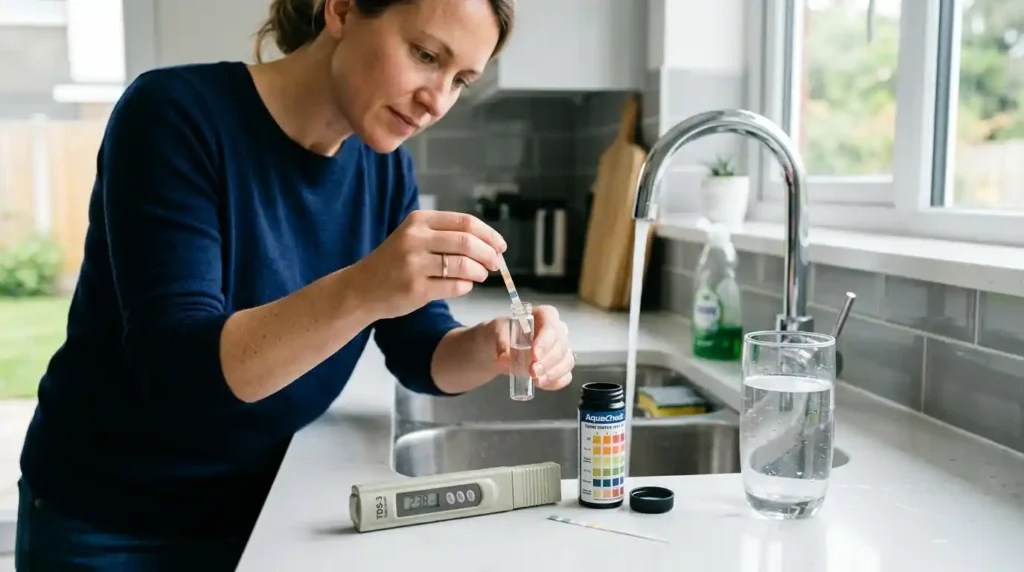
Water Treatment System
Well water treatment system users face an entirely different challenge. Groundwater carries iron removal requirements, manganese filter needs, hydrogen sulfide causing that rotten egg smell, and potential coliform bacteria, E. coli, giardia, and cryptosporidium contamination depending on agricultural runoff and industrial pollution nearby. A TDS meter and water test kit are the starting point for any well water household before selecting filtration technology.
How Whole House Water Filtration Actually Works
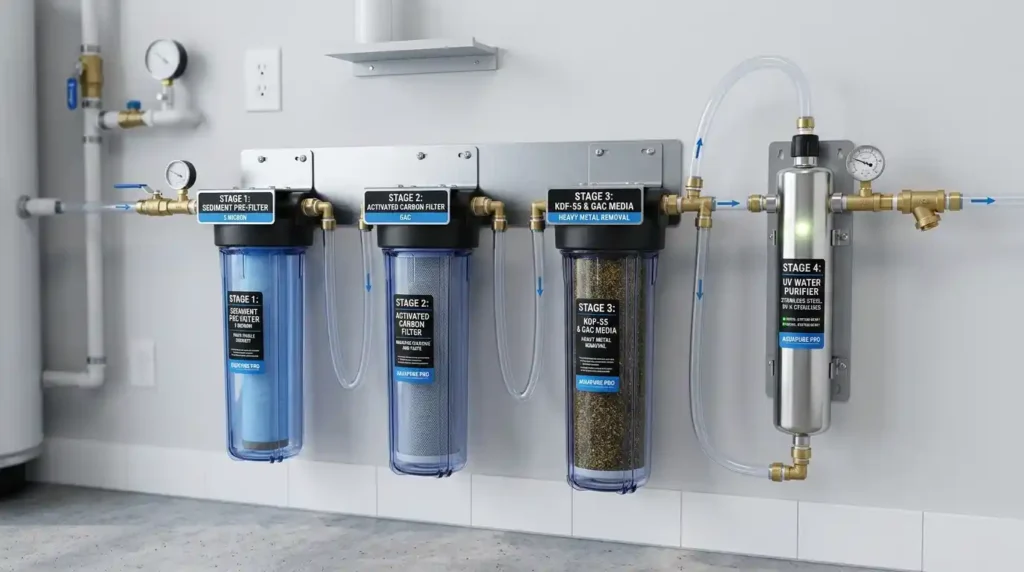
The water filtration system market has expanded significantly, and understanding the underlying technology prevents expensive mistakes. Multi-stage filtration is the standard architecture for whole house systems a sediment pre-filter handles turbidity, sand, silt, rust, and dirt particles first. This helps protect each downstream filtration stage and significantly increases the overall lifespan of the filters.
From there, the treatment path diverges based on water quality. Activated carbon also sold as activated charcoal handles VOC removal, volatile organic compounds, chlorine, chloramine, odor removal, taste improvement, and many pharmaceuticals, herbicides, and pesticides.
Catalytic carbon goes further, addressing chloramine more aggressively and providing a stronger chemical reduction baseline. KDF filter media adds heavy metals protection including lead removal and arsenic removal at the molecular level.
Hard Water Households
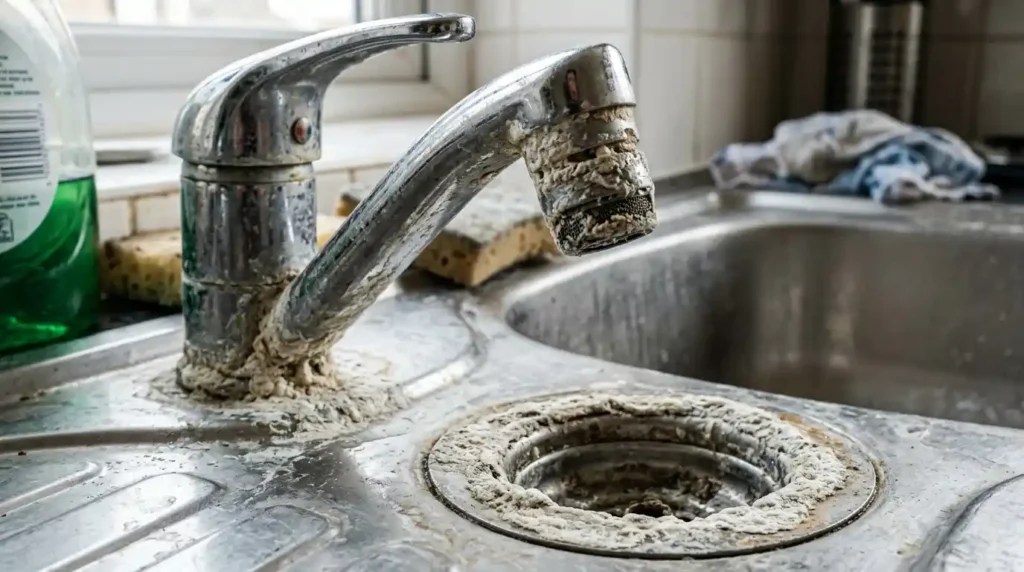
For hard water households which covers most of London, significant portions of Germany, and large areas of the American Midwest and Southeast the choice between a water softener and a whole house filter is actually a false one. These address different problems. Ion exchange in a salt-based softener removes calcium buildup and magnesium that create hard water scale and radiator scale.
A salt free water softener using template assisted crystallization or TAC technology prevents limescale without removing minerals better for drinking water mineral content, gentler on the environment, no brine tank, no regeneration cycle, no salt usage, and no wastewater going down the drain line.
UV water purifier post-treatment adds ultraviolet purification as the final stage delivering 99.9% removal of bacteria, virus, and cyst contamination including giardia and cryptosporidium without adding any chemicals to the water supply.
Matching the Right System to Your Water Problem
Water hardness, measured in grains per gallon or GPG, determines whether limescale prevention is your primary concern. The UK hard water map and European water hardness data show that London hard water, German water quality challenges, and significant French water standards variations all point toward scale prevention as the dominant whole house concern on that side of the Atlantic.
In Canada and Australia, water quality varies dramatically by region Canadian drinking water guidelines and Australian water standards both recommend testing before purchasing any whole house water filter system.
Municipal Water Users
For municipal water users in the US, the EWG water database search by zip code provides a contaminant report that identifies exactly which NSF certified filtration standard applies. NSF 42 covers aesthetic improvement taste and odor. NSF 53 covers health-based contaminant reduction including lead removal and VOC removal.
NSF 58 applies to reverse osmosis systems. NSF 401 addresses emerging contaminants including PFAS removal, pharmaceuticals, and microplastics. NSF 44 covers ion exchange softeners. Matching your water test results to the correct NSF certification standard prevents buying a system that filters the wrong things.
For serious contamination particularly arsenic removal, nitrate removal, fluoride removal, or PFAS removal a whole house RO system delivers the most complete treatment through nanofiltration and reverse osmosis. The trade off is water waste to the drain and a pressure drop that affects GPM flow rate throughout the house. A bypass valve helps regulate the system during periods of high water demand.
The Real Cost Breakdown Nobody Shows You
Whole house filter cost ranges from around $200 for a basic Big Blue filter housing with a single sediment cartridge up to $3,000 to $5,000 for a premium multi-stage system with UV post-treatment, automatic backwash iron filtration, and salt-free scale prevention built in. The brands that consistently appear in independent testing and third party tested comparisons include Aquasana, SpringWell, iSpring, Pelican, Culligan, Home Master, Express Water, and 3M Filtrete.
GE and Whirlpool offer budget filter entry points. Big Blue housing with 10-inch or 20-inch cartridge options suits DIY installation well given the straightforward 1-inch or 3/4-inch connection requirements.
Annual Running Cost
Annual running cost is where systems diverge most sharply. A salt-based softener adds salt usage cost, electricity usage for the regeneration cycle, and plumber visit fees if the brine tank requires servicing. A backwash filter with automatic backwash reduces filter cartridge replacement frequency dramatically filter replacement costs on a standard carbon filter cartridge running a family of four add up to real money over five years.
Filter lifespan claims of 100,000 gallons, 500,000 gallons, or 1,000,000 gallons need to be read against your actual household water usage rather than taken at face value.
Professionally installed systems add installation cost typically ranging $200 to $600 for labor depending on access to the main water line, existing shut-off valve placement, and whether a bypass valve needs retrofitting. DIY installation is genuinely achievable for most homeowners with basic plumbing confidence given that most whole house filter housing connects at the point of entry before the water heater and branches to the entire home supply.
What Better Water Actually Does to Your Home
Pipe protection and plumbing protection from scale prevention extends the functional life of every fixture and appliance in the house. Boiler protection and combi boiler longevity improve measurably when scale is removed from the equation radiator scale reduces heating efficiency and drives up energy costs over time. Dishwasher protection, washing machine protection, and faucet lifespan all benefit from water that no longer deposits calcium buildup on heating elements and seals.
Skin Health Improvements
Skin health improvements specifically reduced dry skin and eczema flare-ups are among the most immediately noticeable benefits reported by households switching from hard chlorinated water to filtered soft water. Hair health responds similarly. The difference between bathing in filtered water versus unfiltered municipal water is something most people notice within the first two weeks.
From a home improvement ROI and property value perspective, whole house water filtration is increasingly appearing as a positive line item on home inspection reports and real estate disclosure documents particularly in areas where water contamination and boil water advisory history has affected property perception.

Buyers in London, Flint Michigan area properties, and regions with known PFAS contamination are paying specific attention to water quality disclosure as part of due diligence. A certified, properly installed whole house water filter system addresses that concern directly and visibly.
Smart water filter technology WiFi water monitor integration, water usage tracker functionality, leak detector alerts, and flow sensor monitoring brings whole house water filtration into the smart home ecosystem in a way that adds genuine practical value beyond simply clean water at every tap.
Conclusion
A whole house filtration system isn’t just an indulgence but rather a necessity, one which protects the health of you and your loved ones, the pipes in your house, any other appliances that depend on water, and ultimately your home’s value as a whole, at the same time. It does not matter whether your primary concern is the removal of PFAS contaminants, getting rid of the hard-water build-up, eliminating chlorine taste or even ensuring that you know for sure that the water coming out of every faucet is actually clean the solution can be found when you test your water, identify your contaminant and match up your NSF Certified technology accordingly.
The general trend occurring in today’s time in the USA, UK, Germany, France, Canada, and Australia is that homeowners do not need to rely on advice of a boil water notice or news headlines about water contamination to understand the significance of water quality anymore. Advancements in the field of smart water filtration technology, along with the extended life of filters and relatively cheaper costs of whole-house water filters, have made the luxury of professional water treatment available for most homeowners regardless of their budget.
FAQs
A whole house water filter, also called a point-of-entry or POE filter, treats every drop of water entering the home before it reaches any tap, shower, or appliance, rather than just one faucet or the water going into a single pitcher. It typically installs near the main water line before the water heater, so filtered water branches out to the entire home supply instead of one isolated fixture.
The Housing Register is the official list you join first, and it determines your eligibility and priority band (A through D) based on factors like local connection, income, and medical or welfare need. Locata is the separate online portal you use afterward to actually browse and bid on available properties once you’ve been accepted onto the register, with homes advertised and allocated weekly based on your priority band and time on the list.
Start by testing your water with a TDS meter and test kit, or for municipal supplies, checking your zip code against the EWG water database and your Consumer Confidence Report for known contaminants. From there, match your results to the right NSF certification, for example NSF 53 for lead and VOC reduction or NSF 401 for PFAS and emerging contaminants, since buying a system without doing this step risks filtering the wrong things entirely.
Basic single-cartridge setups start around $200, while premium multi-stage systems with UV treatment and automatic backwash iron filtration can run $3,000 to $5,000. Beyond the upfront cost, ongoing expenses include filter cartridge replacements and, for salt-based softeners, salt and electricity for the regeneration cycle, so it’s worth weighing annual running costs alongside the sticker price before choosing a system.
DIY installation is realistic for homeowners with basic plumbing confidence, especially with Big Blue-style filter housings that connect via standard 1-inch or 3/4-inch fittings. Professional installation typically adds $200 to $600 in labor and makes more sense when access to the main line is complicated or a bypass valve needs to be retrofitted into the existing plumbing.
NSF certification confirms a filter has been independently tested to reduce specific contaminants, and different numbers cover different jobs. NSF 42 covers taste and odor improvement, NSF 53 covers health-based contaminants like lead, NSF 58 applies to reverse osmosis systems, and NSF 401 covers emerging concerns like PFAS and microplastics, so checking the number against your actual water test results is what prevents buying the wrong system.


4 thoughts on “Whole House Water Filtration by Active Property Care: The Complete Guide to Clean Water at Every Tap”