
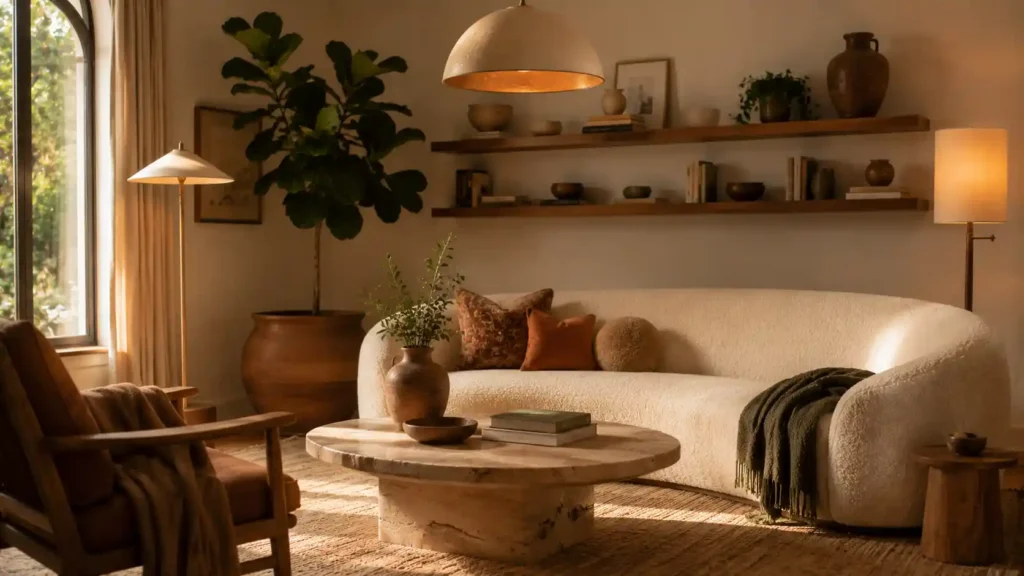
Three weeks after finishing my first properly “decorated” living room, I hated it. The sofa was too big for the wall it sat against. The overhead light made everything look clinical. Nobody naturally gravitated toward the seating area they’d drift in, stand awkwardly near the door, then kind of arrange themselves wherever there happened to be space. The room looked fine in photos. In actual daily life it was frustrating to be in.
The second time around I did something different: I thought before I bought. Not weeks of agonising just an honest hour of sitting in the empty room asking what it actually needed to do. That shift alone changed everything. These ideas for designing a living room come from that experience, and from watching enough other people skip the same step and end up with the same regret.
Why ideas for designing a living room have to start with the room’s job, not its look
Most people open a decorating project by scrolling through photos. That’s not necessarily wrong getting a feel for what appeals to you is genuinely useful. But the mistake is treating that browse as a plan. A living room that works for one household’s daily life might be completely wrong for another’s, regardless of how beautiful it looks in a shoot. Function has to come first.
Ask yourself honestly: is this an entertainment hub centred around a wall-mounted television, a family living room that needs to survive both movie nights and Tuesday afternoons, a quiet reading nook, a space for yoga and reflection, or some combination? Most rooms can handle two or three functions comfortably. Push past that and the space starts pulling apart never quite committing to anything, never fully working for anything.
The floor plan step almost everyone skips
Why layout decisions cost the most to get wrong
Before a single piece of furniture gets ordered, sketch the floor plan. You genuinely don’t need AutoCAD or Revit for this the magicplan app handles basic room measurement via phone camera and generates a workable 2D floor plan in a few minutes. What you’re checking is whether your chosen furniture will actually fit at the right scale, and whether any furniture arrangement leaves 36 inches of walkway clearance on the main traffic paths through the room.
That 36-inch number sounds technical but it’s simple in practice: if you constantly brush past a chair to get to the kitchen, the room will never feel relaxed, however good it looks. An awkward living room layout L-shaped rooms, narrow rooms, rooms with doors on multiple walls is exactly where an hour with a floor plan prevents months of low-grade irritation. A virtual interior design service offering real-time layout suggestions can help here if the room is genuinely puzzling, but honestly the magicplan sketch solves most problems before they cost anything.
Zoning an open plan living room without building walls
What rugs, lighting and furniture placement actually do
Ideas for designing a living room that flows directly into a kitchen or dining area require a slightly different mindset. Without physical walls you have to create structure through other means and the area rug does more of that work than anything else. A large rug anchoring the seating group creates a clear visual boundary. It says “lounge area starts here” without any physical division. It works. Consistently. And yet a surprising number of open plan living rooms skip it entirely.
Layered lighting reinforces this zoning further. Ambient lighting from a chandelier or pendant lighting overhead combined with floor lamp sources at lower heights creates warmth and enclosure that overhead-only lighting never achieves. In open plan spaces especially, getting layered lighting right is what stops the living room feeling like an extension of the kitchen rather than its own distinct space. Natural lighting openings windows kept as clear as possible, curtains that stack completely off the glass should be maximised before any artificial lighting gets added on top.
Focal point first — the principle that fixes most living room layout problems
Every well-designed living room has one thing that the eye goes to first, and that everything else responds to. A fireplace focal point. A media wall. A significant window with a genuine view. A piece of large-scale art. Whatever it is, the seating plan should face toward it, and the room’s main sightline should arrive at it naturally.
The mistake is letting the television become the default focal point in rooms where something better exists. A living room with a fireplace should let that be the anchor. The TV can sit elsewhere mounted to a side wall, set on a slim console table at an angle without dominating the room’s entire geometry. Once the focal point is genuinely established, the furniture layout stops being a puzzle and starts having an obvious solution.
Building the seating plan that makes people actually want to sit down
Sofas, armchairs, and what the conversation pit gets right
A plush sofa or curved sofa facing the focal point is the primary piece, full stop. An armchair or two flanking it creates something close to a conversation pit layout people face each other slightly rather than staring in parallel at a screen, which changes the whole feel of an evening in the room. The curved sofa specifically deserves more credit than it gets in ideas for designing a living room. It creates natural enclosure that pulls a group together physically, which is something straight-edged sectional sofas simply don’t do in the same way.
For small living room situations, pair a deep-seat sofa with one leggy armchair and keep everything else off the floor. Open-framed pieces nesting tables, a pouf, an ottoman take up visual space without blocking sightlines. A storage ottoman handles dual duty: seating when you need it, surface when you don’t, hidden storage always. Scale the coffee table properly to the sofa this matters more than most people think. Too large and the room feels crowded; too small and the sofa looks stranded.
What actually works in compact and awkward spaces
Multifunctional furniture and the three-things rule in practice
Ideas for designing a living room in a small or compact space come down to one thing: not fewer pieces, but better-chosen pieces. A modular sofa reconfigures as the room’s needs shift. A sofa bed extends the room’s function without requiring a dedicated guest room. Folding tables disappear between uses. Every piece should justify its square footage and if it can’t explain itself in terms of daily usefulness, it probably shouldn’t be there.
Colour does real spatial work in compact rooms. A black and white combination with reflective materials like glass and light oak reads as bright and open. Soft beiges and muted earthy palettes keep walls receding. A half-wall tile design adds texture in a way that doesn’t reduce the sense of space that painted plaster maintains. Choose bright, light-reflecting materials wherever function allows, and save dramatic dark colours for accent pieces that can be moved.
Colour and materials — the choices that outlast trends
Colour decisions for ideas for designing a living room sit in one of two camps. Palettes that chase current trends, and palettes built around personal preference and genuine longevity. Both have their place but confusing them leads to repainting walls two years in because a fashionable colour stopped feeling right. Apply trends in swappable things: cushions, throws, artwork. Invest in permanence where it’s expensive to reverse.
Earthy tones remain the most consistently liveable choice across time. Warm browns, deep greens, sage, terracotta, ochre these work across Japandi style, farmhouse living rooms, quiet luxury aesthetics, and mid-century modern settings equally. They age toward character rather than datedness, which is exactly what you want from a paint colour you’ll be living with for years.
Sustainable materials worth actually investing in
Reclaimed wood, bamboo, and the real cost of buying cheap
Reclaimed wood, bamboo, natural stone, recycled metals, light oak these materials age well because they develop character rather than just wearing down. Eco-friendly materials and non-toxic materials also improve the daily indoor environment of a room people spend real time in. Vegan leather and bouclé fabric have become serious upholstery options; high-resiliency foam in custom upholstery maintains its form across years of daily use. Cheap alternatives compress permanently within months. That’s a false economy at any price point, and it’s one of the most common mistakes in budget living room ideas spending less on furniture and then replacing it faster.
Sustainable furniture, almost without exception, is better-made furniture. The production values that support longevity and ethical sourcing tend to arrive together, which makes the decision easier than it might otherwise seem.
Biophilic design — plants, light, and what sensorial design actually means in practice
Bringing natural elements in without making it look like a garden centre
Biophilic integration deliberately incorporating natural elements into interior spaces is consistently one of the most effective ideas for designing a living room that feels genuinely restorative. A fiddle leaf fig in a corner, clusters of potted plants on floating shelves, green plants on a console table these introduce movement, changing colour, and improved air quality simultaneously. Organic elements and nature-inspired decor throughout the room reinforce the effect: linen fabric cushions, natural fibre floor cushions, a light oak media wall, an aromatherapy diffuser on a side table.
Natural light maximisation should happen at the planning stage, not as an afterthought. Curtains that stack fully off the glass when open, pleated fabric blinds that let light in while maintaining privacy, window arrangements that avoid heavy blocking treatments these decisions shape how the room feels at a level that no amount of artificial ambient lighting can compensate for. Natural light first, layered artificial lighting second. In that order, consistently.
Conclusion
Ideas for designing a living room work when they follow a sequence rather than a scatter. Function first. Floor plan before furniture. One clear focal point. Seating built around it. Colours and materials chosen for longevity. Lighting layered deliberately. Natural elements brought in wherever the room allows. Work through that order and the finished room feels considered rather than assembled which is the difference, in practice, between a living room that photographs well once and one that you actually want to spend time in.
Frequently Asked Questions
Start with function rather than aesthetics. Decide what the room needs to do entertainment, relaxation, family use and limit yourself to three functions maximum. Every layout and furniture decision follows from that starting point rather than from a mood board.
Use open-framed furniture, a large area rug to anchor the zone, light muted earthy colour palettes, and wall-mounted TV placement to recover floor space. Multifunctional furniture and a storage ottoman both add utility without reducing the sense of openness.
The focal point. Every well-functioning furniture arrangement responds to one clear anchor a fireplace, a media wall, a significant window. Establish that first and the seating plan solves itself. Skip it and no arrangement will ever feel quite right.



1 thought on “Ideas for Designing a Living Room That Actually Works — 9 Brilliant Strategies to Avoid Costly Mistakes”