
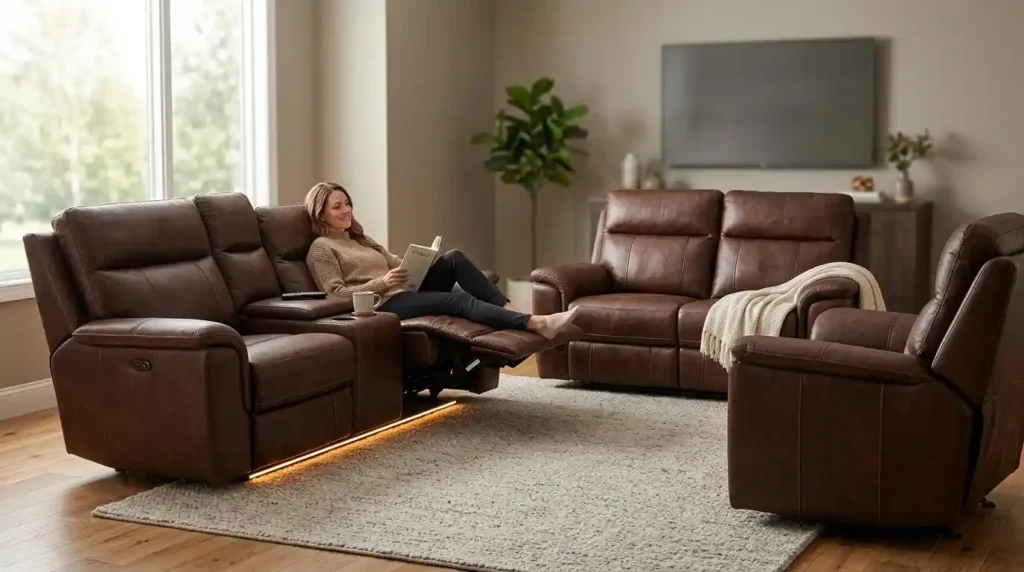
A massage recliner feels incredible for the first ten minutes in a furniture showroom, which is exactly the problem showroom testing tells you almost nothing about six months of actual daily use. A living room set with heat and massage function is a genuinely appealing idea for anyone dealing with chronic tension or just wanting more comfort out of their evening routine, but the gap between “felt amazing in the store” and “still works great a year later” is wider than most buyers expect. This covers what actually separates a good set from a disappointing one, the specific features worth prioritizing, and the maintenance reality nobody mentions before you buy.
What “Heat and Massage” Actually Means Across Different Products
This category covers a genuinely wide range of quality and function, and understanding the spread matters before you start comparing prices. Entry-level sets typically use simple vibration motors and basic heating elements in the lumbar area only, while higher-end options use multi-zone massage with adjustable intensity and heat that extends through the back, seat, and sometimes footrest.
The price difference between these tiers is substantial, and it’s not purely markup better motors last longer, heat elements distribute more evenly, and multi-zone systems target actual muscle groups rather than just vibrating generally. Before buying based on price alone, understand which tier you’re actually looking at, since two products both marketed as “massage and heat” can deliver meaningfully different experiences.
Is Vibration Massage the Same as Shiatsu-Style Massage in Furniture?
No, and this distinction matters more than most buyers realize. Vibration massage uses motors that create general buzzing sensation across a surface, while shiatsu-style systems use rolling or kneading mechanisms that mimic actual hand pressure on specific points. Shiatsu-style tends to feel more genuinely therapeutic for muscle tension, while vibration is more of a general relaxation feature.
The Durability Question Nobody Asks Before Buying
Here’s the honest issue with this category: the electronic components motors, heating elements, wiring are exactly the parts most likely to fail over time, and they’re also the parts hardest and most expensive to repair once something breaks. A basic sofa with no electronics might outlast its fabric by decades; a massage-and-heat set has a genuine mechanical lifespan on the functional features specific to why you bought it, separate from how long the upholstery itself lasts.
Ask directly about the warranty terms on the massage and heat mechanisms specifically, not just general furniture warranty language. A lot of warranties cover frame and fabric for five to ten years but cover the electronic components for only one or two, which tells you something real about how long the manufacturer actually expects those parts to function reliably.
How Long Do Massage Motors in Furniture Typically Last?
Quality motors in mid-to-high-end sets generally hold up for several years of regular use, though exact lifespan varies significantly by manufacturer and usage frequency. Budget sets with basic vibration motors tend to show wear reduced intensity, uneven function considerably sooner, sometimes within the first year of daily use.
Power and Placement Considerations Most People Overlook
A living room set with heat and massage function needs to be near an accessible outlet, which sounds obvious until you’re actually arranging furniture and realize your ideal layout puts the recliner on the opposite side of the room from any outlet. Plan your layout around power access before falling in love with a specific arrangement, since extension cords running across a living room floor are both a tripping hazard and generally not something you want visible in your finished space.
Wireless remote-controlled models solve the control-access problem but still require the unit itself to be plugged in continuously or charged regularly, depending on whether it’s corded or battery-powered for the massage function specifically. Check this detail before buying if outlet placement is a real constraint in your space.
Do These Recliners Need to Stay Plugged In All the Time?
Most do, yes the massage and heat functions typically require continuous power access rather than running on a rechargeable battery, which means outlet placement is a genuine practical constraint on where the piece can go in your room, not just an aesthetic preference.
Comfort Features Worth Prioritizing Over Gimmicks
Adjustable intensity settings matter more than the number of massage “modes” a product advertises. A set with three genuinely adjustable intensity levels across a couple of zones is more useful day to day than one bragging about twelve preset modes that mostly feel identical once you’re actually sitting in it.
Heat that’s independently adjustable from the massage function is a feature worth specifically checking for, since some people want heat without massage (for general warmth on a cold evening) or massage without heat (if heat feels like too much in warmer months). A set that only offers both together, on or off as a single combined setting, is meaningfully less flexible than one letting you control each independently.
Should I Prioritize More Massage Zones or Better Heat Distribution?
It depends on your actual reason for buying if chronic back or shoulder tension is the goal, prioritize genuine multi-zone massage with adjustable intensity over heat features. If general relaxation and warmth matter more than targeted therapy, even distribution of heat across a larger surface area matters more than a high number of massage zones you may rarely use individually.
Fabric and Cleaning Realities With Built In Electronics
Electronics inside upholstered furniture complicate cleaning in ways that aren’t obvious until you’re dealing with a spill. You can’t simply remove and wash cushion covers the way you might with a standard sofa, since the massage and heating elements are typically built into the cushion structure itself rather than sitting under a removable cover.
This makes fabric choice more important than it would be on standard furniture. A stain-resistant, easy-wipe fabric matters considerably more here than on a sofa where you could theoretically remove and launder covers if something spills.
Conclusion
A living room set with heat and massage delivers genuine comfort value when you buy the right tier for your actual needs and understand the durability tradeoffs upfront. Prioritize independently adjustable heat and massage, check warranty terms specifically for the electronic components rather than just the frame and fabric, and plan your room layout around outlet access before committing to a specific arrangement. Get these decisions right, and you’ll have furniture that still delivers real comfort years in, not just during that irresistible first ten minutes in the showroom.
FAQs
Worth it if you’ll actually use the features regularly the price premium over a standard recliner pays for real motors and heating hardware, not marketing language. Mostly want reclining comfort and won’t touch massage or heat much? A well-padded standard recliner might serve you just as well for less.
Most models include an automatic shutoff timer, commonly somewhere in the 15-to-30-minute range, built specifically to prevent extended unsupervised use. Stick to whatever the manufacturer lists as the max session length, and if you’ve got any underlying circulation or skin-sensitivity issues, check with a doctor before regular use of heated massage seating.
Air massage uses inflatable bladders that apply gentle, rhythmic pressure through inflation and deflation cycles. Vibration massage uses small motors that create more of a buzzing sensation right at the seat’s surface. Air massage feels deeper, more like pressure-point work; vibration massage stays closer to a surface-level buzz.
Most reclining sofas and loveseats are built to fit through a standard 30-to-36-inch doorway, though larger sectionals with a built-in chaise sometimes need to come apart for delivery. Check the manufacturer’s listed boxed dimensions against your doorway and hallway measurements before ordering especially for bigger multi-piece sets.