Why Gate Material Matters
Your gate does two jobs at once, and people often forget the second one. It’s security, obviously the first physical barrier between your property and whoever’s walking up. But it’s also the first design element anyone actually notices, before they’ve even reached your front door. With iron, wood, vinyl, and aluminum all competing for your attention, picking the right one really comes down to weighing security against style against how much upkeep you’re actually willing to deal with. Here’s how they stack up against each other.
1. Wrought Iron Gates
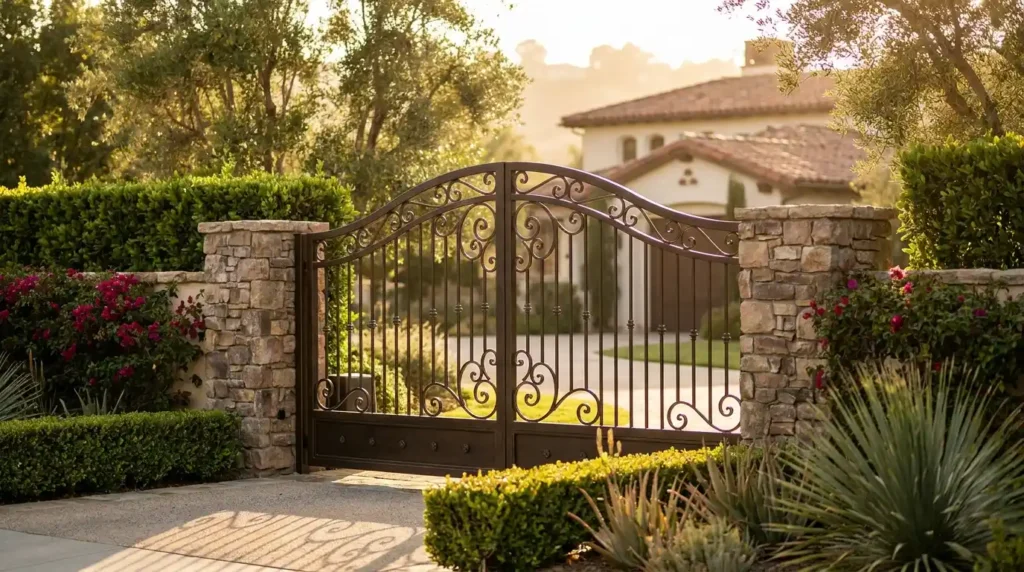
Iron’s reputation isn’t accidental. It’s earned through genuine strength, a design language that’s stayed relevant for centuries, and near-total customization. Want elaborate scrollwork? Fine. Want something stripped-down and modern? Also fine. Few materials let you move between those two extremes while keeping the same underlying durability, which is really the whole appeal in one sentence.
2. Wood Gates
There’s a warmth to wood that’s hard to argue with. It just fits a huge range of home styles naturally. The catch is maintenance. Left unattended, wood warps. It rots given enough moisture exposure, and insects find their way in more often than people expect. Weather just chips away at wood over time in a way metal simply doesn’t experience, and that gap widens the longer you own the gate.
3. Vinyl Gates
Budget-conscious homeowners gravitate toward vinyl, and it’s easy to see why. No rotting, no repainting, low upfront cost. But here’s the tradeoff: nobody skips mentioning vinyl just isn’t strong. It won’t match iron’s presence, either visually or structurally, so if security or a premium look matters to you, vinyl usually falls short.
4. Aluminum Gates
Aluminum solves the rust problem entirely, and it’s genuinely lightweight, which makes installation easier in a lot of cases. It’s also cheaper than iron, generally. What you’re giving up is that heft aluminum just doesn’t carry the same substantial, high-end feel iron does, and it won’t match iron’s strength either, if that’s a priority for your specific property.
5. Comparing Security and Durability
Put these materials side by side on security, and iron wins pretty consistently. Solid construction, real resistance to forced entry wood, vinyl, and aluminum just don’t compete on that front. If your property genuinely needs both curb appeal and real protection, iron ends up being the combination that actually delivers both, not just one or the other.
6. Comparing Maintenance Requirements
Wood asks for regular refinishing, full stop, no way around it. Vinyl can crack once temperatures swing to extremes, which is more common than people expect depending on climate. Iron, properly coated, mostly just needs an occasional wipe-down and the odd finish touch-up. That’s a genuinely different maintenance category than the other three materials.
7. Comparing Style and Customization
Nothing quite matches iron here, honestly. The intricate scrollwork, the custom patterns, finishes tailored to a specific property wood, vinyl, and aluminum can approximate some of this, but not at the same level of detail. For homeowners chasing something that actually feels unique rather than mass-produced, iron’s design flexibility is hard to beat.
8. Comparing Long-Term Cost
Iron costs more upfront. That’s just true, and there’s no getting around it. But stretch the timeline out, and the math shifts durability and minimal upkeep mean you’re not constantly repairing or replacing the gate the way you might with materials that degrade faster. Over a decade or two, iron often ends up cheaper in practice, even with the higher starting price.
9. Electric Gate Compatibility
Automated systems need real structural strength to operate reliably over years of daily use, and iron delivers that in a way lighter materials sometimes struggle with. Pairing iron with an electric gate system gives you both the security benefit and the everyday convenience of not manually opening a gate every time you pull into the driveway.
10. Choosing the Right Gate for Your Property
There’s no single correct answer here; it genuinely depends on what you’re prioritizing. Maximum security, minimal maintenance, a specific architectural look, or some balance of all three. Talking to an experienced iron works specialist helps you actually weigh these tradeoffs against your specific property and budget, rather than guessing.
With years of hands-on craftsmanship serving Southern California, kimironworks.com specializes in custom wrought iron gates, fencing, and railings designed to combine lasting durability with elegant, tailored design.
Conclusion
Choosing between wrought iron, wood, vinyl, and aluminum gates comes down to balancing security, style, and long-term maintenance needs. For homeowners and businesses seeking lasting durability and custom design, wrought iron remains one of the strongest choices on the market.
FAQs
Iron gates typically have a higher upfront cost, but their durability and low maintenance often make them more economical in the long run.
Yes, wrought iron gates are commonly paired with electric gate systems for added convenience and security.
With proper protective finishes and occasional maintenance, quality wrought iron gates are highly resistant to rust and corrosion.