
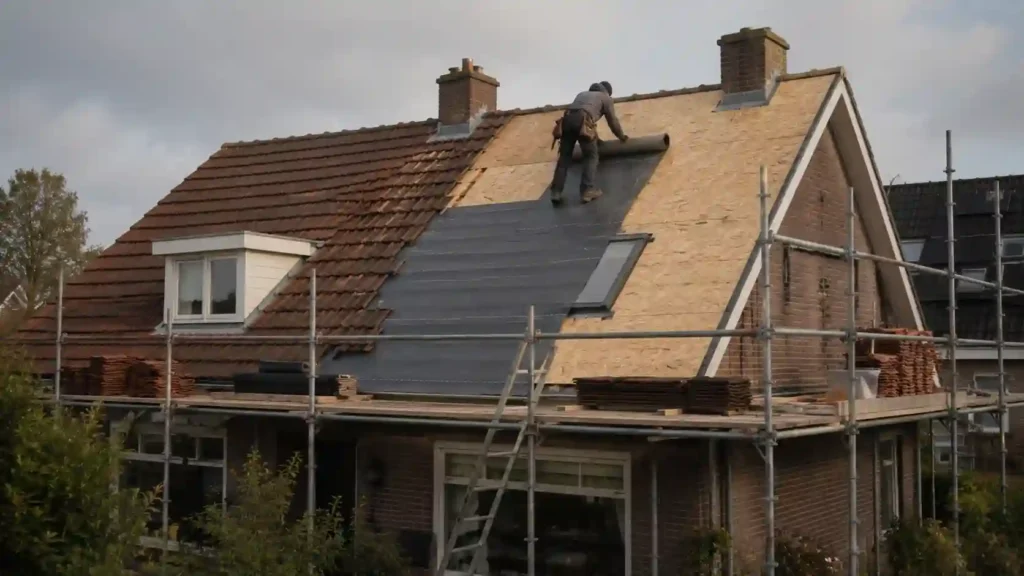
Ask five roofing contractors for a quote and you’ll get five numbers that don’t seem to relate to each other. Which is exactly why “how much is a new roof” is such a frustrating search. The honest answer is that it depends heavily on material, roof size. And how complicated your specific roof shape is but within those variables. Real ranges exist that I can actually walk you through rather than just saying “it varies.” This covers what a typical roof actually costs by material type. Why two quotes for the same house can differ by thousands of dollars. And the specific line items that quietly inflate a bid beyond what the base numbers suggest.
The Baseline Numbers Most People Actually Need
For a standard 2,000-square-foot roof the most common size for a mid-sized single-family home asphalt shingle replacement typically runs somewhere between $8,000 and $16,000 installed. Depending heavily on region and shingle quality. That’s a wide range, but it’s not arbitrary. It reflects the difference between basic three-tab shingles and architectural shingles with a longer warranty. Plus significant regional labor cost variation.
Metal roofing runs considerably higher, typically $16,000 to $30,000 for the same size home. But lasts two to three times longer than asphalt in most cases. Which changes the actual cost-per-year math meaningfully once you account for lifespan rather than just upfront price. Tile and slate sit at the premium end, often exceeding $30,000, and genuinely require structural verification first. Since both materials are considerably heavier than asphalt or metal.
Why Do Roofing Quotes Vary So Much for the Same House?
Material choice, roof complexity, and regional labor rates explain most of the gap between quotes. A roof with multiple angles, valleys, and dormers costs. Meaningfully more to install than a simple gable roof of the same square footage. Since complexity adds labor time regardless of material.
What Actually Drives the Price Beyond Square Footage
Square footage gets all the attention, but roof pitch and complexity often matter just as much for the final number. A steep roof requires additional safety equipment and slows down installation significantly compared to a low-slope roof of identical size. And most contractors build this into their pricing as a pitch multiplier rather than a flat per-square-foot rate.
Tear-off and disposal of your old roof is another line item that catches people off guard. Removing existing shingles, hauling away the debris. And disposing of it properly typically adds a meaningful chunk to the total project cost and if you’ve got multiple layers of old shingles already on the roof. Removal costs climb further since more material needs to come off before new roofing can go on.
Does Roof Pitch Really Change the Price That Much?
Yes, genuinely steep roofs (generally anything beyond a moderate slope) require safety harnesses, additional labor time. And sometimes specialized equipment. Which contractors typically price as an added percentage on top of the base rate rather than absorbing into standard pricing.
Should I Worry About Multiple Layers of Old Shingles?
Yes, if you know or suspect your roof has more than one layer already. Most building codes limit roofs to two layers of shingles maximum, and if you’re already at that limit. A full tear-off becomes mandatory rather than optional, adding real cost you should budget for upfront rather than discovering mid-quote.
Reading a Quote Without Getting Blindsided
A genuinely detailed quote breaks out material costs, labor costs, tear-off and disposal. And any structural repairs separately, rather than bundling everything into one number. If a contractor gives you a single total with no breakdown. Ask for one directly a legitimate contractor should have no problem itemizing this.
Underlayment quality is a detail that gets glossed over constantly but affects both performance and price. Synthetic underlayment costs more than traditional felt paper but performs better in extreme weather. And a contractor swapping in cheaper felt without mentioning it is a subtle way quotes get artificially lowered to win the bid, then quietly upgraded (at extra cost) once work begins.
What Hidden Costs Should I Watch for in a Roofing Quote?
Structural repairs found once old roofing comes off are the most common surprise cost, since rotted decking or damaged rafters aren’t always visible until the old roof is removed. A reasonable contractor flags this as a possibility upfront with a rough per-sheet repair estimate, rather than presenting the initial quote as guaranteed final pricing.
Getting Multiple Quotes That Actually Compare Fairly
Get at least three quotes, and specifically ask each contractor to itemize material grade, labor, tear-off, and any structural contingency separately. Comparing bundled totals across contractors tells you almost nothing useful, since one company’s “complete roof replacement” might include premium underlayment and ridge venting while another’s identical-sounding quote is bare minimum.
Ask directly about warranty terms too a roof with a 25-year manufacturer warranty on materials plus a separate workmanship warranty from the contractor is meaningfully different from one with material warranty only and no coverage on installation quality. The cheapest quote with the weakest warranty terms often costs more over the life of the roof than a moderately higher quote with genuine coverage behind it.
When a Repair Makes More Sense Than Full Replacement
Not every roofing problem requires answering “how much is a new roof” at all. Localized damage a section of missing shingles after a storm, a single leak around a chimney flashing is often repairable for a few hundred to low thousands of dollars rather than requiring full replacement, provided the rest of the roof is structurally sound and not near the end of its expected lifespan.
The general rule worth knowing: if your roof is under 15 years old and the damage is localized, get a repair quote first. If you’re seeing widespread granule loss, multiple leak points, or your roof is already past 20 years old, a repair often just delays an inevitable full replacement while you keep paying for patches.
Conclusion
How much is a new roof really depends on material choice and roof complexity more than any single average figure can capture, but knowing the real ranges asphalt in the $8,000 to $16,000 range for a typical home, metal considerably higher but longer-lasting, tile and slate at the premium end gives you a genuine starting point rather than guessing blind. Get multiple itemized quotes, ask directly about underlayment quality and warranty terms, and don’t assume the lowest number is the best deal until you know exactly what’s included in it.
FAQs
A proper roof quote covers far more than just materials — it should account for labour, scaffolding hire, old roof removal and waste disposal, and a contingency for hidden damage discovered once the old covering comes off. An itemised quote that breaks these out separately is the sign of a contractor who knows their numbers, while a single lump-sum figure with no breakdown is worth treating with caution.
Tear-off, which removes the old roof completely before installing new material, costs more upfront but allows proper inspection of the decking and structure underneath and correct fitting of all flashing. Overlay, laying new shingles directly over the existing layer, is cheaper initially but adds weight to the structure, can trap moisture, and may void the warranty on some materials, which is why tear-off is almost always the better long-term choice.
The gap almost always comes down to what each contractor is actually including in their number and whether they physically inspected the roof or estimated from the street. Since labour typically accounts for 40 to 60 percent of the total cost depending on complexity and access, differences in how thoroughly a contractor accounts for tear-off, disposal, and hidden damage can shift quotes by thousands even for identical roofs.
It depends on the cause — insurance typically covers roof damage from weather events like storms, but the claims process requires proper documentation and coordination with a roofing company to assess the damage. It’s worth investigating a claim specifically if the damage was storm-related, since coverage isn’t automatic and depends on your specific policy terms.



2 thoughts on “How Much Is a New Roof? Real Numbers for a 2,000 Sq Ft House in 2026”