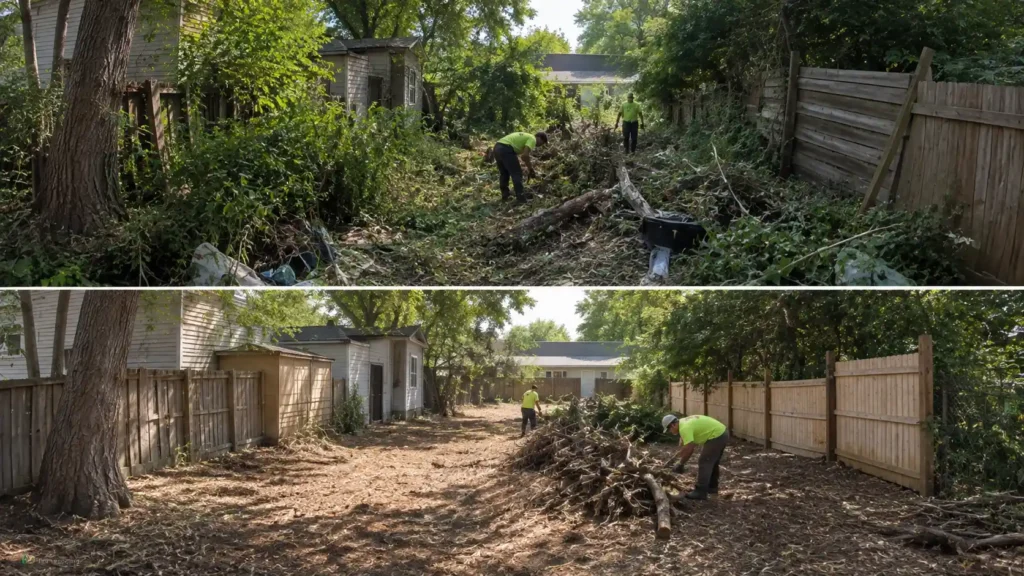
Overgrown lots and neglected properties can accumulate years of vegetation, discarded
materials, damaged outdoor features, and general debris. What initially looks like a
simple mowing or brush-clearing job may involve fallen branches, hidden trash, broken
fencing, old furniture, construction scraps, and dense plant growth.
A structured cleanup strategy helps keep the work manageable. Whether the goal is
preparing a property for sale, renovation, landscaping, or routine maintenance,
organizing the project into clear stages can reduce repeated handling and make
progress easier to see.
Inspect the Property Before Clearing
Begin with a complete walkthrough before cutting vegetation or moving large objects.
Tall grass and brush can hide holes, rocks, wire, broken glass, discarded metal, and
other hazards that are difficult to see from a distance.
Look for unstable structures, damaged fencing, abandoned equipment, drainage
problems, and areas where vegetation has grown around utilities or exterior features.
Mark locations that require extra caution so workers do not encounter them
unexpectedly.
The inspection also provides a better estimate of how much material the cleanup will
produce.
Divide the Property Into Work Zones
Large neglected properties can become overwhelming when everything is treated as
one cleanup area. Breaking the site into smaller sections creates a more organized
workflow.
Crews might begin near the driveway or primary entrance and work progressively
toward the rear of the property. Each zone can be cleared, sorted, and inspected before
work moves to the next section.
This approach also keeps cleared areas available for equipment movement and debris
staging instead of allowing new piles to appear throughout the lot.
Remove Visible Trash First
Loose trash, abandoned household items, containers, and other surface debris should
generally be collected before heavy vegetation clearing begins. Removing these items
makes it easier to see the ground and reduces the chance that equipment will run over
hidden objects.
Separate bulky items from smaller trash whenever practical. Appliances, tires,
electronics, chemicals, and other restricted materials may require different handling
than ordinary property debris.
Early sorting helps prevent questionable materials from becoming mixed with vegetation
or general waste.
Establish Debris Staging Areas
Choose one or more locations where outgoing materials can be collected. Staging
areas should be accessible to vehicles or loading equipment without blocking
entrances, roads, or drainage routes.
Organic debris, bulky items, construction materials, and general trash may require
separate piles. Keeping them organized from the beginning makes final loading more
efficient.
Avoid placing heavy piles over septic systems, soft ground, or areas that must remain
available for later improvements.
Tackle Vegetation in Layers
Dense vegetation is usually easier to manage when clearing begins with smaller growth.
Tall grass, weeds, vines, and light brush can be removed before larger shrubs,
branches, or small trees.
Opening the site gradually improves visibility and reveals debris that was previously
hidden. It also creates room for equipment to reach thicker vegetation safely.
Branches and brush should be consolidated as clearing progresses rather than left
scattered across newly opened areas.
Reduce the Volume of Brush
Brush can occupy considerable space because long branches and shrubs create large
amounts of empty space within a pile. Cutting vegetation into manageable sections can
make hauling and loading more efficient.
On larger jobs, chipping suitable woody material may reduce volume substantially.
Some chips may be reusable depending on the vegetation and future plans for the
property.
Stumps, root balls, and soil-covered vegetation should usually remain separate because
their weight and handling requirements differ from ordinary brush.
Separate Heavy and Problem Materials
Neglected properties frequently contain concrete pieces, stones, metal, old lumber,
broken fencing, and other dense materials. These should be separated from lighter
vegetation and household debris.
Sharp wire, nails, broken glass, and metal fragments need particular attention. Workers
should use suitable gloves and tools rather than reaching blindly into mixed piles.
Paint, chemicals, fuel containers, batteries, and similar materials should also be
identified before disposal because local handling requirements may differ.
Maintain Clear Access Routes
Cleanup becomes slower when debris blocks the same paths needed by workers and
equipment. Driveways, gates, sidewalks, and primary travel routes should remain open
throughout the project.
As piles grow, consolidate or remove them before they spread into these areas.
Keeping access available also makes it easier for trucks, trailers, equipment, or future
contractors to enter the property.
Cleared routes can serve as the backbone of the cleanup operation as work moves
deeper into the site.
Coordinate Removal Before Piles Become Too Large
One common mistake is waiting until the entire property has been cleared before
removing anything. Large piles can quickly consume working space and force crews to
handle the same material more than once.
Waste Removal USA may be considered alongside local transfer stations, recycling
facilities, yard-waste programs, and other available removal options when a neglected
property produces substantial debris.
Planning removal in stages helps preserve staging capacity and keeps newly cleared
areas from becoming temporary storage zones.
Watch for Weather-Related Problems
Rain can make neglected properties significantly harder to clean. Soil softens,
vegetation becomes heavier, and equipment may create ruts or become difficult to
operate.
Wind can scatter lightweight trash and loose vegetation that has already been collected.
Secure these materials before storms or overnight periods.
When possible, place staging areas on firm ground and avoid drainage paths where
debris can obstruct runoff or become saturated.
Perform a Final Ground-Level Sweep
After vegetation and large debris are removed, walk the property again at ground level.
Look for small pieces of glass, wire, nails, plastic, branches, and trash that were hidden
during the initial clearing.
Check drainage areas, fence lines, planting beds, and locations where debris piles were
staged. These areas often retain smaller materials after bulk removal is complete.
The final inspection can also identify grading, repair, or landscaping issues that were
impossible to evaluate while the property was overgrown.
Cleaning an overgrown lot or neglected property is easier when the work follows a
deliberate sequence. Inspection, zoning, sorting, vegetation removal, debris staging,
and scheduled hauling all help prevent the site from becoming more disorganized
during the cleanup process.
By clearing the property in manageable sections and removing materials as work
progresses, crews and property owners can maintain access and reduce repeated
handling. The result is a cleaner, more usable site that is ready for whatever
improvement comes next.