
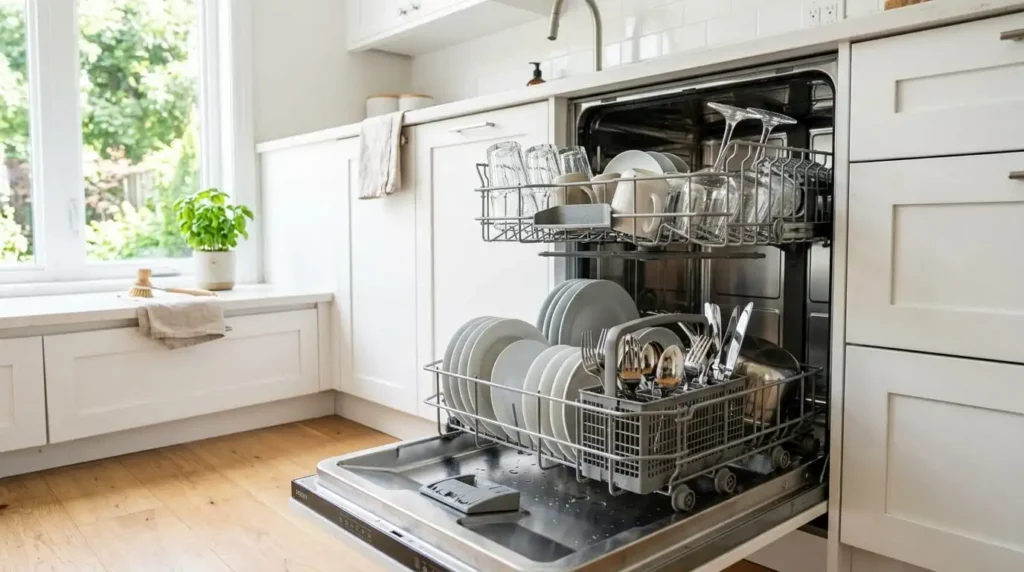
Cleaning the dishwasher usually doesn’t come into anyone’s mind as he loads his dishwasher on a daily basis. Indeed, there’s absolutely no surprise here. Since you’re using a lot of heated water, dishes and dishwashing liquid in the process. Your dishwasher can surely be clean enough, can’t it? Wrong. With time, little bits of food, soap residue, and even grease may accumulate inside. It causing unpleasant odors and stains on glasses, as well as poor washing performance overall. Fortunately, cleaning the device won’t take more than an hour and will cost you next to nothing. Especially if you use some easily available ingredients such as vinegar and baking soda.
The following guide describes all necessary aspects concerning cleaning the dishwasher effectively and timely.
Reasons for Keeping Your Dishwasher Clean
It is something very few people know about. Your appliance that is supposed to clean your plates, cups, cutlery, and tableware is also getting filthy. With each wash cycle, some amount of food remains, fat residues, and dirt from your dishwasher detergent moves around inside. Some of it flows out with the wastewater. Much of it does not.
Lime scale accumulates on the inner surfaces. Calcium deposits form on the sprayer arm and dishwasher filter. Residues of soap form on the dishwasher door seal and inside its body. Food remains accumulate in its lower part where they start decaying. That nasty smell that appears after some time is neither a defect nor a fault. But just a sign of needed maintenance.
Whirlpool states that there are several practical advantages of doing a proper dishwasher cleaning. They include reduction of bad odors, improved operation for better dish washing results. Prevention of appliance malfunctions that may result in costly repairs. In other words, it is important to consider your dishwasher a usual kitchen appliance that requires regular maintenance. Regular maintenance applies to more surfaces than just appliances — if you’re doing a deep clean day. Our guide on how to clean a carpet covers another frequently neglected area of the home.
How Often Should You Clean Your Dishwasher?
The truth is that you should be doing it more often than you currently are. Here is an ideal cleaning schedule.
Always clean up after each wash by removing any remaining food scraps from the bottom of the appliance. One simple step goes a long way toward preventing food waste from being washed around again in the next cycle.
Once per month, conduct a thorough cleaning process. By either using the vinegar and baking soda solution or a specialized dishwasher cleaner tablet. If you live in a hard water area, increase the frequency of this cleaning step. In order to mitigate the effects of hard water and mineral deposits.
Three times per year will suffice if you use your dishwasher once every couple of days. And your house hold size is relatively small. But if there are many people living in your house and the appliance works every day. Follow the monthly cleaning routine mentioned above.
When necessary, wipe the exterior of the machine with a wet cloth. When your dishwasher is made of stainless steel, ensure that you wipe it according to the grain direction.
What You Will Need to Clean Your Dishwasher
Before you begin, make sure that you have all that you require. Nothing fancy about the stuff needed. Most of the items can be found easily within the four walls of your house itself.
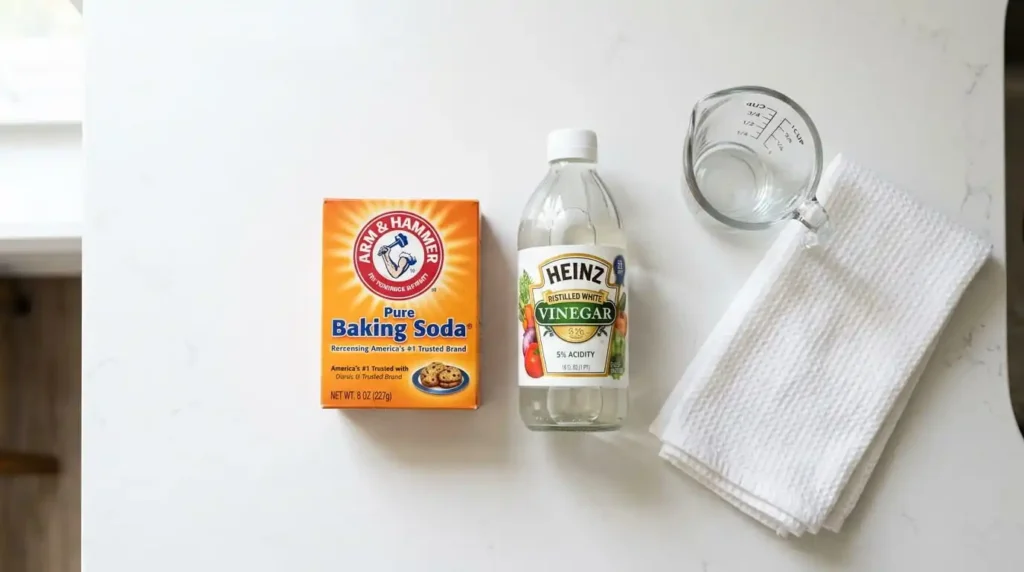
In case of using the vinegar and baking soda method: 1 to 2 cups of white vinegar (500 ml), one cup of baking soda a measuring cup for liquids made of dishwasher safe glass, and a clean towel. In case of cleaning the filter a toothbrush some warm water and a large bowl are required.
Case of using the cleaning tablet method: One affresh dishwasher cleaner tablet or any other dishwasher cleaning tablet.
Dishwasher Cleaner Using Vinegar and Baking Soda
It’s the most common DIY dish detergent recipe that actually does work. This particular technique is also approved by Scott Schrader, who is an expert cleaner for CottageCare. Nina Derwin from Apartment Therapy tried this trick herself and confirmed that the dishes were squeaky clean and looked no different than dishes cleaned using regular detergent cycles. Here’s what you need to do.
Step One: Clean The Filter
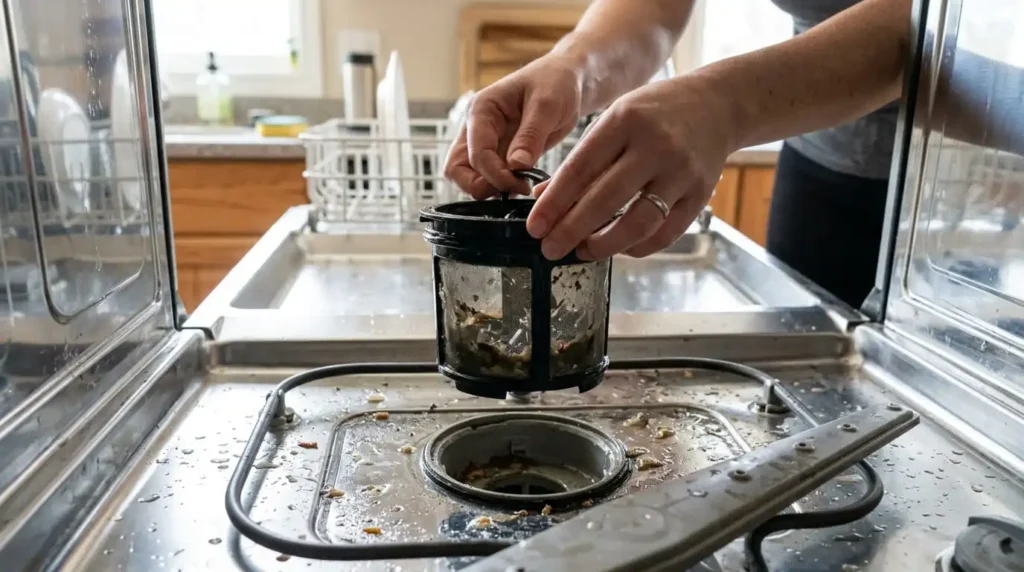
This starts with removing any remnants from the dishwasher. Begin with an empty dishwasher. Lift the lid and take note of food residues, corn kernels, broken glass, or other small particles of food residue accumulated around the filter of the dishwasher. You can use your hands to get rid of these particles.
If your model of the machine is such that has a filter removable feature then remove it following the instructions for this particular model or using and caring guide provided by the producer of the model of the dishwasher that you have. It could be possible that there are two filters – one lower and another upper one. If this is the case, then remove both filters.
Next, rinse the filters under running warm water. Finally, pour some ARM & HAMMER baking soda into the filter and scrub them with a toothbrush. For more extensive cleaning, combine warm water and white vinegar and leave the filter in it for 20 minutes. After this procedure, rinse and dry them completely.
In case you have an old machine without such a feature just clean its surrounding and move on to step two.
Step 2: Perform the Vinegar Cycle
Pour 1 to 2 cups of white vinegar into a dishwasher-safe glass measuring cup or small bowl. Put the filled cup or bowl in the top rack or bottom rack of an empty dishwasher. There is no need to add any dish detergent to the load. Also, turn off the heating element to reduce energy costs and the duration of the wash cycle.
Start the hottest possible water cycle available or a sanitizing or self-cleaning cycle if your dishwasher model offers one. White vinegar acts as a deodorizer and acid to remove dirt, grease, and other build-ups that accumulate inside the dishwasher walls, the door seal, and the sprayer arm.
Whirlpool recommends limiting the number of times you run this cycle. In your dishwasher due to the nature of vinegar being acidic. It can eventually damage the inner workings of your dishwasher if used too often. Only run the vinegar cycle once every month or when necessary.
Never pour vinegar directly into the rinse aid compartment. The rinse aid compartment has an integral seal that can be damaged by frequent exposure to white vinegar.
In case you don’t have distilled white vinegar handy, you can use apple cider vinegar as a replacement. However, you should choose distilled white vinegar. Because it doesn’t contain a colorant that could leave stains on surfaces within your appliance.
Step 3: Add Baking Soda
After the process involving vinegar is done. You should avoid mixing both items together because the formation of suds is caused by the chemical reaction that happens and can work against you when cleaning the dishwasher. Rather, scatter 1 cup of baking soda evenly into the bottom of an empty dishwasher. Proceed to use another short hot water cycle without any dish detergent, but use heat drying.
Baking soda will do the job for whatever was left after vinegar cleaning. The abrasive quality of this material helps clean up any traces of grime and food particles. While its deodorizing effect makes sure there will not be any odors left inside your dishwasher appliance.
How to Clean a Dishwasher Using a Cleaning Tablet
When the baking soda and vinegar method fails to resolve a persistent problem related to accumulation of residues, a purposeful dishwasher cleaning tablet such as the affresh dishwasher cleaner would be the solution. The affresh is designed to eliminate residues causing odors, lime scale, and mineral deposits inside your dishwasher, as well as descaling your glass ware, eliminating the cloudiness caused by hard water.
Step 1: Cleaning the Filter
Follow the same procedure for filter cleaning described above. Eliminate all food particles, debris, and waste found at the bottom of your dishwasher.
Step 2: Add the Cleaning Tablet
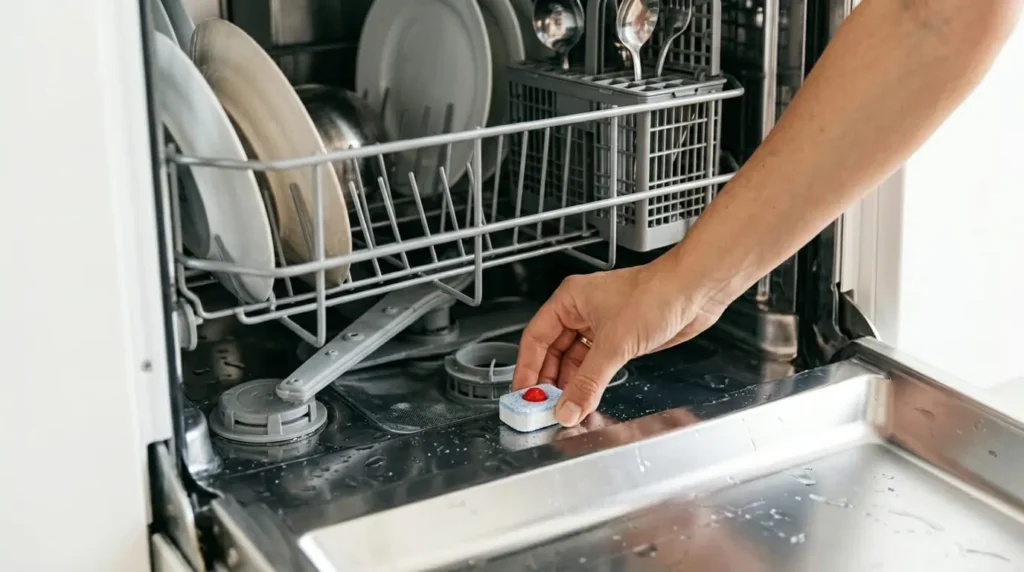
If you are cleaning without any dishes, then put 1 cleaning tablet in the detergent tray. If there is heavy buildup, use another cleaning tablet on the bottom of the machine below the lower rack. You cannot use any ordinary dish soap along with the cleaning tablet when the dishwasher is empty.
If you are cleaning with dishes, an advantage that the affresh brings with it is that you can clean even with a load of dishes inside the machine. So for this situation, place 1 tablet below the lower rack of the machine, and use your detergent normally.
Step 3: Start a Normal Wash Cycle
Start a normal wash cycle. During this process, the cleaning tablets will dissolve and reach areas in your dishwasher that would not normally be cleaned by hand washing. These areas include the sprayer arm, internal pipes, and other hard-to-reach places in your dishwasher. Once the wash cycle is complete, you should have an extremely clean machine without any soap buildup or food particles left inside.
Additional Tips Regarding Dishwasher Maintenance
Outside of the dishwasher: To clean the outside of the machine, all you need is a wet cloth. When dealing with a dishwasher that uses stainless steel, ensure that the cleaning process is done in line with the direction of the grain since the material can be easily scratched by any abrasive sponges.
Cleaning paste for filter: If the filter needs cleaning and it is quite dirty, create a paste of 1/2 cup of baking soda and up to two tablespoons of water. Afterward, just apply it to the filter and scrub with a toothbrush. ARM & HAMMER Baking Soda Shaker is a great choice when it comes to getting the correct amount of product.
Cross-contamination prevention: Do not store your pets’ feeding dishes or even gardening utensils inside a dishwasher. If you do so, ensure to run another cycle of cleaning after those items have been cleaned in order to avoid cross contamination.
Rinse aid and vinegar: Some people consider vinegar as a good alternative rinse aid. While it can be considered quite effective, never place the substance in the dispenser. The recommended way is still via the bowl trick on the dishwasher rack.
The Cost-Friendly Approach of Dishwasher Cleaning
This is probably the part that shocks most readers. ARM & HAMMER baking soda and distilled white vinegar are inexpensive, costing just a few bucks in any location, and they are two ingredients commonly found in the home. The lack of chemicals and overall affordability of the DIY method of dishwasher cleaning are some of its greatest perks when compared to the use of dishwasher cleaning tabs.
Affresh dishwasher cleaner and other similar tablets can be kept for occasional use once a month or quarter especially for house holds with hard water where white vinegar alone might not solve the issues completely.
In conclusion, everything is really quite clear. Clean dishwasher clean dishes. All it takes is to clean your dishwasher on a monthly basis or even more often as needed with regular filter cleaning after every cycle. This way you save yourself from potential malfunctions, reduce the need for costly repairs, and avoid that awful odor that your dishes might emit in the future.
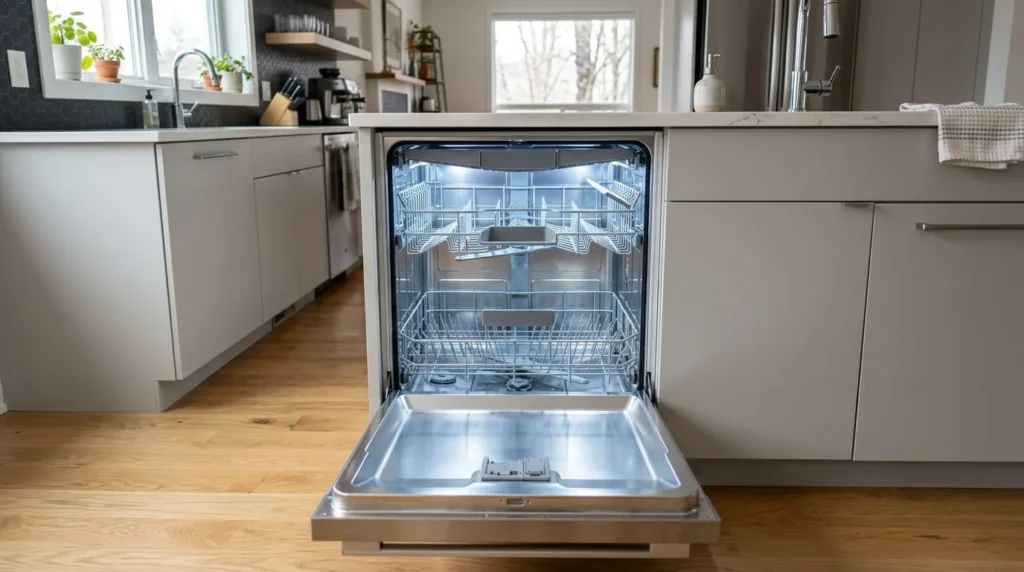
Conclusion
Cleansing your dishwasher may be among the home chores which you tend to forget unless you detect a strong odor emanating from the machine, or your glasses emerge foggy after washing. However, with little effort and cost, you can have your dishwasher working efficiently within no time. Using the vinegar cleaning cycle followed by the baking soda one, cleaning your dishwasher is simple. You only need about half an hour, white vinegar, and some baking soda to restore the machine to its original condition.
Additionally, remember to clean the filter and wipe down the insides and outsides of your dishwasher. Follow the monthly cleansing schedule, and you will not only save on energy bills but also enjoy cleaner dishes and a prolonged life for your appliance. When choosing between making your own detergent using affordable items available at home or buying the affresh dishwasher cleaner, just remember that the key thing is to begin.
FAQs
Even though hot water and detergent pass through with every load, food particles, grease, and soap residue don’t all rinse away completely. Over time these leftovers build up as limescale, mineral deposits, and grime on the filter, sprayer arm, and door seal, which is what eventually causes bad odors and cloudy dishes.
The vinegar-and-baking-soda method is essentially free since both ingredients are cheap pantry staples, and it works well for regular monthly upkeep. A dedicated tablet like affresh is worth reaching for when buildup is more stubborn or you’re dealing with hard water, since it’s formulated specifically to cut through limescale and mineral deposits that vinegar alone may not fully resolve.
Remove any visible food debris by hand, then take out the filter according to your model’s instructions and rinse it under warm water. Scrub it with a toothbrush and a little baking soda, or soak it in warm water mixed with white vinegar for about 20 minutes for a deeper clean, then rinse and dry it fully before putting it back.
Scraping out leftover food after every wash is a quick habit that prevents buildup, while a full clean with vinegar and baking soda (or a cleaning tablet) should happen about once a month. Smaller households running the dishwasher only every couple of days can often stretch a deep clean to three times a year, but daily use or hard water calls for sticking to the monthly routine.
Not everywhere — vinegar should go in a bowl or measuring cup placed on a rack, never poured directly into the rinse aid compartment, since its acidity can damage the compartment’s seal over repeated use. It’s also best not to run a vinegar cycle too frequently, since the acidity can gradually affect the machine’s internal components if overused.
Yes — white vinegar and baking soda together cost only a few dollars and typically last for several cleanings, while cleaning tablets are priced per use and add up faster over time. The tradeoff is that tablets are more convenient and better suited to tougher hard-water buildup, so many people use the DIY method monthly and save tablets for occasional deeper cleans.




2 thoughts on “How to Clean a Dishwasher by Active Property Care: The Complete Step-by-Step Guide”