Every Belize property for sale listing shows you one number. And it’s rarely the number that matters most for your actual budget. Foreign buyers routinely underestimate total costs by 8 to 12 percent of the purchase price. Because stamp duty, legal fees, and registration charges don’t show up on the listing page itself.
This guide walks through what those costs actually are. How the buying process works step by step for a foreign buyer. And where to search that isn’t a stale, duplicate-heavy listing site. You’ll leave knowing your real all-in budget before you make an offer, not after you’re already committed to a deposit.
Why Belize Property for Sale Listings Undercount Your Real Budget
Belize doesn’t operate a single unified MLS the way the U.S. does. Which means listing counts and prices vary considerably depending on which portal you’re browsing. That fragmentation is exactly why the sticker price on a Belize property for sale listing rarely reflects. What you’ll actually pay at closing.
The single biggest additional cost is government stamp duty. Sometimes called the land transfer tax. Which runs 8 percent of the purchase price for foreign buyers (5 percent for Belizean citizens). With the first roughly USD $10,000 of value exempt. Add legal fees, typically 1 to 2 percent, plus registration and administrative charges. And total closing costs commonly land somewhere between 10 and 12 percent above the negotiated purchase price. On a $300,000 property, that’s an extra $30,000 to $36,000 you need budgeted before you start seriously shopping. Not after you’ve already fallen in love with a specific listing.
How Much Does It Actually Cost to Close on Belize Property?
Total closing costs for foreign buyers typically run 10 to 12 percent above the purchase price. Driven mainly by the 8 percent stamp duty plus 1 to 2 percent in legal and registration fees. Budget for the full range rather than the low end, since exact costs depend on property value, location. And how straightforward the title history turns out to be.
The Foreign Buyer Process, Step by Step
Belize is genuinely one of the more foreign-buyer-friendly countries in the region. There’s no residency requirement, no restriction on foreign ownership, and the same freehold rights citizens get. That said, the actual process still has real steps worth understanding before you start browsing listings seriously.
Once you find a property, you’ll typically sign a Sale and Purchase Agreement and pay a deposit. Commonly around 10 percent of the purchase price. From there, your attorney and you genuinely need an independent one. Not one recommended solely by the seller conducts a title search and due diligence review to confirm the land is properly registered and free of competing claims. Belize operates under English common law. Which makes the legal framework relatively familiar to American, Canadian, and U.K. buyers compared to civil-law countries elsewhere in Latin America. The full process, from signed agreement to registered title in your name, typically takes 30 to 90 days. Depending on how quickly due diligence clears and how backed up the local land registry happens to be.
Do I Need to Be in Belize to Buy Property There?
No many foreign buyers complete the entire transaction remotely. Using an apostilled power of attorney to authorize their attorney to sign documents on their behalf. This is common enough that most established Belizean real estate attorneys have a standard process for handling international clients who never set foot in the country before closing.
Freehold Title, Land Certificates, and Why the Distinction Matters
Not all Belizean property titles are created equal. And understanding the difference before you make an offer protects you from a much bigger headache after closing. This is where a genuinely thorough attorney search earns its fee.
Freehold ownership is what most foreign buyers want and what most current listings offer full. Permanent ownership of the land and any structures on it. Belize has been modernizing its title system. And a registered Land Certificate under the current Torrens-style system is generally considered more secure and easier to verify than an older Deed of Conveyance under the historic unregistered system. Which some sellers still hold and which can carry more due-diligence risk. If a property you’re considering only has a deed rather than a registered certificate. Ask your attorney directly whether converting it to a registered title should happen before or shortly after your purchase. Since that conversion adds a step most first-time buyers don’t anticipate.
What’s the Difference Between a Land Certificate and a Deed in Belize?
A Land Certificate reflects registration under Belize’s modern Torrens-style title system. Which is generally considered more secure and easier to verify than an older Deed of Conveyance from the historic unregistered system. Properties still held under a deed can still be purchased safely, but they typically require more thorough title-search work before you can be confident the seller actually owns clear, unencumbered rights to sell.
Where Belize Property for Sale Actually Concentrates
Belize’s real estate market splits fairly distinctly between island, coastal, and inland regions, and each carries a genuinely different price point and use case. Knowing this before you search narrows your options considerably faster than scrolling through listings with no regional context.
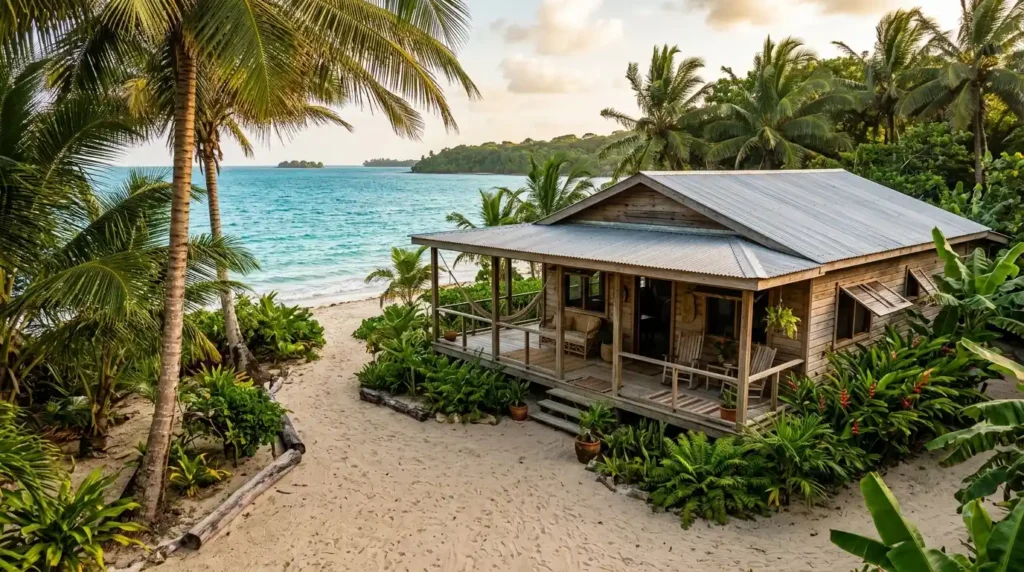
Ambergris Caye and San Pedro remain the country’s most established beachfront and vacation-rental market, commanding the highest per-square-foot prices, particularly in the Secret Beach area, which has seen rapid development over the past several years. Placencia, on the southern peninsula, offers a comparable beachfront lifestyle at generally somewhat lower price points, with a quieter, less built-up feel. Inland, the Cayo District around San Ignacio appeals more to buyers prioritizing acreage, agricultural potential, or a jungle-adjacent lifestyle over waterfront access, typically at a meaningfully lower cost per acre than coastal property.
Where Is the Best Place to Buy Property in Belize?
It depends entirely on your goal Ambergris Caye and San Pedro suit buyers prioritizing beachfront lifestyle and vacation-rental income potential, while Cayo District inland acreage suits buyers wanting land, privacy, or agricultural use at a considerably lower price per acre. Placencia sits in between, offering coastal access with somewhat more affordable pricing than the island market specifically.
Ongoing Costs and Why Belize Stays Popular With Retirees
Beyond the purchase itself, Belize’s ongoing ownership costs are a major part of its appeal, and it’s worth understanding these numbers alongside the upfront closing costs before you commit.
Annual property tax in Belize is notably low compared to most of the U.S. and Canada, generally running around 1 to 1.5 percent of the property’s assessed value, and assessed value frequently sits below current market value, which keeps the effective rate even lower in practice. There’s no capital gains tax on property in Belize for most sellers, though U.S. citizens still owe U.S. tax on any gain under domestic reporting rules regardless of where the property sits, so that distinction matters more for tax planning than it might first appear. Belize’s Qualified Retired Persons Programme offers additional incentives for retirees establishing residency, including duty exemptions on personal property brought into the country, which is part of why the country draws a steady stream of North American and European retirees specifically.
Are Belize Property Taxes Really That Low?
Yes annual property tax generally runs around 1 to 1.5 percent of assessed value, which is meaningfully lower than typical property tax rates across most of the United States and Canada. Combined with no capital gains tax on the Belizean side of most sales, this is one of the more consistently cited reasons foreign buyers and retirees find Belize property attractive beyond the purchase price alone.
Conclusion
Belize property for sale searches get you halfway there the real work is budgeting the additional 10 to 12 percent in stamp duty and closing costs, hiring an independent attorney for genuine due diligence, and understanding whether a property’s title is a modern Land Certificate or an older deed before you commit to a deposit. The country’s foreign-buyer-friendly rules, English common law framework, and low ongoing property taxes make the process genuinely more approachable than many other international markets, provided you go in with accurate numbers rather than just the listing price.
FAQs
Yes Belize grants foreign buyers the same freehold ownership rights as citizens, with no residency requirement and no special license needed to purchase. The main practical differences are the stamp duty rate, which runs 8 percent for foreign buyers versus 5 percent for Belizean citizens, and the added importance of thorough title due diligence.
The process from signed purchase agreement to registered title typically takes 30 to 90 days, depending on how quickly the title search and due diligence process clears. Remote closings using an apostilled power of attorney are common and don’t require the buyer to travel to Belize in person.
The Belize dollar has been pegged at a fixed 2-to-1 rate to the U.S. dollar since 1976, which removes exchange-rate risk for USD-based buyers during the transaction itself. Many transactions are conducted in or settled through USD directly, which simplifies budgeting compared to countries with floating exchange rates.
Many buyers do complete transactions remotely, but a personal visit before committing is still strongly advisable to verify the actual condition and location of the property, not just photos or a virtual tour. If you can’t visit, hiring a genuinely independent local attorney for thorough due diligence becomes even more essential to protect against title or boundary issues you couldn’t otherwise catch remotely.