
“Federal architects” actually means two different things. And mixing them up is the most common confusion out there. One is a design era Federal-style architecture, roughly 1780 to 1830. Built by a specific generation of early American architects working right after independence. The other is a live ongoing policy question. How the U.S. government selects architects and what style federal buildings are supposed to look like today. This piece covers both. You’ll get the actual history behind the Federal style. The architects who built it, and how the modern selection process. Through the General Services Administration works if you’re trying to understand today’s rules rather than the 18th-century ones.
Who Were the Original Federal Architects?
The Federal style emerged in the decades right after. The Revolutionary War and it wasn’t accidental. A newly independent country wanted buildings that looked distinctly American rooted in classical antiquity. But lighter and more restrained than the heavier Georgian style that came before it.
What Defines Federal-Style Architecture?
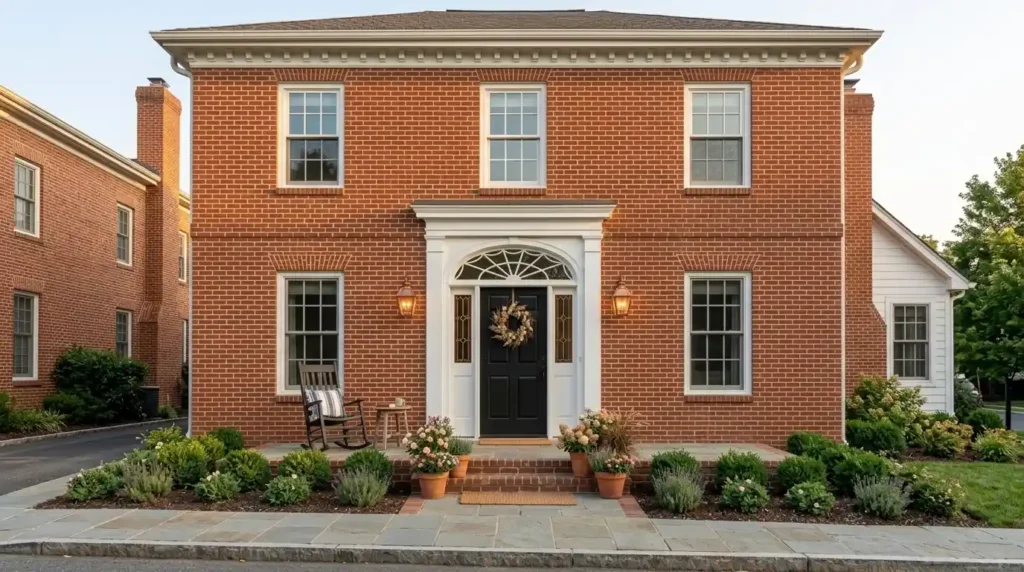
The features of the Federal style include symmetry, elegance. And delicacy, most prominently seen in the form of an elliptical fan light above a central entrance door. The roofs are generally low pitched, the walls are flat, and the decoration is simple and less ornate. Than that of its predecessor, the Georgian style. The Federal style is an elegant architectural style, and that was exactly what the new nation wanted to portray.
Which Architects Shaped the Federal Style?
The three men who are first recognized by architectural historians include. Charles Bulfinch, Benjamin Henry Latrobe, and Samuel McIntire. Charles Bulfinch was the designer of the Massachusetts State House. Which was completed in 1798. He later designed the U.S. Capitol. The second architect is Benjamin Henry Latrobe. Who is known as the “father of American architecture” for designing the interiors of the Capitol and encouraging Federal architecture to become more academic in its approach to classicism. Lastly, Thomas Jefferson must be included in this list as an amateur designer of Monticello.
Federal Style Compared to Georgian and Greek Revival:
Style labels get thrown around loosely. And Federal architecture sits right between two other classical revivals. That people frequently confuse it with.
How Is Federal Style Different From Georgian Architecture?
Federal style is lighter and more delicate. Than Georgian which came earlier and favored heavier proportions and bolder ornament. Where a Georgian doorway might carry a substantial pediment and heavy columns. A Federal doorway typically gets a slim fanlight. And narrow sidelights instead. Think of Federal as Georgian’s more refined, less heavy-handed younger sibling. Built for a country that wanted classical dignity without royal weight behind it.
How Federal Style Led Into Greek Revival:
Greek Revival followed federal architecture. From around 1820 to 1860, due to changes in taste towards something more bold. And classical, based directly on Greek architecture. While federal architecture is characterized by slender columns and delicate porches, Greek Revival architecture prefers thick columns and deep porches. It’s important to know the difference between the two architectural styles because. While houses from both periods might look alike. Houses constructed in 1815 and 1840 are indeed different in terms of style philosophy.
Federal Style Landmarks Still Standing Today:
A handful of surviving buildings show the style at its most representative. And visiting or researching any of them is a solid way to understand. Federal design beyond a textbook description.
One of the most recognizable examples. That most Americans will see would be the White House, designed by James Hoban but mostly completed by 1800. Another Federal building would be the original Capitol design of William Thornton. Although it was greatly expanded by Latrobe and Bulfinch. Other Federal buildings outside of Washington include the Massachusetts State House by Bulfinch. And many buildings of Salem, including houses that are part of the Samuel McIntire Historic District. If one is looking at a particular building and wants to verify its authenticity. The National Park Service’s National Historic Landmarks can help with that information.
How the Federal Government Selects Architects Today:
This is where “federal architects” shifts from history into current policy. And it’s a genuinely different question with its own set of rules.
What Is the GSA Design Excellence Program?
The GSA’s Design Excellence Program, established in the 1990s under the Public Buildings Service, is the primary mechanism through which private-sector architects get selected for federal building projects. The process typically runs through a two-phase competition. An initial qualifications-based solicitation followed by a more detailed technical evaluation, rather than picking the lowest bidder outright. Firms need demonstrated specialized experience. And technical competence to even be considered. And a senior advisor for architectural design within GSA oversees the review process for major commissions.
Do Federal Buildings Have to Look Classical?
Not by strict legal requirement, but there’s been real political pressure in that direction in recent years. According to a 2020 Harris Poll conducted on behalf of the National Civic Art Society, a sizable majority, said to be 72 percent of Americans, favored traditional/classical designs over modernist designs when it comes to federal buildings; this percentage needs to be verified against the National Civic Art Society’s own report. The preference was used to influence federal policy decisions, such as those relating to classical/ traditional architecture being the default design choice for federal buildings with some exceptions, depending on various situations that can be verified against GSA guidelines if you’re working on any ongoing project.
Becoming a Federal Architect Today:
If you’re an architect trying to actually win federal commissions rather than just studying the history. The path runs almost entirely through GSA’s competition process rather than direct outreach.
What Qualifications Do You Need for GSA Design Competitions?
Firms generally need a track record of comparable public or civic project experience. Proven financial stability, often cited informally around a meaningful annual revenue threshold, and staff with relevant licensure and design credentials. Portfolio strength matters enormously in the qualifications phase. Since GSA reviewers are specifically looking for evidence a firm can execute at the scale and permanence federal buildings demand. Smaller firms without prior government experience sometimes partner with larger. Established practices on a first federal project specifically to meet these threshold requirements before bidding independently on future work.
Federal Architects Conclusion:
Federal architects created something truly unique in the decades following independence, modest, symmetrical. And quietly confident in its Americanism even after two hundred years. The term also refers to a more recent process for selecting. Those who design government buildings constructed today via the GSA. Grasping both parts of this history will provide a greater insight into the reasons behind the particular appearance of some of these buildings, and also how the same controversy about classicism versus modernism remains just as relevant.
FAQs About Federal Architects:
What time period does Federal-style architecture cover? Federal-style architecture generally spans from around 1780 to 1830, though some historians extend the range slightly depending on the region. It emerged shortly after American independence and gradually gave way to Greek Revival by the 1820s and 1830s.
Who is considered the father of American architecture? Benjamin Henry Latrobe is most commonly given that title, largely for his work on the U.S. Capitol and his role in professionalizing architecture as a distinct career in the young United States. Charles Bulfinch and Thomas Jefferson are also frequently credited as foundational figures from the same era.
How does a private architecture firm get selected for a federal building project? Firms apply through the GSA’s Design Excellence Program, which runs a two-phase competition process rather than a simple lowest-bid selection. The first phase evaluates qualifications and experience, and the second involves a more detailed technical and design proposal review.