
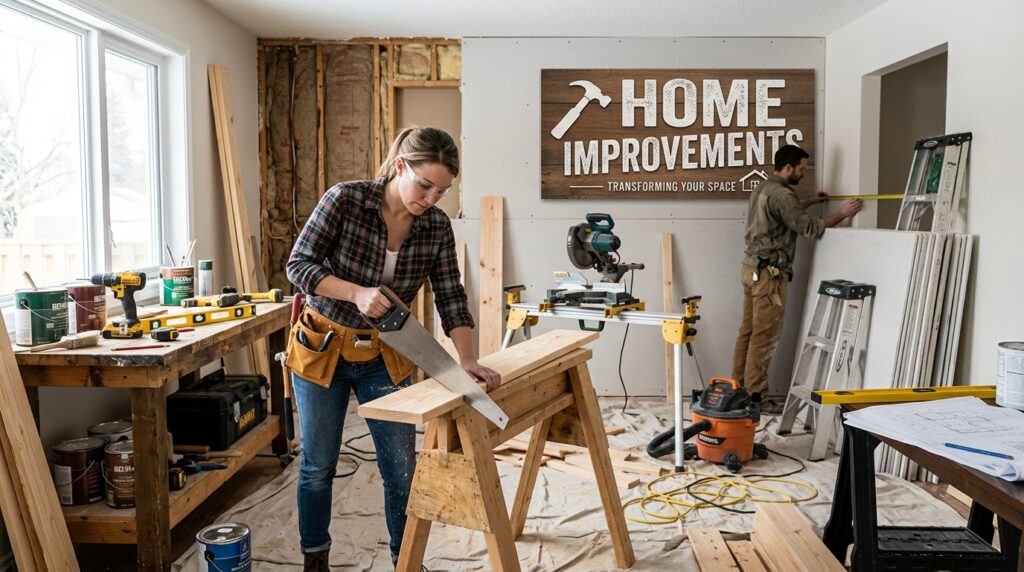
Before diving into what upgrades are worth your money, let me share something I’ve learned from years of watching homeowners make costly mistakes most people focus too much on aesthetics and too little on return on investment. Not every remodeling decision adds real value to your home. Some home improvements genuinely pay you back, and the numbers from Remodeling Magazine’s Cost vs. Value 2024 report which studied 23 remodeling projects across 150 housing markets make that crystal clear.
Is It Worth the Investment?
Take something as simple as a garage door replacement it leads all popular upgrades with a staggering 193.9% ROI, meaning you’re literally recouping nearly double your cost. A steel entry door replacement follows closely, returns 188.1% while also enhancing security and aesthetics of your front door. Adding manufactured stone veneer to your exterior boosts home value by 153.2% a relatively low time commitment for serious resale value. From personal experience, I’ve seen a simple minor kitchen remodel swapping out a sink and refreshing cabinet fronts recoup 96.1% of investments, and installing a wooden deck for extra outdoor living space quietly returns 82.9%, making both smart plays whether you’re upgrading a bedroom, improving curb appeal, or simply making smarter upgrades that strengthen your position across competitive housing markets.
Will a Metal Roof Get Louder When It Rains? What Most Homeowners Overlook Before Starting
When I first started advising homeowners on renovation projects, one thing became clear quickly people often dive into upgrades without thinking about where they live and what their immediate needs actually are. The truth is, national averages only paint half the picture. Labor and supply costs, personal styles, and consumer preferences shift drastically depending on your location.
Before committing to any project, I always recommend hiring a trusted contractor, a real estate agent, or a certified appraiser to visit your house in person.If your renovation plans include major exterior work, understanding how much a new roof costs helps you budget realistically before comparing different improvement projects. Their opinion can help you consider which upgrades truly provide value based on your specific neighborhood and market.
Beyond market value, think about what your home personally lacks. Take an extra bathroom, for example something I have seen families overlook until it becomes a daily frustration. Adding an additional washroom may not let you fully recoup all expenses, but the comfort it brings can absolutely satisfy a real house hold need. The cost of a remodeling job like this makes more sense when weighed against long-term livability, not just resale numbers. So before anything else, balance what the numbers say with what your home and family genuinely need.
Is It Worth Replacing Your Garage Door?
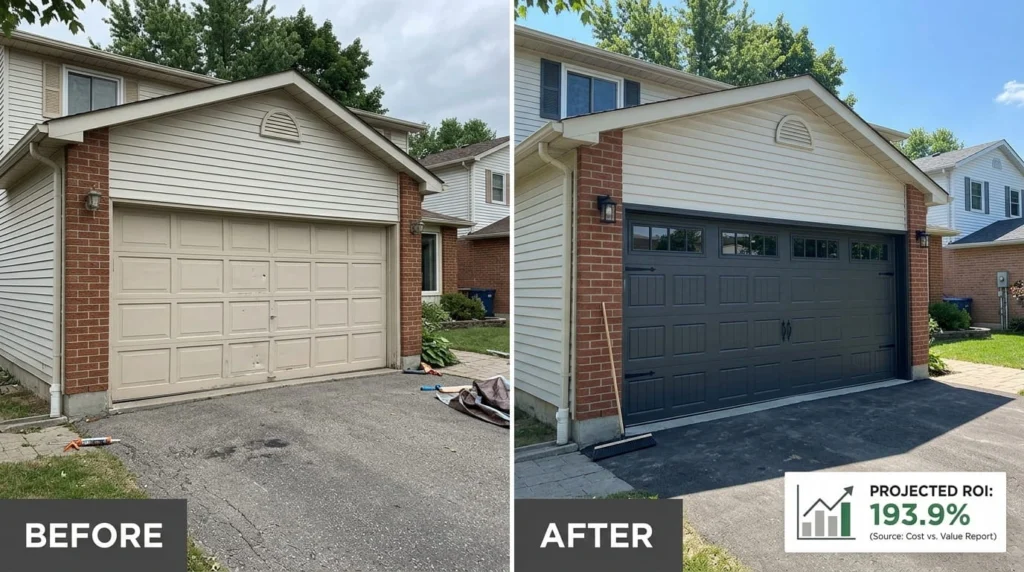
From personal experience working through several home renovation projects, I can tell you that a garage door replacement is one of those home improvement upgrades that quietly delivers more than you expect. When I finally swapped out my old garage door for a new garage door, the shift in curb appeal was immediate neighbors noticed before I even finished cleaning up. According to the Cost vs. Value report, this single exterior renovation can deliver a return on investment of 193.9%, meaning your costs recouped can nearly double your initial investment. With an average cost of $4,513 covering both the door and cost of labor and a projected resale value of $8,751, the numbers make a strong case. For anyone thinking about remodeling or boosting their property value, few projects match this ROI in terms of pure real estate value, home equity, and market value impact.
How the Process Actually Works
What makes this upgrade even more appealing is how manageable the installation process is. The time commitment is surprisingly short realistically a few days or even a single weekend making the project duration easy to plan around. If you choose professional installation, a contractor will typically visit twice: once to take measurements and offer a quote, and again to install the new garage door. However, if you’re comfortable going the DIY route do it yourself with a friend self-installation is entirely possible, which adds meaningful cost savings by cutting out labor cost entirely. Either way, replacing an old garage door with something attractive and sturdy transforms your home exterior and outside appearance for years to come. It’s a relatively affordable, cost-effective path to improving both home appearance and functionality and one of the smartest homeowners can make during any serious home renovation.
Will Your New Steel Front Door Pay You Back?
When it comes to home improvements that truly deliver, swapping out your entry door ranks among the smartest moves you can make. I’ve seen firsthand how a new, safe, and attractive steel door including a clear dual pane half-glass panel, jambs, an aluminum threshold, and a composite stop completely transforms how a home feels from the outside. According to the Cost vs. Value report, this single door replacement carries an average cost of $2,355 while returning a resale value of $4,430, meaning the cost recouped hits an impressive 188.1%. That’s a serious bang for your buck that most prospective homebuyers will immediately notice and appreciate.
The general time commitment is roughly one week, and the installation process is more manageable than most people expect. You can go the pro route and hire an installation expert who will visit your home to take initial measurements and then return to complete the work or you can handle it yourself with a friend if you’re comfortable enough to measure and order the door independently and only seek help during the final installation stage. Either way, replacing your front door is one of those rare home improvements where the numbers genuinely work in your favor.
Does Stone Veneer Actually Boost What Buyers Will Pay?
From my experience working through home upgrades that genuinely move the needle, few things hit as hard visually as removing the vinyl siding and adding stone veneer to the bottom third of your street-facing façade. This popular and effective renovation makes first impressions count something that matters deeply when selling a home. The numbers back this up strongly: the average cost sits at $11,287, yet the resale value reaches $17,291, putting the cost recouped at an outstanding 153.2%. On top of that, the exterior upgrade alone returns 102.3% of the cost of renovation, making the value added here genuinely hard to ignore for prospective homebuyers.
The general time commitment runs roughly one month, and how you choose to tackle this project shapes the timeline significantly. You can hire a handyperson to handle the installation, but understand that construction days may not be successive meaning your exterior could remain under construction for several weeks or even longer before things are complete. I’ve seen this stretch beyond the expected window on more than one occasion, so planning ahead matters. If you prefer to manage it yourself, carve out at least several days and pace the work smartly. Either way, returning strong on the cost of renovation through adding stone veneer makes this one of the sharper home investments you can make.
Is a Kitchen Remodel Worth It? What the Numbers Actually Say
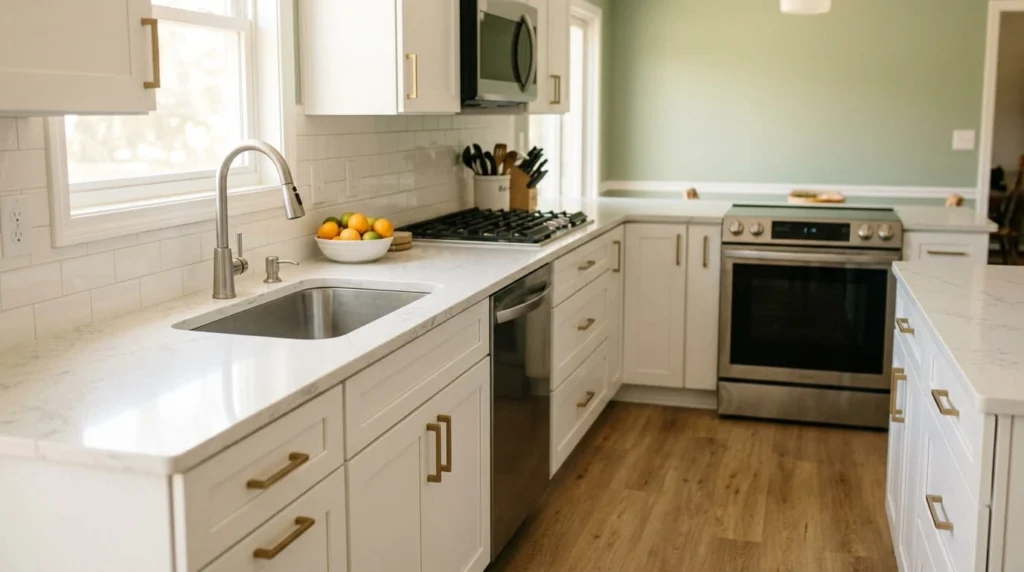
From my experience working on home upgrades, I can tell you that a kitchen remodel often feels overwhelming but it doesn’t have to be. The smartest move I’ve seen homeowners make is starting with a minor remodel rather than jumping straight into major kitchen remodels. The ROI difference is striking: according to the Cost vs. Value report, a minor kitchen remodel has a cost recouped of 96.1%, with an average cost of $26,406 and a resale value of $27,492 numbers that speak for themselves.
A minor remodel focuses on replacing things like cabinet fronts, countertops, floors, sink, faucet, cooktop, and oven range, while keeping the layout of your working kitchen intact. This faster-turnaround approach typically takes far less time than the four to eight months or even several months that major kitchen remodels demand. When you devote time to creating a realistic budget, you can expect to get expert help from an electrician, plumber, or contractor at a minimum additional cost. Be realistic and factor in that installing new models like a refrigerator or oven range as a smaller upgrade within your project can push returns well beyond the 38% to 49.5% typically seen on larger, more disruptive remodel jobs making the remodel and every upgrade count.
Will Your Deck Pay You Back When You Sell?
If you have ever spent a sunny day outside with family and friends, you already know how a great outdoor space just feels different. Homeowners looking to maximize their outdoor living space often pair a new deck with outdoor kitchen ideas to create an entertaining area that adds both everyday enjoyment and long-term value.Once your backyard is upgraded, it also becomes the perfect setting for family gatherings, outdoor celebrations, or even renting a bounce house for kids’ parties.
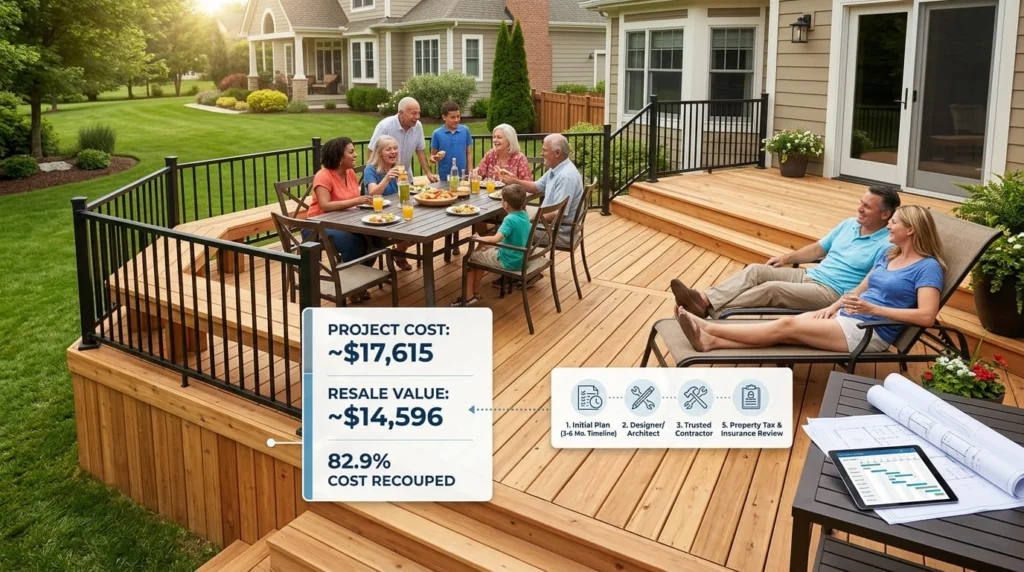
A wooden deck installation in your backyard is one of those home improvement moves that gives you real joy while you still live there and real money when you leave. Potential buyers consistently pay extra for a well-built outdoor living space, and the numbers back this up. The average cost of a deck installation sits around $17,615, while the resale value comes in at $14,596, meaning you get 82.9% cost recouped nearly half the project paying for itself just in what buyers are willing to offer.
What makes this project worth doing right the first time is how many moving parts are involved. From the moment you map out an initial plan, you are looking at a three to six months timeline, so patience matters. Enlisting a designer or architect early keeps the vision clear, while a trusted contractor handles the actual building. Your city will likely require an inspection to make sure everything meets local building codes, and it is smart to check how the addition might affect your property taxes and home insurance costs. I have seen firsthand how skipping these steps early in the job creates expensive headaches later the upfront planning truly protects the $14,596 in resale value you are working toward.
Is Switching to an Electric HVAC System Worth the Investment?
Swapping out a fossil fuel-burning HVAC system for one powered by electricity is not a small decision, but the Cost vs. Value report makes a strong case for it. The average cost sits at $18,800, and while that feels steep, homeowners can expect a resale value return of $12,422, putting costs recouped at 66.1% roughly two-thirds of what you put in. Beyond what comes back at sale, the real day-to-day win is the drop in heating and cooling bills after the electric conversion. I have spoken with homeowners who were genuinely surprised by how much savings showed up in their first winter after the switch. The environmental benefits are real too, and buyers today are paying attention to energy efficiency more than ever.
This is absolutely not a DIY project. The installation alone can take anywhere from 1-2 days to several days depending on whether your home needs structural changes and that complexity is exactly why you need a licensed HVAC technician or a trusted team of professionals handling it. I always recommend speaking with at least two or three HVAC installation teams before committing, so you can properly compare potential systems and cost options that fit your budget and house hold needs. The replacement process goes much smoother when the right technician is involved from day one of planning the conversion.
Adding a Primary Suite: Big Cost, Modest Return
A primary bedroom or bathroom addition can genuinely upgrade your living experience, but when it comes to the bottom line, the numbers tell a more sobering story. The average cost for a midrange home addition lands at $164,649, while an upscale primary suite can reach $339,513 a truly hefty financial commitment for a project that spans four to eight months. The resale value comes back at just $58,484 for midrange and $81,042 for upscale, meaning cost recouped is only 35.5% and 23.9% respectively well under one-third of what you put in. From personal experience advising on renovation decisions, I have seen homeowners genuinely caught off guard by how little of this investment return shows up at closing, especially after such a long time commitment.
That said, the picture is not entirely discouraging it just depends on a multitude of factors. Take a $300,000 home that adds a suite for $164,649: it could sell for $358,000 instead, which is a 19.3% increase in the value of your home and that shift in value is real, even if hypothetical on paper. The key is being honest about how you plan to finance the addition and which finance options make sense for your situation. Whether you are applying for a home improvement loan, tapping into home equity, pulling from savings, or leaning on credit cards, each of these options carries its own risk. Expanding your home this way can still be worthwhile but only when the cost, the equity you build, and your personal use of the space all line up together.
Bathroom Remodel vs. Addition: What the Numbers Actually Tell You
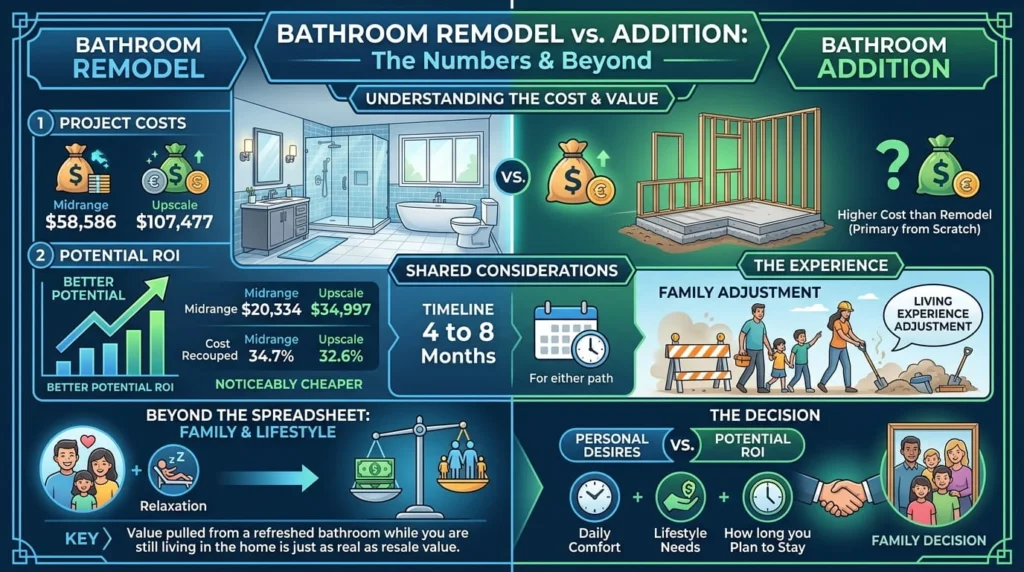
When it comes to a bathroom remodel versus a full bathroom addition, the average cost difference is significant a midrange remodeling project runs around $58,586, while an upscale version climbs to $107,477. That makes a remodel noticeably cheaper than building a primary bathroom from scratch, and it also edges ahead with a better potential ROI. The resale value lands at $20,334 for midrange and $34,997 for upscale, with cost recouped sitting at 34.7% and 32.6% respectively. Having worked through the numbers on projects like these before, I can tell you that the ROI rarely tells the whole story the value you pull from a refreshed bathroom while you are still living in the home is just as real as what shows up at sale.
The timeline for either path runs four to eight months, so the project cost is not just financial it is also a living experience adjustment your family has to be ready for. This is genuinely a family decision, not just a spreadsheet calculation. A large remodeling project of this scale needs to be weighed against both the potential ROI and what you personally want to get out of your home improvement. The investment and return only make full sense when you factor in daily comfort, lifestyle needs, and how long you plan to stay because that balance is something only you and your family can honestly work out.
Not Every Renovation Pays Back the Same Way
Home renovation shows make remodeling look quick and easy, but real life tells a different story. Through years of watching homeowners navigate renovations, one thing becomes clear the return on investment is never one-size-fits-all. Smaller moves like a garage door replacement or adding a stone veneer to your facade consistently deliver a better ROI than going all-in on extra space like a primary bedroom or bathroom. The level of ROI shifts dramatically depending on what project you choose, and the upgrade value you gain at resale does not always match the improvement cost you put in. Every home improvement decision deserves honest thought not just excitement from renovation shows.
What I have learned from working through these decisions is that ROI is just one factor in a much bigger financial consideration. The cost, the time, and the disruption to your living space all weigh in too. A big project that is time-consuming and costly might still be completely worth it not because of resale or return, but because of how it improves your day-to-day life at home.And when all the renovations are finally complete, many homeowners celebrate with a gathering where thoughtful house opening ceremony gifts make the occasion even more memorable.
Whether you are replacing something worn out or adding something new, treat each remodeling choice as a real investment in both your comfort and your property’s future value. The smartest upgrades are the ones that balance personal need with practical consideration.
Conclusion
Not every home improvement pays off the same way and that is exactly the point. Whether you are eyeing a garage door replacement with its remarkable 193.9% ROI, refreshing your kitchen with a smart minor remodel, or considering a larger primary suite addition, the decision always comes down to two things: what the numbers say and what your home and family genuinely need.
The Cost vs. Value report gives you the data, but your lifestyle, your neighborhood, and your long-term plans give you the real answer.For homeowners dealing with an aging roof, a roof replacement may deserve priority before investing in cosmetic upgrades because it protects the home’s overall value and condition.
The smartest homeowners are the ones who treat every remodeling choice as both a financial decision and a personal one because the best home improvements are the ones that pay you back in comfort, resale value, and peace of mind, all at once.
Frequently Asked Questions (FAQs)
A chandelier or oversized pendant does more to set the mood, since glass and brass fixtures add sparkle a flush-mount simply can’t produce. Flush-mount lighting is the safer, lower-commitment choice if you’re not ready to invest, but for a dining room that wants a real focal point, a statement fixture is the stronger pick.
A remodel is the stronger financial move on paper, since it costs less upfront and recoups a higher percentage than building a new bathroom from scratch. That said, an addition might make more sense if your home genuinely needs the extra space day to day, since livability matters just as much as the resale math.
Both routes work. A professional typically visits once to measure and quote, then returns to install, while a confident DIYer working with a friend can handle it solo and pocket the labor savings, since the whole job usually wraps up in a few days or a weekend either way.
It’s a mixed bag financially, recouping a little over two-thirds of what you spend at resale, but the payoff shows up faster in lower monthly heating and cooling bills. Because the installation can involve structural changes, this isn’t a DIY project, so it’s worth getting quotes from a couple of licensed HVAC technicians before deciding
A minor remodel, focused on things like cabinet fronts, countertops, and appliances while leaving the layout alone, recoups a much higher share of its cost than a full major remodel. Major remodels take significantly longer and involve far more disruption, so unless the layout itself is the problem, a minor refresh is usually the better-returning choice.
Common options include a home improvement loan, tapping into home equity, drawing from savings, or using credit cards, each with its own cost and risk tradeoffs. Since additions like this recoup only a modest share of their cost at resale, it’s worth choosing a financing option you’re comfortable with even if the payback takes years rather than showing up at the next sale.



7 thoughts on “Top Home Improvements That Boost Your Home’s Value and ROI in 2026”