
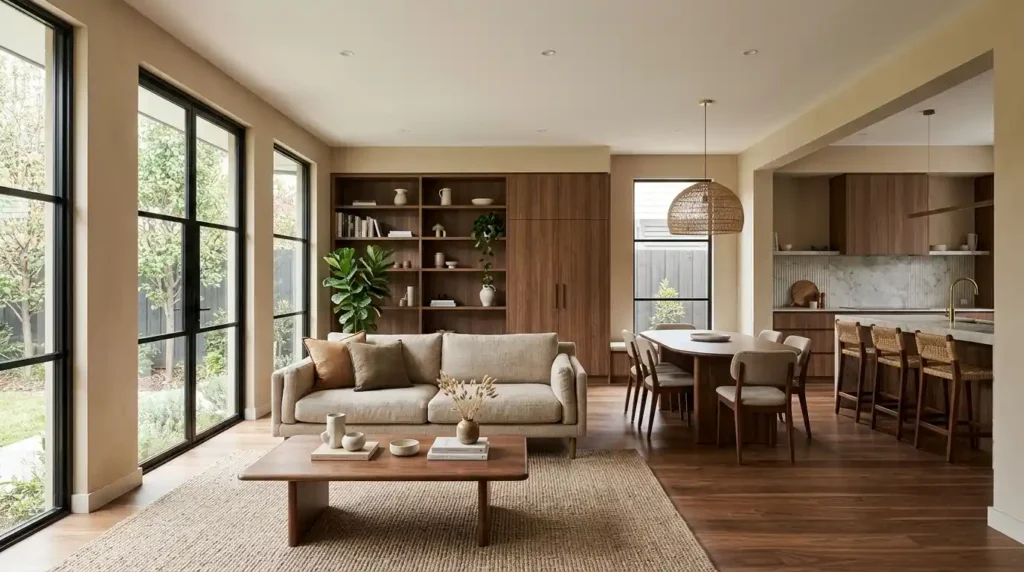
It is common for anyone who intends to renovate his/her home to enter the process with an image in mind and a figure in one’s budget. While the former is often acceptable, the latter rarely turns out accurate. Having been involved in numerous house renovation heartomenal including mine, I can confirm that the disconnect between what one anticipates that home improvement will cost him/her and what it ultimately costs is not a matter of poor planning, but a matter of ignorance. To bridge this knowledge gap, one needs to know in advance, before knocking down a single wall, the type of renovation and the actual cost of such per square meter/foot in the area, among other things.
The forecasted cost related to renovations and repairs will reach record levels of $524 billion by the beginning of 2026, says the Harvard Joint Center for Housing Studies. Half of all homeowners expect to do renovations in 2026, says Houzz. These are significant numbers, reflecting many choices that are going to be made, some good, some bad.
Room by Room: Where the Budget Actually Goes in a Whole House Renovation
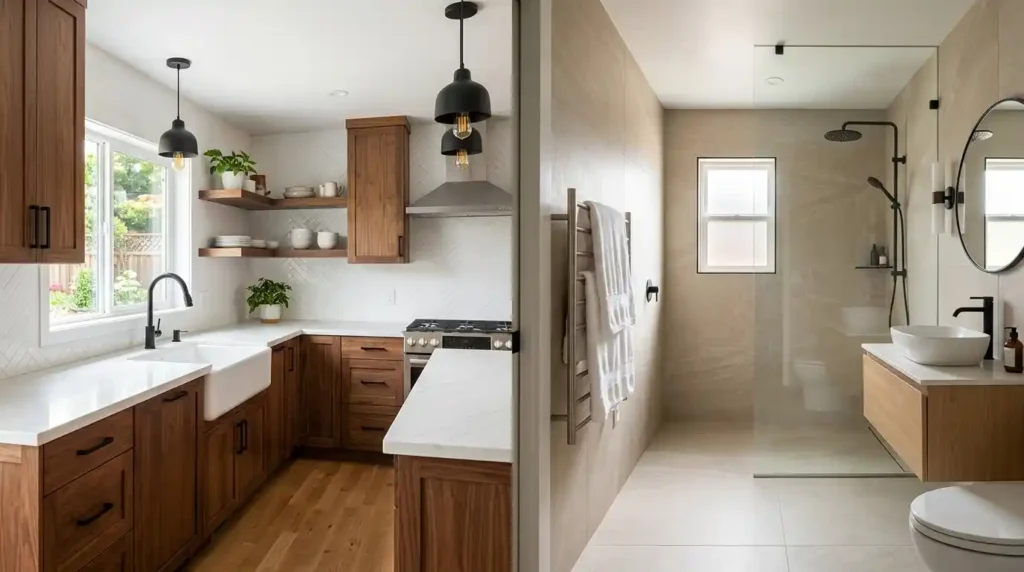
It is quite logical why the kitchen renovation and bathroom renovations feature so prominently in each discussion regarding expenses. Kitchens topped the list in 2026 when the median expense was $24,000 as compared to $22,000 in 2024, according to Houzz figures, while the median cost of primary bathrooms went up to $15,000 from $13,000 in the year under review, with guest bathrooms costing $7,000.
As far as the UK is concerned, a kitchen renovation costs between £7,000 and £25,000 and an average bathroom renovation costs about £7,000; however, a mid-range bathroom renovation that includes installation of a shower cubicle, heated towel radiator, and new floor tiles may cost between £7,000 and £12,000.
Cost For Renovating The Bathroom
In Australia, the expected cost for renovating the bathroom is $26,000 by 2026. It varies between $5,000 to $15,000 for simple renovations such as cosmetic improvements up to $35,000 to $95,000 for expensive renovations. In Australia, the average cost of renovating your kitchen ranges between $20,000 to $35,000. Custom cabinetry and other expensive finishes can increase the cost to above $65,000.
In all kitchen renovation budgets across all markets, cabinetry comprises a proportion of about 30 to 40 percent. This indicates that the choice of your cabinets is the single biggest factor affecting the total cost of your kitchen renovation project.
Cost For Renovating The Basement
It should also be mentioned that it is in the basement that American and Canadian homeowners can get the highest combination of square footage increase and added value. Basement renovation of 1,000 square feet costs between $30,000 and $75,000, has a 70% ROI and can be regarded as one of the most logical investments within home renovation. The basement bathroom addition is priced from $8,000 to $20,000 and can be referred to as the best investment within such range.
In the UK, loft/attic conversion adds about 10% to 15% of its value if turned into a bedroom, while an average kitchen renovation does not give the same results even for the average property worth £270,000 according to ONS House Price Index. Garage conversion renovation is the most affordable way to obtain one more habitable room within your existing premises.
Extensions, Structural Work, and the Costs That Blindside First-Timers
House extension cost is where the renovation budget most often departs from the original plan. A side return extension or kitchen diner extension with around 12 square metres of floor space and a flat roof averages £17,500 in the UK. Double-storey extension renovation delivers 10 to 20% property value uplift versus 5 to 10% for a single storey extension which is why, if you’re extending at all, the bump out addition case for going up rather than out deserves serious consideration.
In Australia, a structural extension runs $150,000 to $550,000 including second storey addition, ground floor extensions, foundation work, and roofing.
Load Bearing Wall Removal
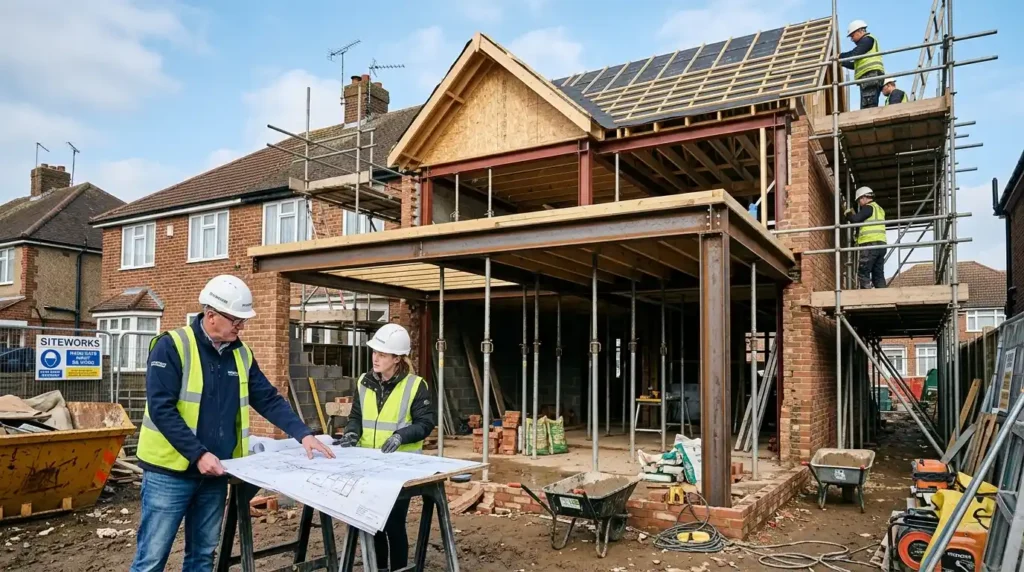
The load bearing wall removal is one of the most consistent renovation surprise costs I encounter. Homeowners budget for the cosmetic transformation the open plan renovation or interior reconfiguration that follows and underestimate what temporary propping, structural steel installation, and engineering certification actually cost.
In Australia, removing a load-bearing wall to create an open plan living area requires all three, and the cost spikes accordingly. In the US and UK, foundation repair and structural renovation work are similarly undercosted in initial renovation budget guides.
Damp Proofing Installation
Damp proofing installation averages £2,750 in the UK an unglamorous line item that most renovation planning checklists bury under the exciting stuff. Roof renovation or roof refurbishment on a period property renovation averages £12,250.
Electrical rewiring and plumbing renovation in older homes built before 1980 frequently need an electrical panel upgrade at $1,400 to $2,800 before the kitchen renovation or bathroom renovation can even begin. These are the renovation cost multipliers that catch first-time remodellers by surprise and they’re why a 10% contingency fund is not a suggestion but a requirement.
Permits, Planning Permission, and the Unpermitted Work Risk Nobody Wants to Talk About
The house renovation permits guide conversation is one that most homeowners actively avoid until it bites them. Every structural change removing or modifying load-bearing walls, adding rooms, room addition, second storey addition requires a building permit.
Electrical work beyond simple fixture swaps, plumbing renovation that moves drain or water lines, HVAC renovation, and roof renovation in most jurisdictions all require permits and inspection. This is not bureaucratic nuisance. It is the mechanism that keeps renovation work insurable, mortgageable, and sellable.
Unpermitted Renovation
Unpermitted renovation consequences are real. A California homeowner who built an unpermitted ADU was fined $8,000, forced to pay double permit fees of $1,200, and required to bring everything to code. A $450,000 home with an unapproved kitchen renovation caused three buyers to walk away before a fourth buyer negotiated the price down to $395,000 and requested the seller to correct the issues.
Renovation without permit consequences extend to homeowner’s insurance: if unpermitted work causes damage, your insurer can deny the entire claim. Council approval renovation and planning permission renovation requirements vary by region, but the principle is consistent skip the permit, carry the liability.
Permit Costs
Permit costs typically run $50 to $2,000 depending on project scope in the US, with most falling in the $200 to $500 range. Commercial building permits run $0.15 to $0.84 per SF or 0.5% to 3% of total construction value, which scales the cost conversation usefully for larger renovation projects.
Professional fees architect fees, structural engineer, project management fees at 5% to 15% of total construction cost, and insurance at 1% to 4% of budget are the soft costs of renovation that sit alongside permits and are equally underestimated.
ROI, Resale Value, and the Photo Test Every Renovating Homeowner Should Apply
The return on investment for exterior paint can be as high as 100% or even more at $3,000-$6,000 per single family home, making exterior painting the most profitable renovation project of all as per Cost vs. Value Report published by Remodeling Magazine every year. Garage door replacement projects earn 95%-100% of return on investment, replacement of the front door earns 90%-100% return on investment, and minor kitchen remodeling is worth 75%-85%.
Energy-efficient windows, energy-efficient appliances, and deck remodeling projects always earn 60%-100% returns on investment. The composite decking in the top outdoor living renovation project will cost between $30-$60 per square foot, and a simple deck of 12×16 feet will cost you $5,000-$12,000. Outdoor kitchen renovations start from $3,000 to $15,000+.
Photo Test
The photo test is the most practical ROI filter I’ve come across for house renovation to sell decisions: only renovate what will noticeably improve Rightmove or Zillow listing photos and exceed the renovation cost in value uplift. A dated bathroom with an avocado suite from the 1970s? Yes, that needs updating. A perfectly functional white bathroom with good fixtures? Probably not, at £15,000 of renovation spend that adds £13,500 or less in value on an average UK home.
Adding a fourth bedroom to a three bedroom house adds 10 to 15% property value. Adding a bathroom adds around 6%. A 10% increase in floor space adds approximately 5% more value which is why the room by room renovation decision and the house extension decision should always be run through the value per square metre lens before a contractor is engaged.
Sustainability, Smart Tech, and the Renovation Decisions That Pay Beyond Resale
Categories like sustainable house renovation and eco-friendly home renovation are now not considered niche topics anymore. The driving forces behind decisions to install solar panels, heat pumps, electric vehicle charging stations, and even energy efficient renovations now include more practical reasons such as cost efficiency and government grants rather than ideological ones. In the state of California, all qualified ADUs need to be solar-ready as per Title 24.
Voice Commanded Systems For Smart Home Renovations
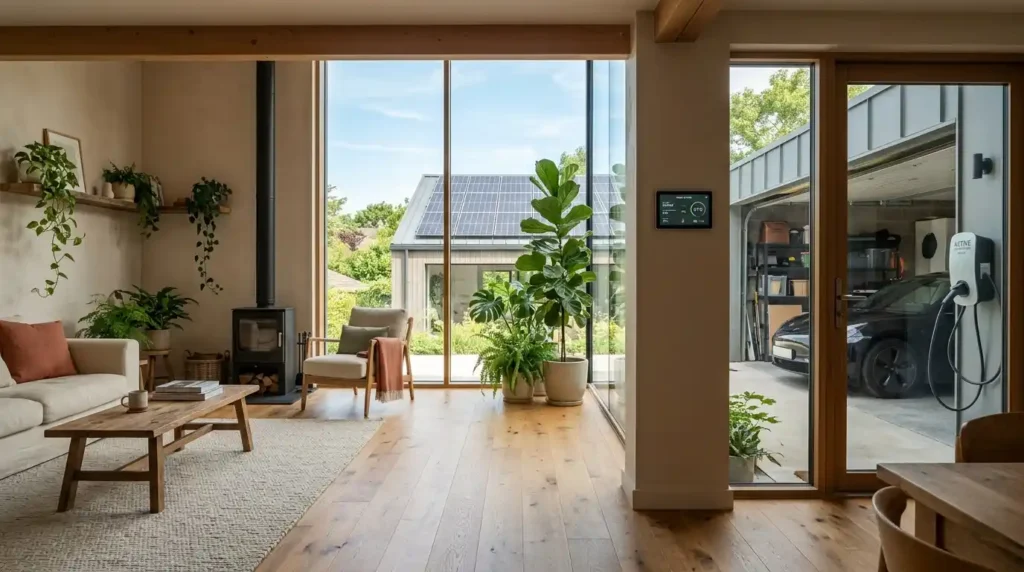
Voice commanded systems for smart home renovations, smart fridges with cameras inside them, smart lighting and heating, and EV charging home renovation facilities are being installed during renovations right from the beginning in 2026 and not added later on. The warm minimalist home renovation style, the luxury renovation finish that is quite muted, and the natural renovation interiors with biophilic design elements are the three renovation trends that are dominating renovation mood boards in 2026.
Textured surfaces and layers, earthy tones, mid brown timber, and the walnut stain color scheme are replacing blonde oak finishes and white interiors which were trending during the mid decade. The closed concept renovation trend is making a comeback against the backdrop of the open-plan renovation trend from last decade.
Multi Generational Home Renovation
The multi generational home renovation adding in law suite renovation, ADU renovation, granny flat renovation, or wide doorway renovation and curbless shower renovation for aging in place is the fastest-growing category in renovation finance conversations. FHA 203k renovation loan and Fannie Mae Homestyle renovation products are making these projects accessible to a broader income bracket. A California ADU renovation cost ranges from $120,000 to $450,000 depending on type, size, and materials.
A standard ADU permitting process takes 4 to 8 weeks. The renovation loan, renovation mortgage, and renovation contingency fund budgeted at 10% of total renovation cost are the three financial instruments that determine whether a house renovation heartomenal project finishes on time and within budget, or becomes the cautionary tale your contractor tells the next client.
Conclusion
A house renovation heartomenal is not about making a one-off decision. It is more like a series of interrelated decisions, where each impacts another. It is not about having the largest budget. It is about understanding renovation costs per square meter from the beginning, securing all required permits, creating a flexible renovation budget for unexpected situations, and choosing designs that match how you truly live in the home rather than an idealized image. If that work is done properly, then the resulting house deserves its renovation in real life terms.
FAQs
Cost is driven far less by the big visible transformation than by what’s hidden underneath it, things like outdated electrical panels, old plumbing, or a load-bearing wall that needs engineering and temporary propping to remove safely. Kitchens and bathrooms tend to dominate renovation budgets since cabinetry alone can account for 30 to 40 percent of a kitchen’s total cost, making it the single biggest line item to plan around.
Structural work is the classic budget-buster, since removing a load-bearing wall or dealing with damp proofing and electrical rewiring in an older home often isn’t factored into the original plan. These “unglamorous” costs, like a $1,400 to $2,800 electrical panel upgrade needed before a kitchen renovation can even start, are exactly why a contingency fund isn’t optional in any realistic renovation budget.
It depends on what the space actually needs, but the numbers do favor certain moves — a double-storey extension delivers roughly 10 to 20 percent property value uplift compared to 5 to 10 percent for a single storey extension. Smaller, targeted renovations like adding a fourth bedroom (10 to 15 percent value increase) or a bathroom (around 6 percent) can also outperform a full extension in terms of value per dollar spent.
Unpermitted work carries real financial risk beyond just fines — one documented case involved an $8,000 fine plus doubled permit fees after the fact, and unpermitted renovations have caused buyers to walk away from home sales entirely or negotiate steep price cuts. It also puts your insurance at risk, since insurers can deny an entire claim if unpermitted work is found to have caused the damage.
The “photo test” is a useful filter: only renovate what will noticeably improve your listing photos and add more value than it costs, rather than upgrading something that’s already functional just because it looks dated to you personally. Exterior paint is a strong example, since it can return 100 percent or more of its cost, while replacing a perfectly good bathroom might cost £15,000 and add back less than that in value.
A 10 percent contingency fund on top of your total renovation budget is treated as a requirement rather than a nice-to-have, specifically to absorb the structural and permitting surprises that come up in almost every project. Soft costs like professional fees, project management, and insurance, typically running 5 to 15 percent and 1 to 4 percent of the total respectively, should also be budgeted for separately rather than assumed to be baked into the main construction estimate.




4 thoughts on “House Renovation Heartomenal: What Nobody Tells You Before You Start”