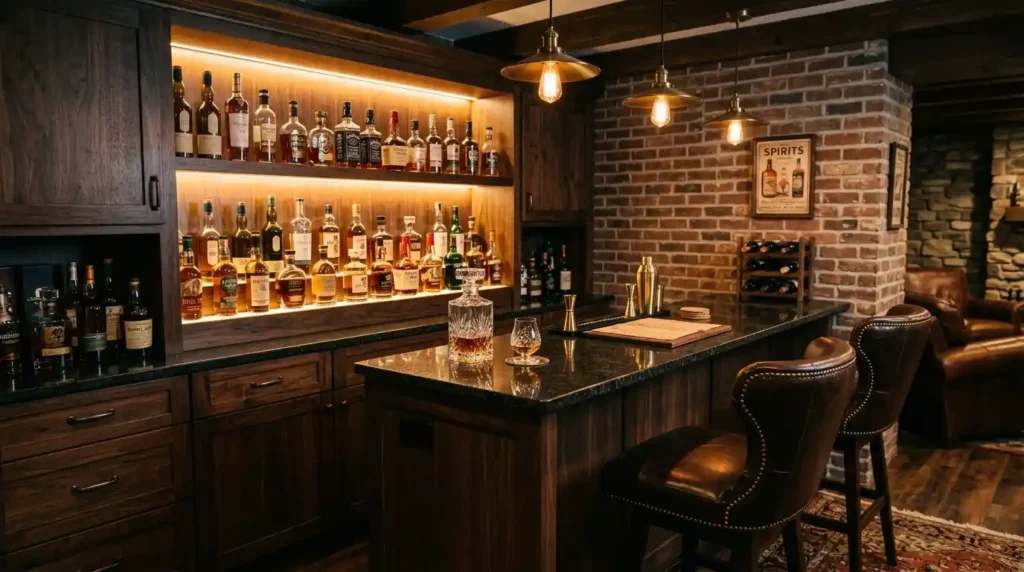
Most people overthink this. They picture a full basement conversion, custom millwork, a kegerator humming in the corner and they quietly close the browser tab. The reality is that functional, good-looking home bar setup ideas don’t demand a contractor or a second mortgage. What they demand is knowing your space honestly and spending where it counts.
I’ve helped plan more than a few of these. A tight apartment corner with a fold-down bar table on one end. A proper basement bar with a glycol-cooled draft system and custom granite on the other. The gap between those two isn’t talent or budget alone it’s knowing which decisions actually move the needle.
Wet Bar vs Dry Bar — Settle This First or You’ll Waste Money
Here’s where most planning quietly falls apart. People get attached to an aesthetic the moody backsplash, the brass sconces, the whole speakeasy decor vision before answering the one question that controls everything else. Do you actually need a sink?
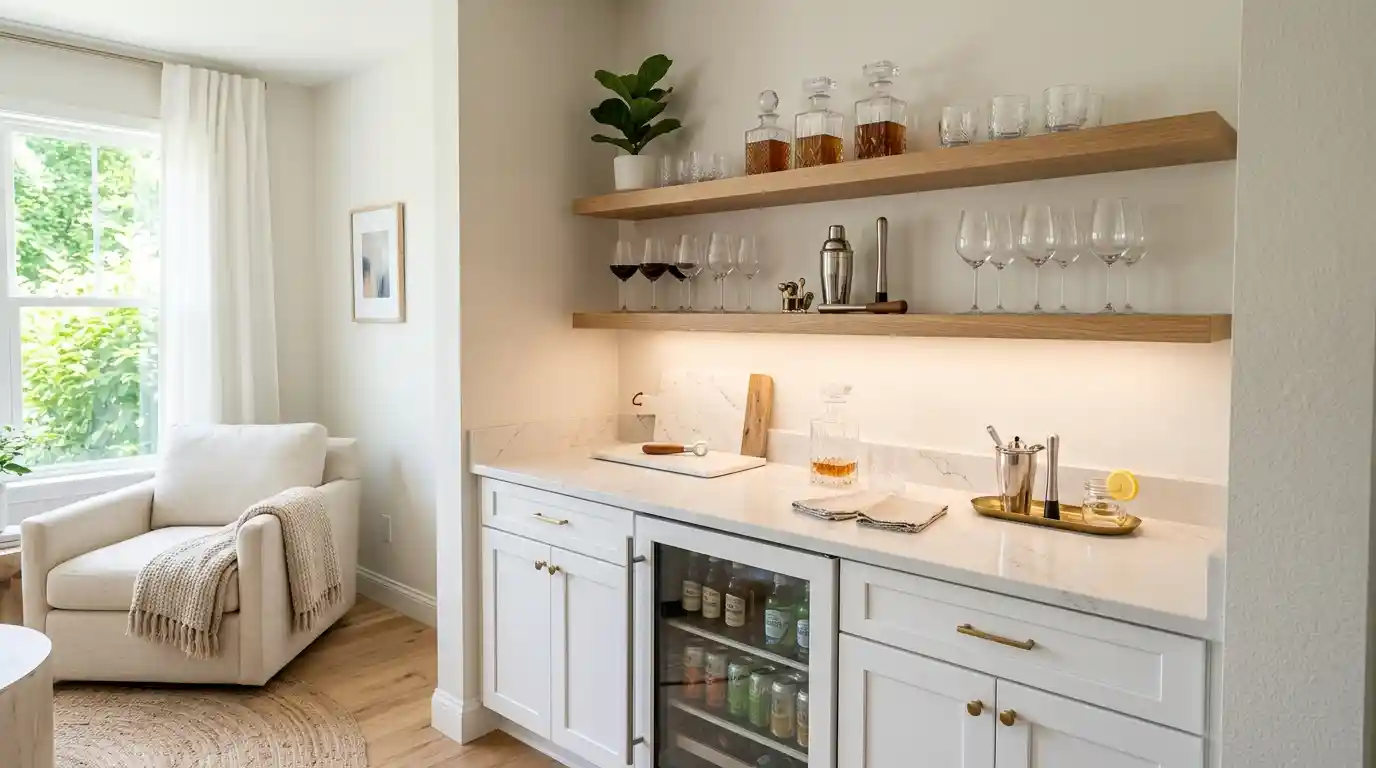
A wet bar runs you $3,000 to $8,000 more than a dry bar setup. Sometimes considerably more. If your basement sits below the sewer line, factor an ejector pump in before you price anything else. That number surprises people mid-project, and it shouldn’t. A dry bar skips the plumbing entirely counter space, storage, a beverage fridge, wine rack, maybe a kegerator. For most home bar ideas for small spaces, that’s genuinely all you need. The wet bar earns its cost when guests are staying for hours, when you’re rinsing glasses regularly, when the bar is the room. If you’re carving a drinks station into a living room corner or building out under-stair bar ideas, plumbing is overkill most of the time. A dry bar ideas living room setup with a compact beverage fridge covers what 90% of households actually use.
Location Decides Your Budget Before You Pick a Single Material
This doesn’t get said plainly enough. Where the bar lives shapes everything downstream what you spend, which appliances fit, how often the thing actually gets used.
Basement home bar ideas give you the most room to work. Ceiling height is the hard constraint nobody mentions early enough. You want at least 7.5 feet for the space to feel right. Standard bar height is 42 inches. The counter needs a minimum of six linear feet to function, with 36 inches of clearance behind the stools so guests aren’t squeezing past each other. Pair that with basement finishing work that’s already happening and the infrastructure investment starts making more sense per dollar.
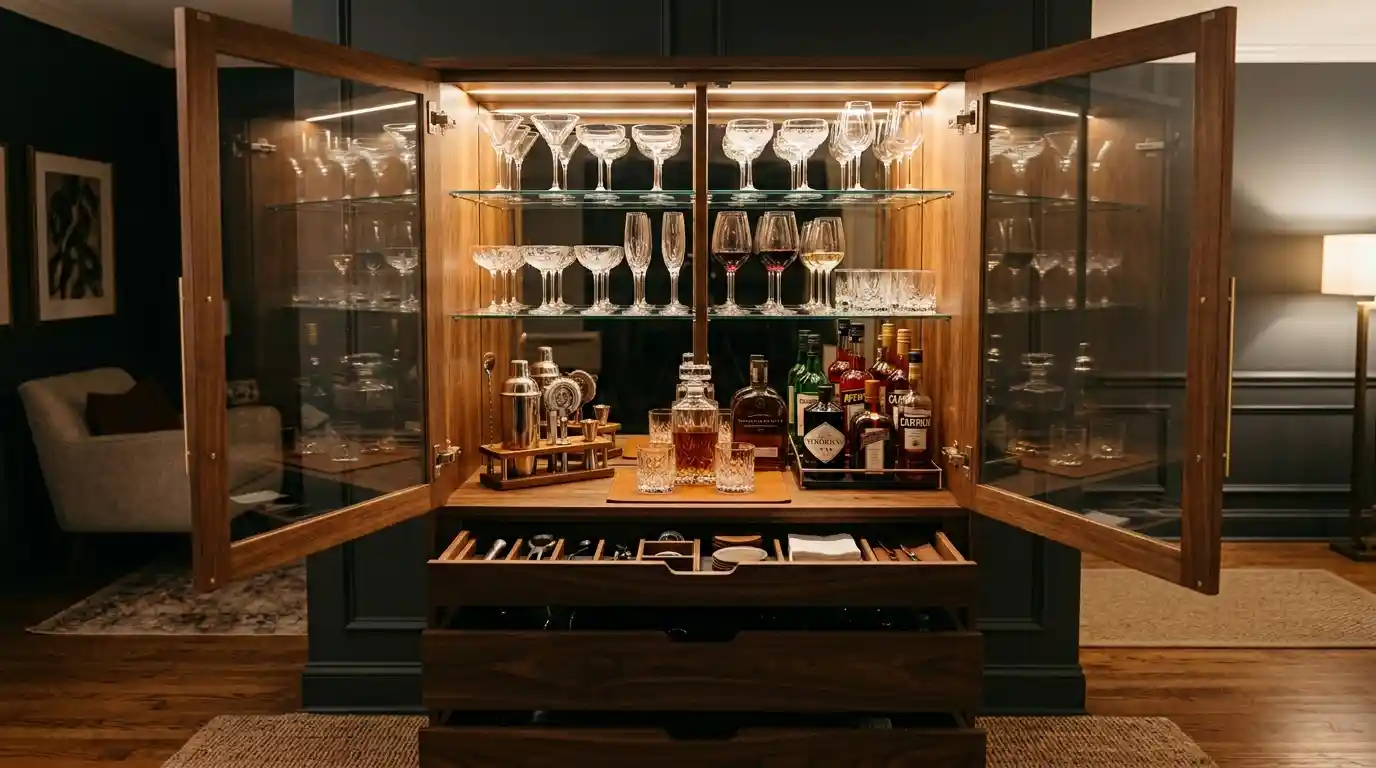
Living room bar territory is different altogether. Treat it like a drinks cabinet ideas or drinks trolley ideas problem rather than a renovation. A bar cart, a corner bar cabinet with glass-front doors, a wall-mounted shelving run carrying an open bottles display none of that requires touching a wall structurally. Bar cart styling means it moves when your layout does, which apartment dwellers understand intuitively.
Corner home bar ideas get ignored more than they should. A triangular built-in fitted into a dead corner with floating shelves running up above it, a small countertop, a compact beverage station that setup holds more volume than it appears to. The angled design also does something interesting to the room’s visual lines that a straight run of cabinetry never quite manages.
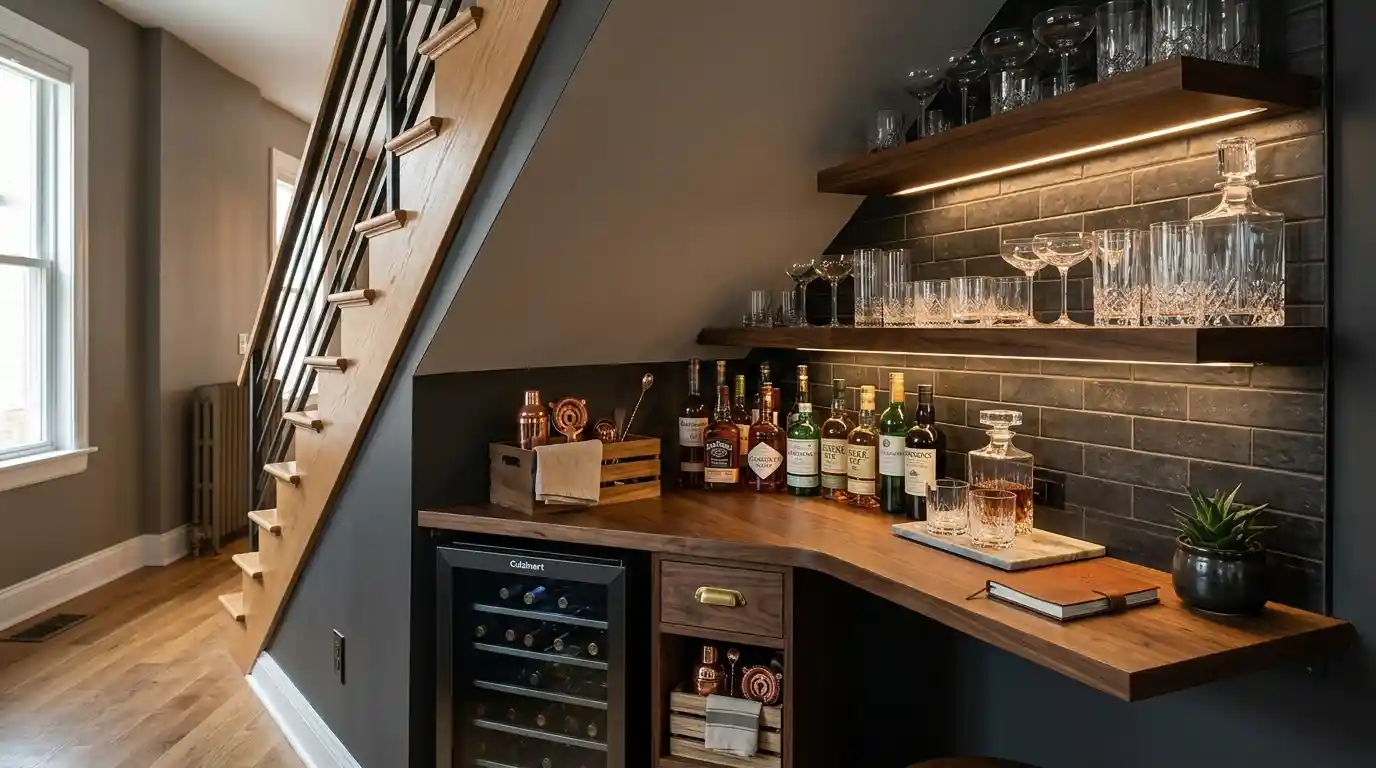
Under stairs bar ideas are the most consistently overlooked square footage in any house. A slim countertop, a couple of cabinets, accent lighting, a wine fridge tucked in and suddenly a void that previously collected boxes looks like it was always meant to be there.
What Actually Looks Expensive vs What Just Costs Money
Countertop is where the visual weight of a bar gets decided. Butcher block countertop reads warm, works across transitional and farmhouse bar styles, and costs a fraction of stone. Quartz countertop is the practical choice no sealing, stain-resistant, consistent patterning. Granite countertop and quartzite bring natural variation that no engineered surface fully replicates. Marble countertop is genuinely beautiful and genuinely punishing around acidic drinks you’ll know within a year. Laminate countertop with a strong edge profile mimics natural stone better than most people expect at a fraction of the price.
Cabinetry range is wide. Stock cabinets start around $150 per linear foot. Fully custom cabinets with specialty finishes push past $800 per linear foot. Shaker cabinets sit in a middle ground that suits modern home bar, rustic home bar, and transitional bar design without committing hard to any of them. Dark wood cabinets shift the mood considerably. Flat-panel cabinets read contemporary bar without much effort.
Mirror backsplash does more for a compact setup than almost any other single choice it doubles perceived depth in a way that photographs and reads in person. Exposed brick holds warmth and fits naturally into speakeasy style and industrial bar design. Tile backsplash is the most flexible of the three, running from clean subway to patterned encaustic depending on where the aesthetic is going.
The Budget Numbers People Don’t Share Until You Ask
A straightforward DIY home bar ideas build dry bar, open shelving, butcher block top, no appliances lands somewhere in the low thousands for materials. A mid-range basement bar with wet bar plumbing, beverage fridge, and custom cabinetry runs $15,000 to $25,000 depending on finish choices. A full custom build with draft taps, commercial-grade equipment, and millwork throughout? That clears $30,000 without much effort.
The two-tap glycol-cooled draft system alone is $2,500 to $5,000 installed. Dedicated circuits for appliances, under-cabinet lighting, and a dimmer switch setup all need licensed electrical work. That’s one area where cutting corners repays itself badly.
Home bar ideas on a budget actually work when the priorities are right. Spend real money on the countertop and the lighting. Pull back on cabinetry open shelving for display bottles costs less and reads better anyway. A $200 pendant light above a $400 butcher block counter beats $600 spent on diffuse overhead lighting above a bare shelf. Every time.
Lighting Is the Decision That Does the Most Work
It’s the most consistently underestimated variable in any home bar setup ideas conversation. LED strip lighting sitting behind open shelving turns a row of spirits into a lighted liquor display that anchors the room completely once the sun goes down. Pendant lights above the bar top mark the zone and establish ceiling relationship. A dimmer switch on every circuit means Tuesday night and Saturday night use the same space without changing a thing physically.
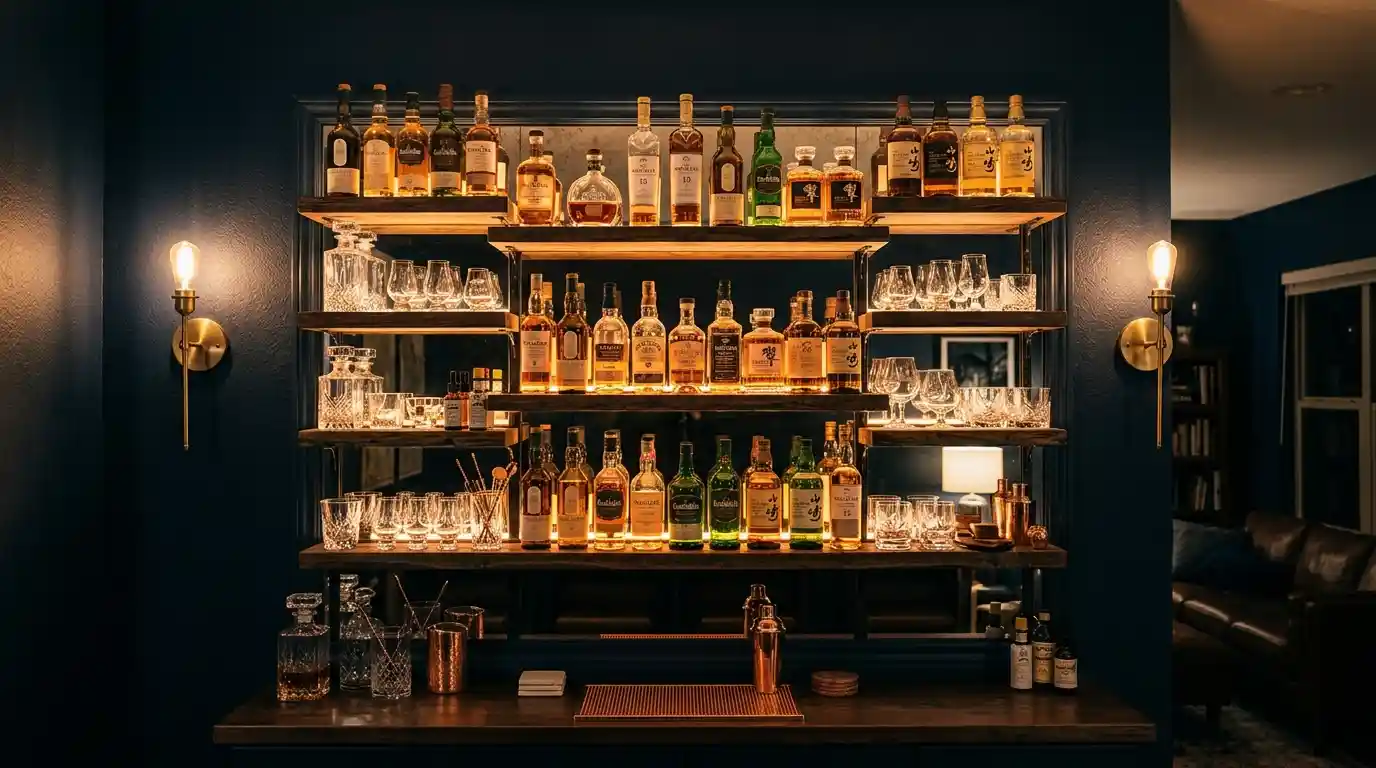
Backlit shelves on the bottle display create depth that no amount of styling achieves otherwise. Wall sconces flanking a mirror backsplash add warmth without competing with the display. Ambient lighting, task lighting, and accent lighting spread across three circuits gives you real environmental control. That layered lighting approach not one overhead fixture doing everything is what separates a proper drinks station from a room that happens to have bottles in it.
Storage That Earns Its Square Footage
A home bar cabinet with glass-front doors turns glassware into décor rather than something to hide. Stemware rack mounted under upper cabinet’s keeps cocktail glasses visible and genuinely within reach. Pull-out drawers manage bar tools cocktail shaker, bar mat, bottle opener, decanter set off the counter entirely. A wine rack integrated into the cabinetry or wall-mounted on a blank surface keeps the wine collection organised without eating counter space nobody has to spare.
Open shelving for spirits above with closed storage beneath is the layout that holds up across bar sizes. The raised liquor display at eye level pulls the whole thing together visually. Below the counter wine fridge, icemaker, kegerator flush with the cabinet faces. Bar stools at the correct height to meet the 42-inch bar top, and the setup is complete.
Picking a Style and Not Second-Guessing It
Moody and dark works naturally in basement bar ideas deep cabinetry, mirror backsplash, brass sconces, exposed brick where it exists. Speakeasy decor fits that environment without forcing it. Modern home bar runs toward flat-panel cabinets, quartz countertop, a monochrome bar palette, LED strip lighting. Rustic home bar leans on butcher block, dark wood cabinets, stone accent wall, vintage bar decor. Farmhouse bar brings shaker cabinets, open shelving, warm pendant lights, and nothing more complicated than that.
Style consistency matters more than individual piece cost. A pallet bar executed with genuine commitment to an industrial bar design aesthetic will outperform an expensive setup with no clear direction. Pick one transitional bar design, contemporary bar, eclectic bar, tiki bar accessories-led coastal bar and run every purchase decision through it.
Moisture control and proper electrical work are the two places where cutting costs destroys everything built around them. Everything else in a home bar can be revised, repainted, or replaced. Skipping those two cannot.
Conclusion
A good home bar doesn’t start with a big budget. It starts with one honest decision about your space. The best home bar ideas aren’t the most expensive ones they’re the ones that fit how you actually live, entertain, and use your home day to day. Nail the location, the countertop, and the lighting .All other aspects follow these three. Whether you are setting up in a corner of your living room or completing a basement, the end result of building that bar will be far superior to having it in a browser tab.
FAQs
A wet bar includes plumbing for a sink, which adds $3,000 to $8,000 or more to the cost, especially if your basement sits below the sewer line and needs an ejector pump. A dry bar skips plumbing entirely and covers counter space, storage, and a beverage fridge instead, which is genuinely enough for around 90% of households unless guests are staying for hours or you’re regularly rinsing glasses.
Ceiling height of at least 7.5 feet is the hard constraint most people don’t think about early enough, since anything lower starts to feel cramped. Beyond that, aim for six linear feet of counter minimum, a standard bar height of 42 inches, and 36 inches of clearance behind the stools so guests aren’t squeezing past each other.
A basic DIY dry bar with open shelving and a butcher block top runs in the low thousands for materials alone. A mid-range basement bar with wet bar plumbing, a beverage fridge, and custom cabinetry lands between $15,000 and $25,000, while a full custom build with draft taps and commercial-grade equipment can clear $30,000.
Countertop and lighting are the two areas worth spending real money on, since they carry the most visual weight in how finished the space looks. Cabinetry is the easiest place to pull back, since open shelving for displaying bottles costs less than closed cabinets and often looks better anyway, and a well-chosen pendant light over a solid counter will always outperform an expensive fixture pointed at a bare shelf.
Butcher block is the warmest-looking option and costs a fraction of stone, making it a strong pick for transitional or farmhouse styles. Quartz is the most practical everyday choice since it doesn’t need sealing and resists staining, while marble looks genuinely beautiful but stains easily around acidic drinks within a year, so it’s more of a style statement than a practical daily-use surface.
Treat it more like furniture than a renovation — a bar cart, a corner cabinet with glass-front doors, or a wall-mounted shelving run all work without touching any walls structurally. Dead space like an awkward corner or the area under a staircase can also hold more than it looks like, since a slim countertop with accent lighting and a compact beverage station makes surprisingly efficient use of square footage that would otherwise sit empty.