Winter property management in Canada demands more than routine maintenance—it requires strategic preparation against months of ice, snow, and freezing temperatures that can create liability risks and costly damage. For rental property owners, the stakes are particularly high: tenant safety, property preservation, and accessibility all hinge on effective winterization strategies.
Heated mats have emerged as a practical solution to one of winter’s most persistent challenges: ice accumulation on walkways, stairs, and driveways. Unlike traditional snow removal methods that require constant labor and chemical de-icers that damage concrete and harm vegetation, these electric-powered systems provide continuous, automated protection throughout the coldest months. This article examines how different types of heated mats function in rental properties, their energy considerations, and what property owners should know before installation.
How Heated Mat Technology Works
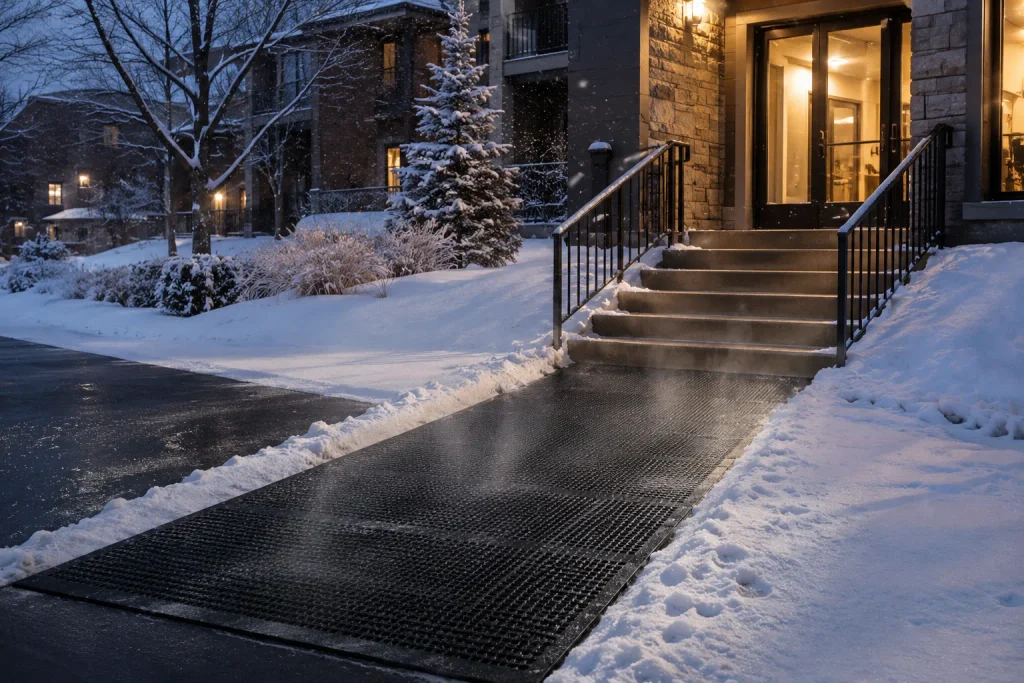
Heated mats operate through embedded heating elements that generate warmth sufficient to melt snow and ice on contact. When temperatures drop and precipitation begins, these systems activate—either manually or through automatic sensors—to maintain clear, ice-free surfaces. The technology has evolved considerably from early iterations, with modern systems offering improved energy efficiency and weather-resistant construction designed for Canadian winters. To learn more about green building, refer to this government resource.
The versatility of heated mat systems allows property owners to address multiple high-risk areas:
- Stairways: Modular heated stair mats conform to individual steps, eliminating ice buildup on one of the most dangerous areas during winter months.
- Pedestrian pathways: Heated walkway pads create safe passage routes between buildings, parking areas, and entrances.
- Vehicle access: Driveway heating mats cover larger surface areas, maintaining clear access for tenant and emergency vehicles.
- Building entrances: Snow melting door mats prevent ice formation at thresholds where foot traffic concentrates.
The investment in heated mat systems reflects a preventive maintenance philosophy. Rather than responding to ice-related incidents after they occur, property owners can eliminate the hazard entirely—an approach that typically proves more cost-effective than addressing slip-and-fall claims or weather-related property damage.
Selecting the Right Heated Mat Configuration
Not all heated mats serve the same purpose, and matching the right type to specific applications determines both effectiveness and cost efficiency. Canadian property owners should consider several distinct categories when planning their winter safety strategy.
Walkway and sidewalk systems represent the most common application. These mats typically range from two to six feet in width and can be connected in series to cover extended distances. A quality sidewalk heating mat should withstand both foot traffic and the occasional vehicle crossing without degrading. For rental properties with multiple buildings or long approach paths, these systems prevent the daily accumulation that creates hazardous conditions between maintenance visits.
Stair-specific solutions require different engineering. Heated stair mats must conform to tread depth and rise height while providing even heat distribution across the entire step surface. Many systems offer individual mats for each step rather than a single runner, allowing for replacement of damaged sections without replacing the entire installation. This modular approach proves particularly valuable for properties with heavy tenant turnover and the associated wear.
Driveway and parking applications demand the most robust construction. These larger driveway heating mats must handle vehicle weight, tire chains, and snow plow contact while maintaining consistent performance. For multi-unit properties where parking access affects multiple tenants, these systems can prevent the bottlenecks that occur when vehicles become stuck or driveways become impassable.
Entrance and threshold mats serve a dual purpose: melting snow while also providing a transition zone that reduces tracked moisture into buildings. Snow melting door mats are typically the smallest investment but can significantly reduce interior floor damage and cleaning costs throughout winter months.
The KEMF HotFlake heated mat collection offers various configurations designed specifically for Canadian climate conditions, with options suitable for different property types and traffic levels, similar to systems offered by IceTrek and HotStep.
Energy Consumption and Operating Costs
The practical question for most property owners centers on operating expenses. Heated mats do consume electricity, but modern systems have become considerably more efficient than earlier generations. Most residential-scale installations draw between 50 and 200 watts per square foot, depending on the system design and desired melting capacity.
Several factors influence actual energy costs:
- Activation method: Manual systems operated only during active snowfall consume less power than continuously-running installations, though they require monitoring and intervention.
- Temperature sensors: Automatic systems with ground temperature and moisture detection activate only when conditions require, reducing unnecessary runtime.
- Coverage area: Strategic placement on high-traffic zones rather than comprehensive coverage can reduce total power consumption while maintaining safety.
- Insulation beneath mats: Proper substrate preparation prevents heat loss downward, directing thermal energy upward where it’s needed.
The cost-benefit analysis should also account for reduced snow removal expenses, decreased salt and chemical purchases, and the potential liability reduction from preventing ice-related injuries. For many rental properties, these offset costs make heated mat systems economically neutral or even cost-positive over a typical Canadian winter.
The environmental consideration extends beyond energy consumption. Traditional de-icing chemicals damage concrete, corrode metal fixtures, and contaminate soil and groundwater. Heated mats eliminate or dramatically reduce chemical use, protecting both property infrastructure and surrounding ecosystems. This approach aligns with increasingly stringent municipal regulations regarding chloride use in many Canadian cities.
Installation Considerations for Rental Properties
Proper installation determines both system performance and longevity. While some heated mat products are designed for seasonal placement and removal, permanent installations require more careful planning and execution.
Surface preparation forms the foundation of effective installation. The substrate must be level, clean, and properly graded for drainage. Any existing cracks or deterioration should be repaired before mat placement, as movement or settling can damage heating elements. For permanent installations, many property owners choose to embed mats in concrete or asphalt during construction or renovation projects.
Electrical requirements vary by system size and design. Most residential heated mat systems operate on standard 120V or 240V circuits, but larger installations may require dedicated circuits or even three-phase power. Ground fault circuit interrupter (GFCI) protection is essential for outdoor applications. Property owners should consult with licensed electricians familiar with outdoor heating systems to ensure code compliance and safe operation.
Portable versus permanent systems present different trade-offs. Seasonal mats that can be rolled out and stored offer flexibility and lower initial installation costs, making them suitable for rental properties where infrastructure modifications face restrictions. Permanent embedded systems provide superior performance and durability but require greater upfront investment and professional installation.
For property owners considering DIY installation of portable systems, the process typically involves:
- Measuring coverage areas accurately, accounting for overlap zones and power cord routing
- Ensuring the surface is completely dry before initial placement
- Securing mats with appropriate fasteners that won’t damage heating elements
- Protecting electrical connections from moisture intrusion
- Testing system operation before the first significant snowfall
Professional installation becomes advisable for permanent systems, complex configurations, or properties where electrical work requires licensed contractors.
Maintenance and Seasonal Management
Heated mat systems require relatively minimal maintenance compared to mechanical snow removal equipment, but regular attention ensures reliable operation throughout winter. Property owners should establish a seasonal routine that includes pre-winter preparation, mid-season monitoring, and post-winter storage or inspection.
Pre-season preparation should begin in early fall, well before the first snowfall. This includes inspecting mats for any damage from the previous season, testing electrical connections, verifying that automatic sensors function correctly, and cleaning surfaces where mats will be placed. For portable systems, this is the time to plan placement locations and ensure adequate electrical access.
During winter operation, periodic inspection helps identify issues before they become problems. Check for areas where snow isn’t melting uniformly, which may indicate heating element damage or inadequate power supply. Monitor electrical consumption to detect any unusual increases that might signal system problems. For properties with multiple buildings or extensive mat coverage, keeping a simple log of system performance can help identify patterns or recurring issues.
End-of-season care extends system lifespan. Portable mats should be cleaned, thoroughly dried, and stored in a climate-controlled location away from rodents and moisture. Permanent installations benefit from a final inspection to identify any damage that occurred during winter, allowing for repairs during the off-season when contractors are more available and costs are typically lower.
Common maintenance issues include:
- Damaged power cords from snow plows or vehicle traffic
- Moisture intrusion in electrical connections
- Uneven heating from debris accumulation or mat displacement
- Sensor malfunction in automatic systems
Most of these issues can be prevented through proper installation and regular inspection. For rental properties where tenant safety depends on system reliability, establishing a maintenance schedule and documenting inspections provides both operational benefits and liability protection.
Practical Questions Property Owners Ask
What’s the realistic lifespan of heated mat systems? Quality heated mats typically last five to ten years with proper maintenance, though this varies significantly based on traffic levels, installation quality, and whether systems are portable or permanent. Embedded permanent installations often exceed ten years, while portable mats subject to frequent setup and storage may require replacement sooner.
Can heated mats handle Canadian temperature extremes? Modern systems are engineered for temperatures well below -30°C, which covers the vast majority of Canadian winter conditions. However, extremely cold temperatures do reduce melting efficiency, and very heavy snowfall rates may temporarily exceed the system’s melting capacity. Most property owners find that heated mats handle typical winter conditions effectively, with occasional manual snow removal needed during extreme weather events.
Do heated mats work on existing surfaces? Yes, most portable heated mat systems are designed to be placed on existing concrete, asphalt, or paver surfaces without modification. Permanent embedded systems require surface preparation or reconstruction but offer superior performance and durability.
What about insurance implications? Many property insurance providers view heated mat installations favorably, as they demonstrate proactive risk management for slip-and-fall liability. Some insurers may offer premium reductions for properties with comprehensive winter safety systems. Property owners should document installations and maintenance practices to support any insurance claims or liability defenses.
Are there alternatives to electric heated mats? Hydronic systems that circulate heated fluid through tubing offer an alternative for large-scale applications, though they require more complex installation and maintenance. For smaller areas or budget-conscious property owners, strategic use of heated mats on the highest-risk zones combined with traditional snow removal for other areas provides a middle-ground approach.
Strategic Implementation for Rental Properties
The decision to install heated mat systems should align with broader property management objectives. For rental properties, several factors make these systems particularly valuable: reduced liability exposure from tenant and visitor injuries, decreased emergency maintenance calls during winter storms, improved property accessibility that supports tenant satisfaction and retention, and long-term infrastructure protection from freeze-thaw cycles and chemical de-icers.
Property owners should prioritize installation locations based on risk assessment. High-traffic areas, slopes and stairs, building entrances, and accessible routes required by building codes typically warrant first consideration. A phased implementation approach allows property owners to assess performance and refine their strategy before committing to comprehensive coverage.
For properties considering heated mat systems, the evaluation process should include:
- Documenting current winter maintenance costs, including labor, equipment, materials, and emergency service calls
- Identifying high-risk areas where ice-related incidents have occurred or are most likely
- Obtaining quotes for both portable and permanent systems appropriate to property size and configuration
- Calculating projected energy costs based on local utility rates and typical winter weather patterns
- Consulting with insurance providers about potential premium impacts
The investment in heated mat technology represents a shift from reactive to proactive winter property management. Rather than responding to each snowfall with labor-intensive removal efforts, property owners create systems that automatically maintain safe conditions. This approach reduces the operational burden during winter months while providing more consistent protection for tenants and visitors.
Making the Decision
Heated mat systems won’t eliminate every winter maintenance task, but they can significantly reduce the burden while improving safety outcomes. For Canadian rental property owners, the combination of liability protection, reduced maintenance demands, and improved tenant experience makes these systems worth serious consideration.
The key is matching system type and coverage to specific property needs rather than pursuing comprehensive installation that may exceed practical requirements. Strategic placement on high-risk areas often delivers the majority of benefits at a fraction of the cost of complete coverage. As with most property improvements, the goal is finding the intersection of effectiveness, cost-efficiency, and long-term value—an intersection that, for many Canadian rental properties, includes heated mat technology as a core component of winter preparedness.