Every “interior design styles” article eventually turns into the same thing. Eight boxes, eight tidy definitions, no actual guidance on which one is right for your actual house. I’m not doing that here. Interior design styles matter less as a checklist and more as a set of decisions. Someone made on purpose decisions you can either copy or push back against once you understand why they were made. This covers four styles worth genuinely understanding, what people consistently get wrong trying to copy them. And my honest take on which ones age well versus which ones look dated in five years. If you want a full encyclopedia, this isn’t it. If you want to actually pick something and commit, keep reading.
Modern vs. Contemporary: The Distinction Nobody Actually Needs
I’ll be blunt this distinction gets treated like some sacred design-world secret. And honestly, it matters way less than people act like it does. Modern refers to a specific mid-century design movement. Contemporary just means “whatever’s popular right now.” That’s it. That’s the whole distinction.
Here’s my actual opinion: unless you’re specifically hunting for authentic vintage mid-century pieces at an auction, you don’t need this distinction to shop well. What you need to know is that “modern” furniture tends to mean tapered wood legs, organic curves, minimal fuss a look that’s held up remarkably well for seventy-plus years now, which says something. “Contemporary” changes every few years by definition, which means contemporary purchases have a shorter shelf life before they start looking dated. If you’re buying furniture you want to keep for a decade, lean modern over contemporary almost every time, purely on durability-of-taste grounds.
Why Does Mid-Century Modern Specifically Keep Coming Back?
Because the proportions were genuinely well-designed, not because of nostalgia alone. Tapered legs and clean lines photograph well, fit smaller modern homes better than bulkier traditional furniture, and don’t fight against the open floor plans most new construction defaults to now.
Farmhouse Fatigue Is Real, and Modern Farmhouse Caused It
I need to say something slightly unpopular here: modern farmhouse peaked and is currently in its overexposed phase. Black-and-white shiplap, barn doors on every hallway, the same reclaimed-wood dining table in a thousand identical listing photos it stopped feeling like a style choice and started feeling like a real estate staging default.
That doesn’t mean the underlying bones are bad. Traditional farmhouse warmer, more varied color palette, genuinely aged materials rather than distressed-to-look-aged materials actually has more longevity than its modern cousin, because it never got flattened into a single repeatable formula the way modern farmhouse did through about a decade of HGTV saturation. If you like the farmhouse direction, my honest advice is to skip the black-and-white version everyone’s tired of and lean into the warmer, messier original instead.
Is Modern Farmhouse Actually Going Out of Style?
Somewhat, yes design trend cycles are running faster than they used to, and modern farmhouse’s extremely specific, easily-copied formula made it especially vulnerable to overexposure and eventual backlash. Traditional farmhouse’s broader, less formulaic approach is holding up better.
Minimalist Rooms Photograph Beautifully and Are Miserable to Actually Live In
This one’s a genuine hot take, but I stand by it: pure minimalism works great for a photo shoot and works badly for daily life with actual humans in the space. Strip a living room down to almost nothing and it looks stunning empty. Add a kid, a dog, mail that needs somewhere to go, and the whole aesthetic collapses within a week because there’s no built-in place for real life to happen.
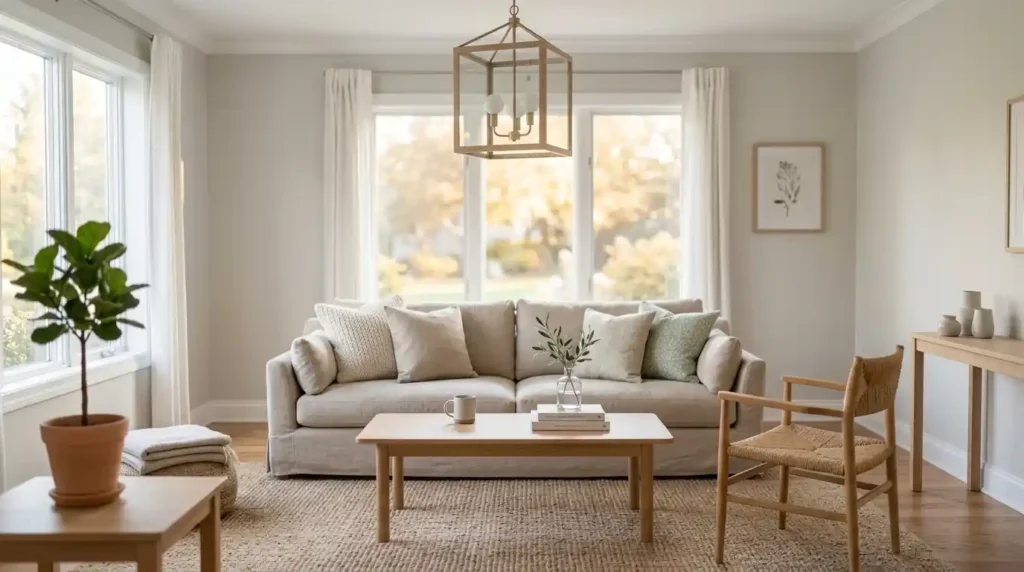
Scandinavian design solves this specific problem, and it’s why I think it’s aged so much better than strict minimalism. Same restraint, same neutral base but it builds in warmth through texture and actually accounts for storage and coziness rather than pretending clutter doesn’t exist. If you like the clean look of minimalism but have an actual household to run, Scandinavian is almost always the more livable version of the same idea.
Why Do Minimalist Rooms Feel Cold Compared to Scandinavian Ones?
Minimalism prioritizes emptiness and restraint as the goal itself, while Scandinavian design uses the same restraint as a starting point and then deliberately adds warmth back through textiles, wood, and functional decor. The difference is intent one treats bareness as the finish line, the other treats it as a foundation.
Industrial Style Almost Always Looks Try-Hard Outside an Actual Loft
Here’s my strongest opinion in this whole piece: industrial design exposed brick, visible ductwork, raw concrete works when it’s honest about the building it’s in, and looks forced almost everywhere else. A converted warehouse loft with genuine exposed brick has earned that look. A suburban house with faux-distressed metal light fixtures bolted onto drywall didn’t earn anything; it’s cosplay.
This isn’t snobbery about the style itself. It’s that industrial design’s entire appeal rests on authenticity raw materials that are actually raw, not staged to look raw. Fake it in a space that doesn’t have the underlying architecture, and it reads as exactly that: fake. If your house doesn’t have real exposed structural elements, you’re generally better served borrowing individual industrial pieces (a metal-framed shelf, one Edison bulb fixture) as accents within a different overall style, rather than committing to the full industrial look.
So Which One Should You Actually Pick?
Look at what you already own and gravitate toward, not what’s trending. If your instinct is clean lines and you live with other people who need actual storage, Scandinavian beats pure minimalism nearly every time. If you’re drawn to warm, worn materials, go traditional farmhouse rather than the black-and-white version everyone’s already tired of. And if you don’t live in a genuine loft, resist industrial as a whole-room commitment borrow a piece or two instead.
Conclusion
Interior design styles aren’t really a checklist to memorize they’re a set of tradeoffs someone else already made, and your job is deciding which tradeoffs you’re actually willing to live with. Modern ages better than contemporary because it isn’t chasing a moving target. Traditional farmhouse has more room to breathe than its oversaturated modern cousin. Scandinavian beats minimalism for anyone with an actual household. And industrial only really works where the architecture backs it up. Pick based on how you live, not how a room photographs empty.
FAQs About Interior Design Styles:
The word “modern” refers to the style of interior design that was very common during the earlier part of the 20th century and possessed some unique features. Contemporary just means the current or present trend.
Yes, and in fact, the majority of good home designs will incorporate several styles rather than just one. The key is to find a connecting element such as a color theme or type of material used.
It is a good idea to examine the items that you own and love because an interior design style always becomes evident from this process. Taking a style quiz is another way to help you define your style.