Most outdoor kitchen ideas articles show you the finished dream version without ever telling you what it costs to get there. Which is exactly backwards from how anyone actually plans a project. I want to fix that here by breaking things into three honest budget tiers a genuinely low-cost setup. A mid-range build most homeowners land on, and a full custom kitchen and telling you exactly what each one gets you. Where the money actually goes, and which upgrades are worth stretching for versus which ones are just marketing. If you’ve been staring at inspiration photos with no idea whether you’re looking at a $2,000 project or a $40,000 one. This should clear that up fast.
The $3,000 Tier: A Genuinely Functional Starting Point
This budget gets you a freestanding grill station rather than a built-in structure, and honestly. That’s not a compromise as much as people assume. A quality freestanding grill cart, a small prep table nearby, and a portable side burner covers real cooking functionality without touching concrete or running new gas lines.
The trick at this tier is resisting the built-in temptation entirely. Trying to squeeze built-in cabinetry and countertops into a $3,000 budget. Usually means cutting corners on materials that need to survive weather, which defeats the purpose. A propane tank instead of a permanent gas line also saves real money here you lose some convenience. But you avoid the permitting and trenching costs that eat budgets fast at higher tiers.
Is a Freestanding Grill Setup Actually Worth It Long-Term?
Yes, if your cooking habits are simple mostly grilling, occasional side dishes. A well-built cart-style grill with decent BTU output lasts years. And you can always upgrade to a built-in structure later without having wasted money on a foundation you’d tear out anyway.
The $10,000 Tier: Where Most Real Projects Actually Land
This is the range where a genuine built-in structure becomes realistic a masonry or stainless-steel-clad island with a built-in grill. Actual counter space on both sides, and basic storage underneath. This tier typically includes running a permanent gas line for convenience, which usually adds a meaningful chunk of the budget depending on distance from your existing gas source.
At this level, prioritize counter space over extra appliances every time. A single high-quality grill with 24 to 36 inches of counter space on each side gets used more than a grill crammed next to a side burner. And a mini-fridge with barely enough room to set down a plate. I’ve seen plenty of $10K kitchens that look impressive in photos but feel cramped the moment someone’s actually cooking a full meal in them.
What Should I Prioritize First If My Budget Is Tight at This Level?
Counter space and weatherproof cabinetry, in that order both directly affect whether the kitchen is genuinely usable, while a side burner or beverage fridge are additions you can bolt on later without touching the core structure.
Should I Add a Sink at This Budget?
Only if you already have water access nearby; running new plumbing to a remote patio location can rival the cost of your gas line, and for most people, walking food inside to wash prep items isn’t a dealbreaker worth thousands of dollars to avoid.
The $30,000+ Tier: Full Custom, Multiple Zones
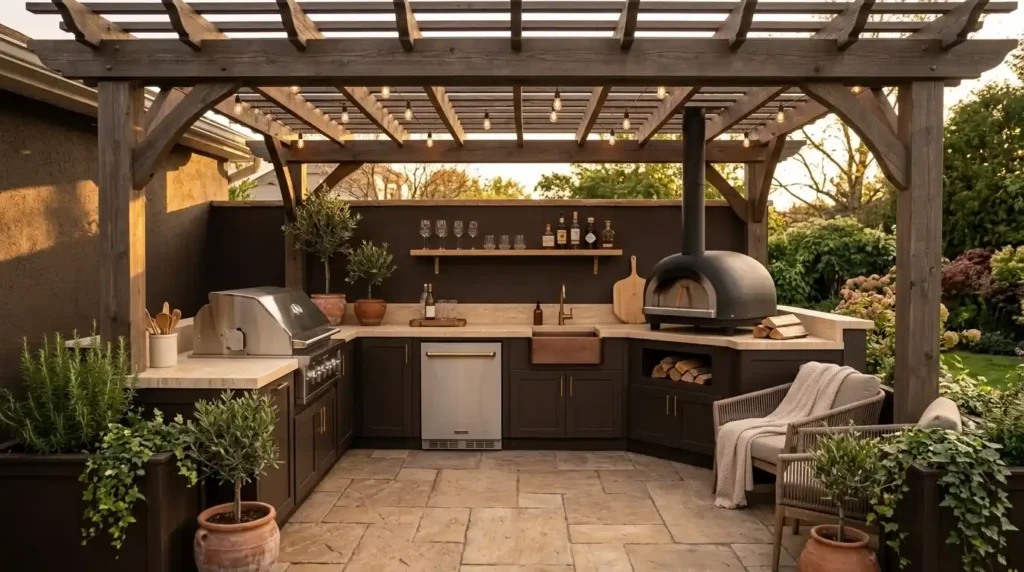
At this level, you’re looking at a genuinely custom structure natural stone countertops, a pizza oven or dedicated smoker zone, integrated refrigeration, a bar or seating area built into the layout, and often a covered structure like a pergola or full roof overhead. This tier is where outdoor kitchen ideas from high-end design magazines actually become achievable without compromise.
The real value here isn’t more appliances it’s zoning. A proper high-end layout separates prep, cooking, and serving into distinct areas so multiple people can use the space simultaneously without colliding, which matters enormously if you actually entertain regularly. This is also where premium materials genuinely pay off long-term, since natural stone and marine-grade everything survives decades of weather exposure that would wreck budget materials within a handful of seasons.
Is a Pizza Oven Worth the Investment at This Budget Level?
Only if you’ll use it regularly rather than as a novelty dedicated pizza ovens take real space and add meaningful cost, and I’ve seen plenty sit mostly unused after the first summer once the novelty wears off. If you cook pizza more than a few times a month, it earns its keep; if it’s an occasional thing, a pizza stone on your existing grill accomplishes most of the same result for a fraction of the cost.
What Stays the Same Regardless of Budget
A few decisions matter at every tier and shouldn’t get skipped even on the tightest budget. Weatherproof materials are non-negotiable in door-rated cabinetry or standard hardware will fail within a season or two regardless of how much you spent on the rest of the project, so don’t cut this corner to afford a fancier grill.
Shade and wind protection matter at $3,000 just as much as $30,000, since an uncovered kitchen in direct afternoon sun gets used less regardless of how nice it looks. Even a simple umbrella or strategic placement near existing shade makes a real difference in how often the space actually gets used through a full summer, not just in the first excited week.
Where People Consistently Overspend
Beverage centers and dedicated ice makers show up at every budget tier and get used far less than people expect once the initial excitement fades a good cooler often accomplishes 90 percent of the function for a fraction of the cost and zero plumbing or electrical work. Similarly, oversized layouts built for hosting large groups regularly, when someone actually hosts more like four times a year, waste real money that could’ve gone toward better materials on a smaller, more honestly-sized footprint.
Conclusion
Outdoor kitchen ideas only become useful once you know what tier you’re actually planning for, since a $3,000 setup and a $30,000 one solve genuinely different problems rather than being the same project at different sizes. Start with how you actually cook and entertain, not with the most impressive photo you’ve seen, and match your spending to real usage rather than aspirational usage. Whether you’re working with a modest budget or a generous one, prioritizing weatherproof materials, adequate counter space, and shade will get you more genuine daily use than any single flashy appliance.
FAQs:
Functionality and layout precede appliances each and every time. Find out how you plan to use this area in your everyday life – apart from those special occasions – and construct the layout accordingly.
Indeed, particularly if there is some uncertainty about budgets or future changes in your lifestyle. The ability to add a drink center or a pizza oven to your initial grill-and-countertop setup prevents you from overinvesting.
Stainless steel with a UV-stable finish, along with natural stone or quartzite countertops, tends to perform well against sun, moisture, and salt exposure. Always ask specifically about salt resistance if you’re anywhere near the coast.